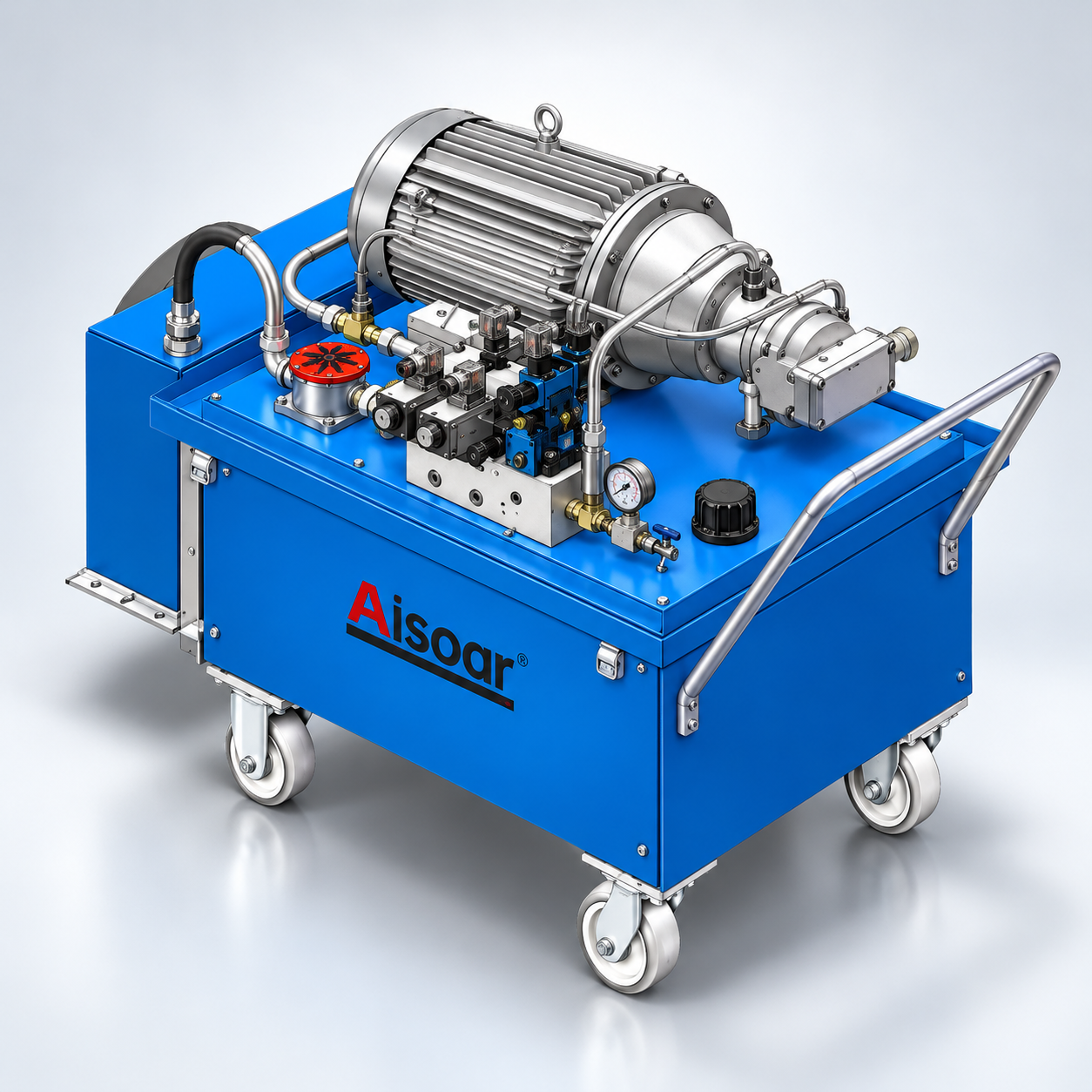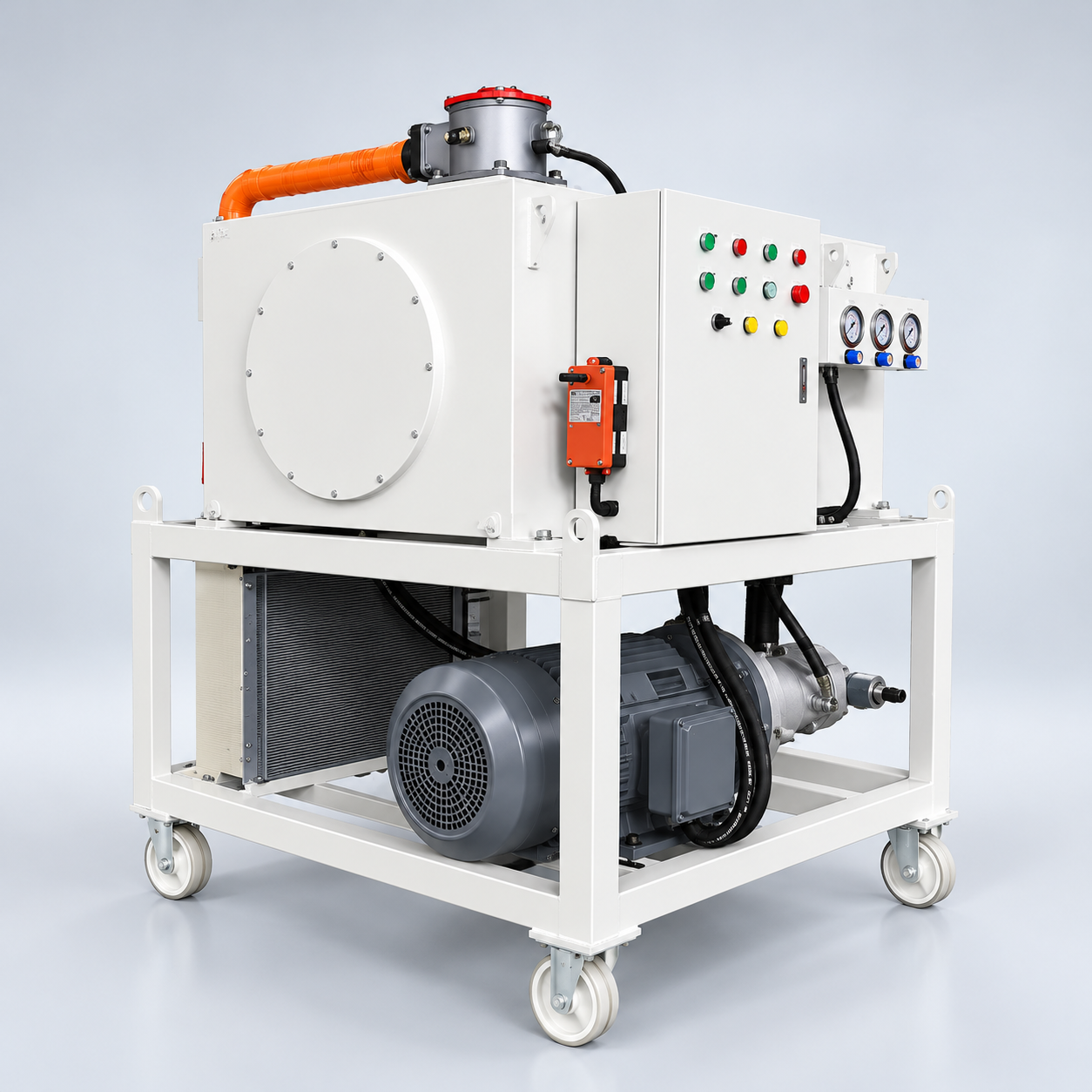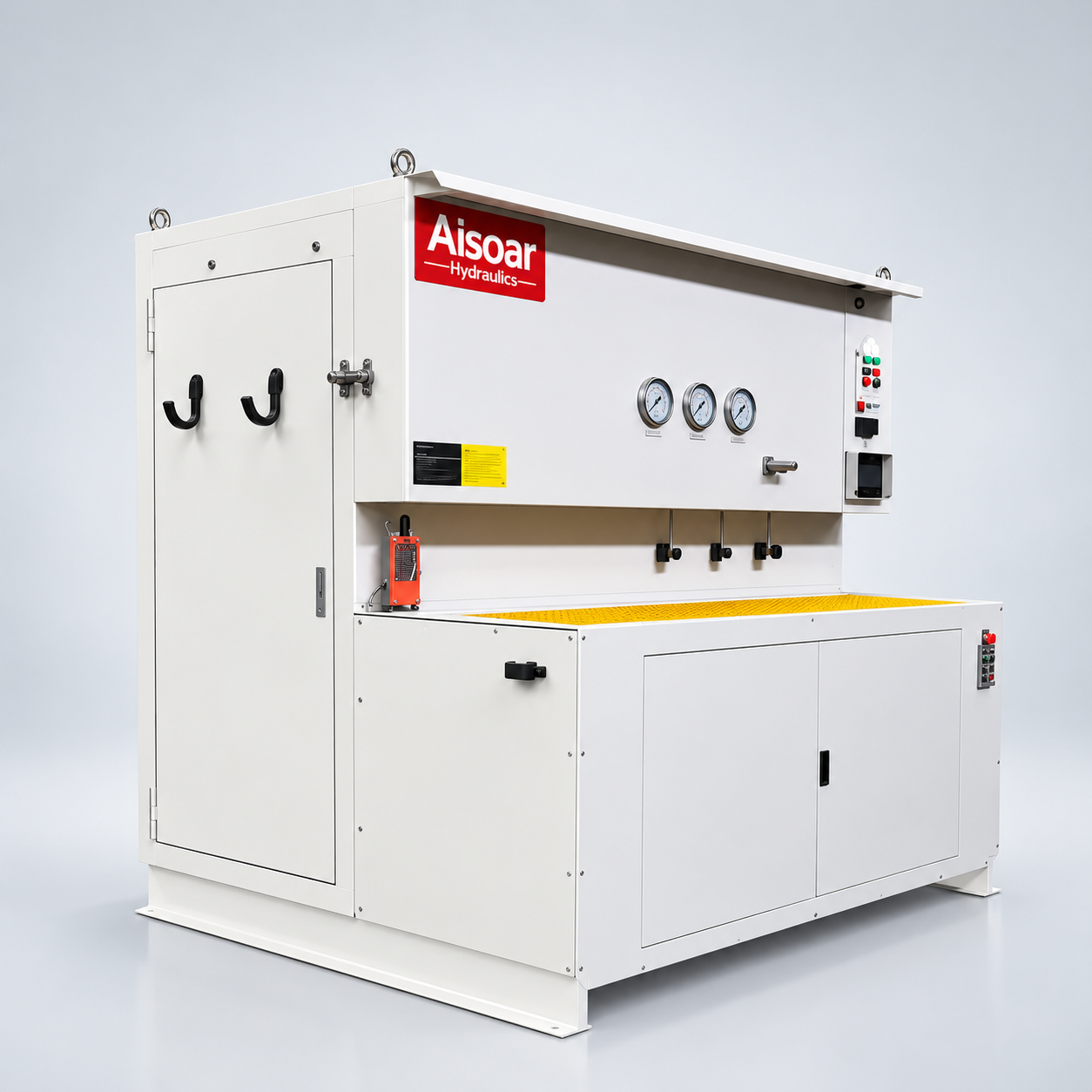
A hydraulic cylinder test bench is a specialized testing system designed to evaluate the pressure resistance, sealing performance, movement quality, and functionality of hydraulic cylinders. It can perform extension and retraction testing, proof pressure testing, pressure holding, internal and external leakage inspection, and other application-specific tests.
Hydraulic cylinder test benches are widely used by cylinder manufacturers, repair workshops, and maintenance centers to verify cylinder performance before delivery or after repair. Depending on the cylinder dimensions, pressure requirements, and testing procedures, different test bench configurations may be required.
What Can a Hydraulische Zylinder-Prüfstation Test?
Hydraulic cylinder testing can be divided into three main categories: functional and movement testing, pressure and leakage testing, and specialized performance testing. Each category evaluates different aspects of cylinder performance.
Functional & Movement Testing
Functional testing evaluates whether a hydraulic cylinder can operate correctly throughout its intended stroke. Extension and retraction, movement smoothness, stroke accuracy, and minimum starting pressure can help identify abnormal friction, assembly problems, or unstable movement.
For double-acting cylinders, movement is evaluated in both directions. For single-acting cylinders, the testing arrangement must accommodate the actual return mechanism, such as gravity, spring force, or an external load.
Pressure & Leakage Testing
Proof pressure testing evaluates structural integrity under a specified test pressure, while pressure holding evaluates pressure stability over time. External leakage inspection focuses on visible oil leakage, whereas internal leakage testing measures oil bypass across internal sealing areas.
Pressure decay alone does not necessarily indicate piston seal leakage, as temperature variations, trapped air, and leakage within the test circuit can also affect the results. Cylinder acceptance testing can be specified with reference to ISO 10100:2020 and applicable customer requirements.
For more information, read our guide on hydraulic cylinder leakage testing.
Specialized Performance Testing
Depending on the application, additional testing may include cushioning performance, multi-cylinder synchronization, output force measurement, and endurance testing. These functions require appropriate sensors, loading devices, test circuits, and control configurations.
| Prüffunktion | Testing Purpose |
| Extension & Retraction | Verify basic cylinder operation |
| Schlagüberprüfung | Check actual travel distance |
| Minimum Starting Pressure | Determine the pressure required to initiate movement |
| Proof Pressure Testing | Evaluate pressure resistance and structural integrity |
| Pressure Holding | Evaluate pressure stability over time |
| External Leakage | Inspect seals, ports, welds, and connections |
| Internal Leakage | Measure internal oil bypass |
| Cushioning Test | Evaluate end-of-stroke deceleration |
| Synchronization Test | Compare the movement of multiple cylinders |
| Force Measurement | Measure pushing and pulling force |
| Endurance Testing | Evaluate performance over repeated cycles |
Wie funktioniert eine hydraulische Zylinder-Prüfstation?
A hydraulic cylinder test bench combines a hydraulic power supply, pressure and flow control, measuring instruments, mechanical supports, and a control system. Together, these elements provide controlled testing conditions according to the cylinder specifications.
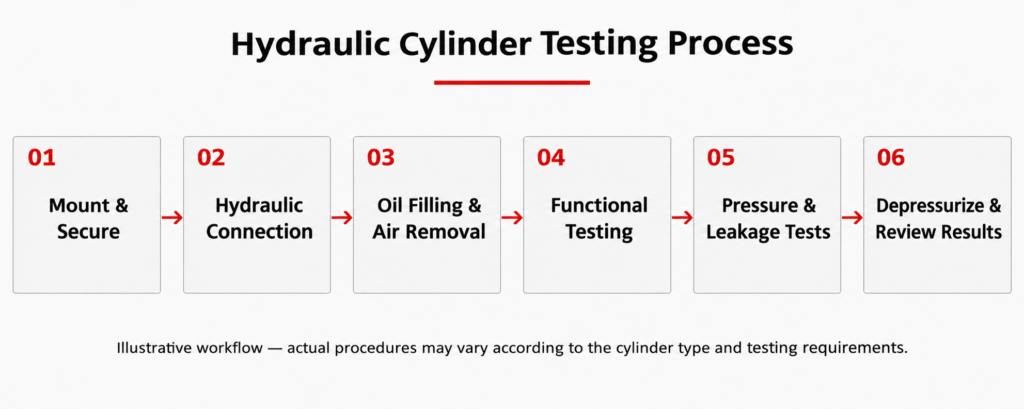
The testing process begins with securing the cylinder, connecting the hydraulic lines, and preparing the circuit for low-pressure cycling. Functional, pressure, and leakage tests are then performed according to an approved test procedure, followed by controlled depressurization and evaluation of the results.
Depending on the equipment configuration, test parameters can be recorded manually or collected automatically through PLC and software systems. Digital test records and reports are particularly useful for production quality control and customer acceptance.
How to Choose a Hydraulic Cylinder Test Bench?
Selecting a test bench requires more than determining its maximum pressure and flow rate. Cylinder dimensions, oil volume, weight, mounting arrangements, and mechanical restraint must also be considered to ensure the equipment is suitable for the intended testing application.
| Auswahlfaktor | Erforderliche Informationen |
| Zylindertyp | Single-acting, double-acting, telescopic |
| Cylinder Dimensions | Bore, rod diameter, stroke, closed and extended length |
| Mechanical Requirements | Weight, mounting type, support and restraint |
| Hydraulic Parameters | Required test pressure and flow rate |
| Testfunktionen | Movement, pressure, leakage and specialized tests |
| Automatisierungsgrad | Manual, semi-automatic or fully automatic |
| Data Management | Test curves, records and report export |
| Installation | Workshop layout and safety requirements |
Manual testing may be suitable for occasional repair work, while automated test sequences and digital reporting can improve consistency in repetitive production testing. For heavy-duty applications, additional attention should be given to large-bore and long-stroke hydraulic cylinder testing, particularly mechanical support, oil volume, and available testing space.
Integrated vs. Split-Type Hydraulic Cylinder Test Benches
Hydraulic cylinder test benches can be designed with integrated or split-type structures. The main difference is how the hydraulic power unit, control system, and testing platform are arranged.
| Merkmal | Integrated Test Bench | Split-Type Test Bench |
| Equipment Structure | Combined system | Separate functional units |
| Installation Layout | Kompakt | Flexible |
| Testing Capacity | Model-dependent | Configurable for large cylinders |
| Mechanical Support | Integrated platform | Customized support structure |
| Typische Anwendung | Repair and production testing | Heavy-duty and long-stroke cylinder testing |
Integrated systems are suitable for many routine testing applications, while split-type configurations offer greater flexibility when large cylinders require additional installation and testing space. Both configurations can support different pressure ranges, automation levels, and testing functions.
AISOAR Hydraulic Cylinder Test Bench Solutions
AISOAR Hydraulics provides standard and customized hydraulic cylinder testing solutions for manufacturing, maintenance, and quality inspection. Equipment configurations can be adapted to specific cylinder dimensions, pressure requirements, testing procedures, and data management needs.
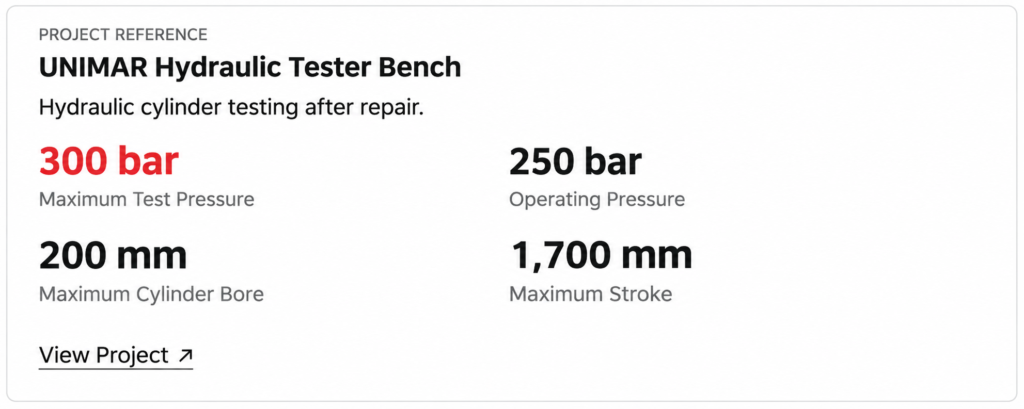
Project Reference: UNIMAR Hydraulic Tester Bench
For an industrial maintenance customer, AISOAR developed a mobile hydraulic tester for leakage inspection after cylinder repair. The project supported double-acting cylinders with the following maximum test requirements: