Hydraulic pump efficiency testing is used to evaluate how effectively a pump converts mechanical input power into hydraulic output power. By measuring flow rate, pressure, rotational speed, and drive torque under controlled operating conditions, engineers can calculate volumetric, hydro-mechanical, and overall efficiency. These results help identify performance losses, assess pump condition, and verify whether a pump meets its specified requirements.
What Are the Three Types of Hydraulic Pump Efficiency?
Hydraulic pump efficiency is generally evaluated through three related measurements.
Volumetric Efficiency
Volumetric efficiency measures how much actual flow a pump delivers compared with its theoretical flow. Internal leakage and other flow losses cause the actual output to be lower than the theoretical value.
Hydro-Mechanical Efficiency
Hydro-mechanical efficiency evaluates the mechanical losses inside the pump by comparing theoretical driving torque with actual shaft input torque. Friction and other mechanical losses affect this value.
Gesamteffizienz
Overall efficiency measures the relationship between hydraulic output power and mechanical input power. It reflects the combined effect of volumetric and hydro-mechanical losses.
For a positive-displacement pump under the same operating conditions:
Overall Efficiency = Volumetric Efficiency × Hydro-Mechanical Efficiency
What Parameters Are Needed for Efficiency Testing?
Accurate efficiency calculations require measurements taken under controlled and consistent operating conditions.
| Parameter | Einheit | Zweck |
|---|---|---|
| Outlet Pressure | bar / MPa | Determine hydraulic pressure output |
| Inlet Pressure | bar / kPa | Evaluate pump inlet conditions |
| Durchflussmenge | L/min | Measure actual pump delivery |
| Rotational Speed | rpm | Determine theoretical pump flow |
| Drive Torque | N·m | Calculate mechanical input power |
| Oil Temperature | °C | Monitor fluid operating conditions |
| Verdrängung | cm³/rev | Calculate theoretical flow |
Pressure and flow measurements are essential for volumetric efficiency calculations. To determine overall efficiency directly, the test setup also needs to measure shaft torque and rotational speed.
For pumps equipped with a case drain connection, measuring case drain flow can provide additional information about internal leakage.
How to Calculate Hydraulic Pump Efficiency
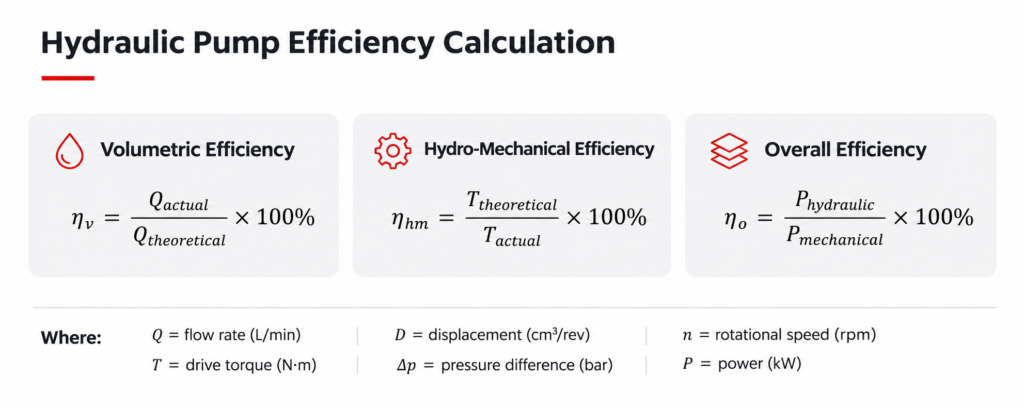
The three efficiency measurements provide different insights into pump performance. The following formulas use commonly applied metric units.
A. Volumetric Efficiency
Volumetric efficiency compares actual pump delivery with theoretical flow.
Formula:
ηv = (Qactual / Qtheoretical) × 100%
The theoretical flow rate is calculated as:
Qtheoretical = (D × n) / 1000
Wo:
- D = Pump displacement (cm³/rev)
- n = Rotational speed (rpm)
- Qactual = Measured output flow (L/min)
For example, if a pump has a displacement of 50 cm³/rev and operates at 1,500 rpm, its theoretical flow is 75 L/min. If the measured flow is 69 L/min, its volumetric efficiency is 92%.
B. Hydro-Mechanical Efficiency
Hydro-mechanical efficiency evaluates the effect of mechanical losses during pump operation.
Formula:
ηhm = (Ttheoretical / Tactual) × 100%
Wo:
- Ttheoretical = Theoretical driving torque (N·m)
- Tactual = Measured shaft input torque (N·m)
The theoretical torque can be calculated as:
Ttheoretical = (Δp × D) / 62.83
Where Δp is the pressure difference across the pump in bar and D is displacement in cm³/rev.
C. Overall Efficiency
Overall efficiency evaluates the complete energy conversion process.
Formula:
ηoverall = (Phydraulic / Pmechanical) × 100%
Hydraulic output power:
Phydraulic (kW) = (Δp × Qactual) / 600
Mechanical input power:
Pmechanical (kW) = (Tactual × n) / 9550
Wo:
- Δp = Pressure difference across the pump (bar)
- Qactual = Actual flow rate (L/min)
- Tactual = Shaft input torque (N·m)
- n = Rotational speed (rpm)
These calculations should use measurements from the same stabilized operating point.
How to Perform Hydraulic Pump Efficiency Testing
A hydraulic pump test bench provides controlled operating conditions for collecting the measurements needed to evaluate pump efficiency.
The general testing process includes:
Step 1: Prepare the Pump
Confirm pump displacement, rated speed, pressure limits, and recommended hydraulic fluid. Check the pump installation and measuring instruments.
Step 2: Establish Stable Operating Conditions
Start the pump under approved low-load conditions. Allow the hydraulic oil temperature to stabilize and check for abnormal noise, vibration, and leakage.
Step 3: Measure Pressure and Flow
Operate the pump at specified speeds and pressure points. Record inlet pressure, outlet pressure, and actual flow rate at each test condition.
Step 4: Measure Torque and Speed
Use appropriate measuring instruments to record shaft input torque and rotational speed. These values are necessary for evaluating hydro-mechanical and overall efficiency.
Step 5: Calculate and Record Efficiency
Calculate the three efficiency values using measurements from corresponding operating points. Record the results and compare them with the manufacturer’s performance data or agreed acceptance requirements.
For a more detailed explanation of the testing sequence, see our guide on [How to Test a Hydraulic Pump with a Test Bench].
What Factors Affect Hydraulic Pump Efficiency?
Pump efficiency can change with operating conditions, component condition, and fluid properties.
| Factor | Possible Effect on Efficiency |
|---|---|
| Internal Leakage | Reduces actual output flow |
| Betriebsdruck | Higher pressure can increase internal losses |
| Oil Temperature | Changes fluid viscosity and leakage characteristics |
| Fluid Viscosity | Affects lubrication and internal leakage |
| Pump Wear | Can increase leakage and mechanical losses |
| Rotational Speed | Influences flow, losses, and operating conditions |
| Inlet Conditions | Poor inlet conditions can cause cavitation or aeration |
These factors should be considered when comparing test results. A difference in oil temperature, pressure, or rotational speed can affect the measured efficiency even when the pump itself has not changed.
How to Evaluate Hydraulic Pump Test Results
Efficiency values should not be evaluated in isolation. Engineers should compare the results with the pump manufacturer’s specifications or agreed project requirements under equivalent operating conditions.
A useful evaluation includes:
- Volumetric Efficiency: Check whether actual flow meets the expected performance requirements.
- Hydro-Mechanical Efficiency: Evaluate mechanical losses based on measured shaft torque.
- Overall Efficiency: Assess the complete conversion of mechanical input power into hydraulic output power.
- Performance Consistency: Compare measurements across different pressure and speed points.
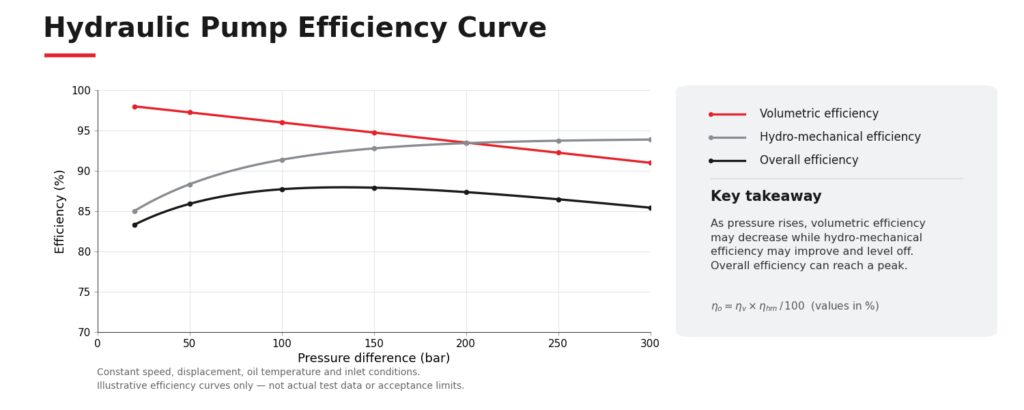
A performance curve can also help identify how efficiency changes as operating pressure increases. This provides a clearer picture of pump behavior across its working range.
ISO 4409:2019 provides an international reference for testing and presenting the steady-state performance of positive-displacement hydraulic pumps and motors.
Hydraulic Pump Efficiency Testing Solutions from AISOAR
Accurate pump efficiency testing requires suitable measurement instruments, controlled hydraulic loading, and reliable data recording.
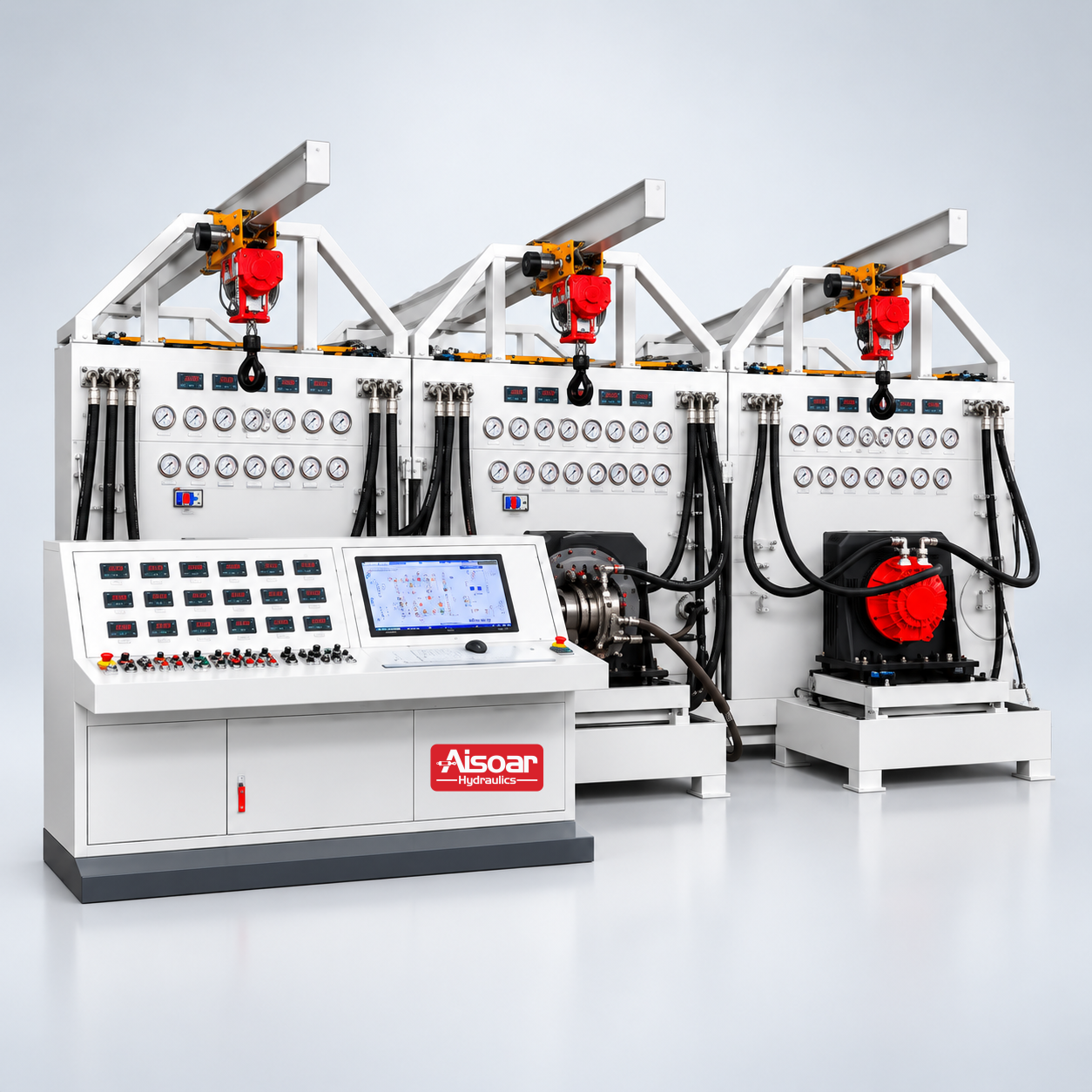
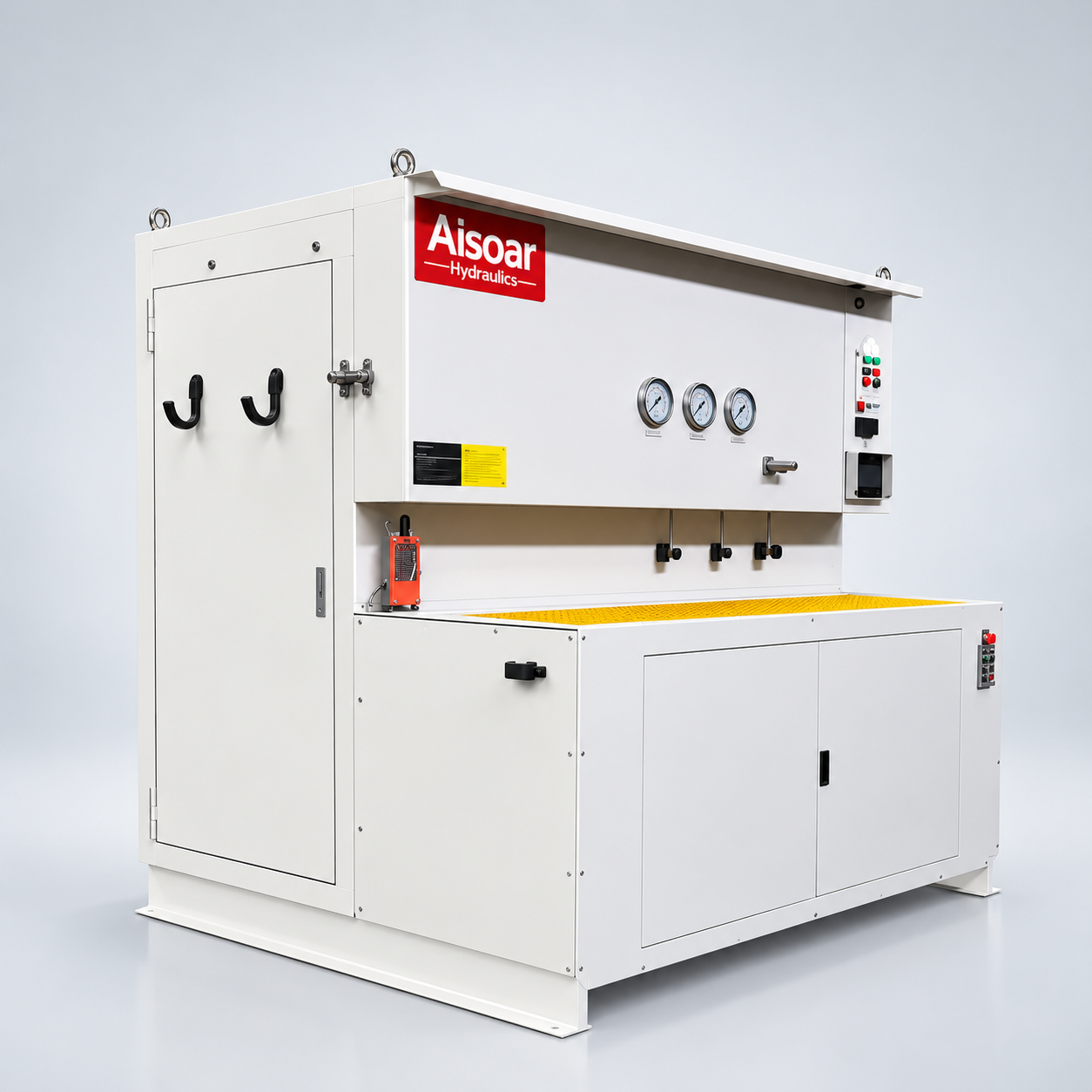
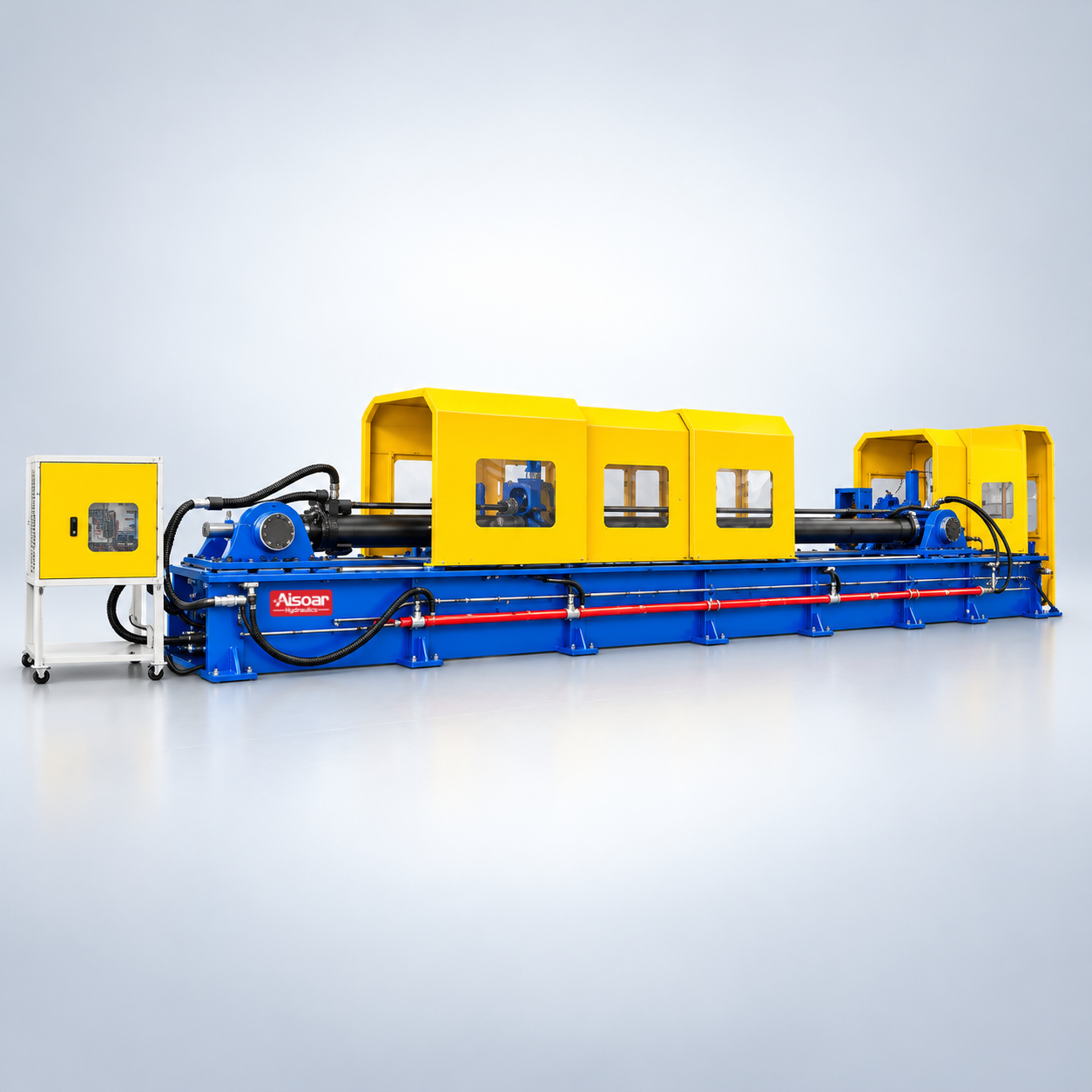
AISOAR designs customized Hydraulic Pump & Motor Test Benches for manufacturers, repair workshops, and industrial maintenance facilities.
Depending on the application, test bench configurations can include pressure and flow measurement, variable-speed drive, torque measurement, hydraulic loading, temperature monitoring, and data acquisition.
Looking for a hydraulic pump test bench for performance and efficiency evaluation? Contact AISOAR with your pump specifications, required testing pressure, flow range, rotational speed, and measurement requirements. Our engineering team can help develop a suitable testing solution for your application.