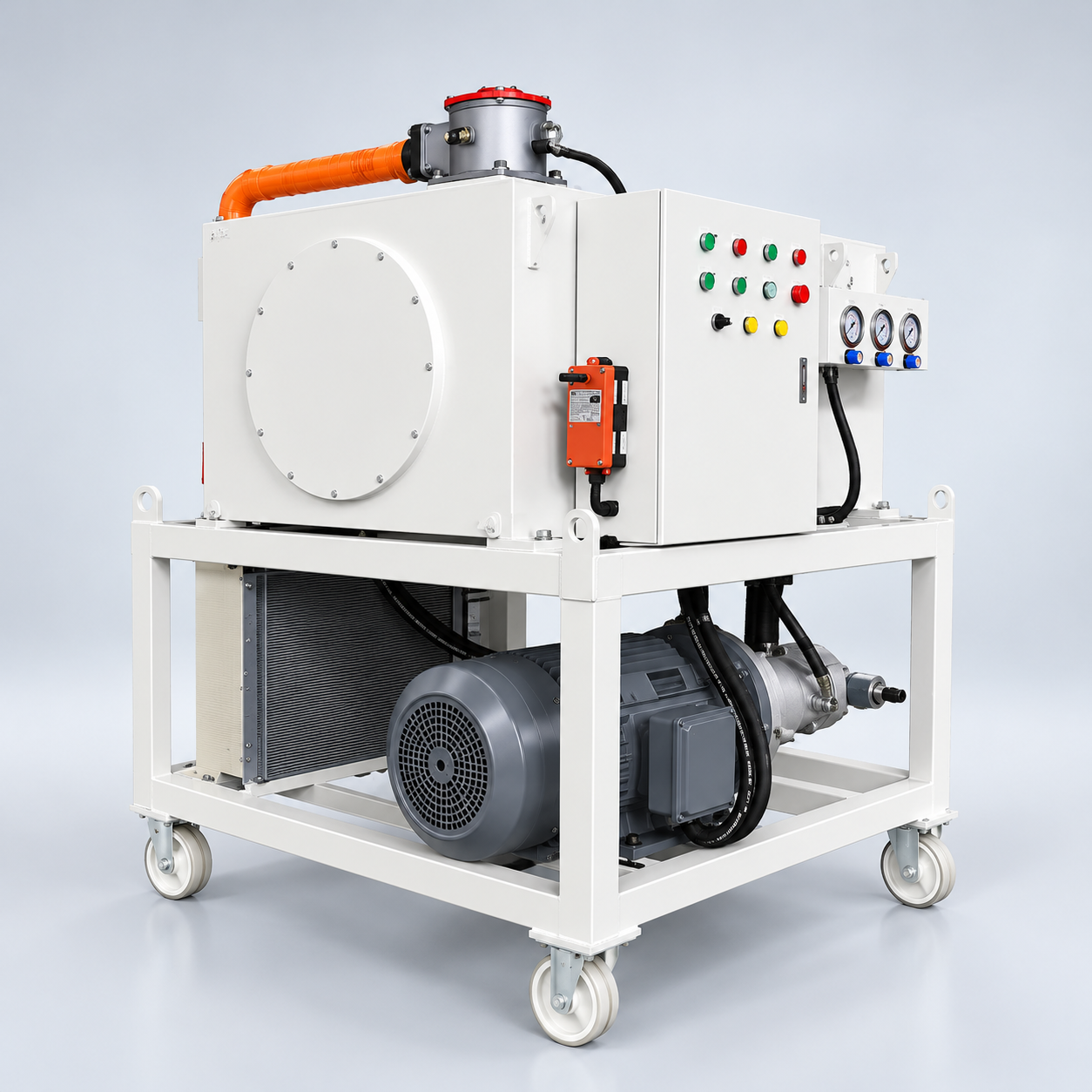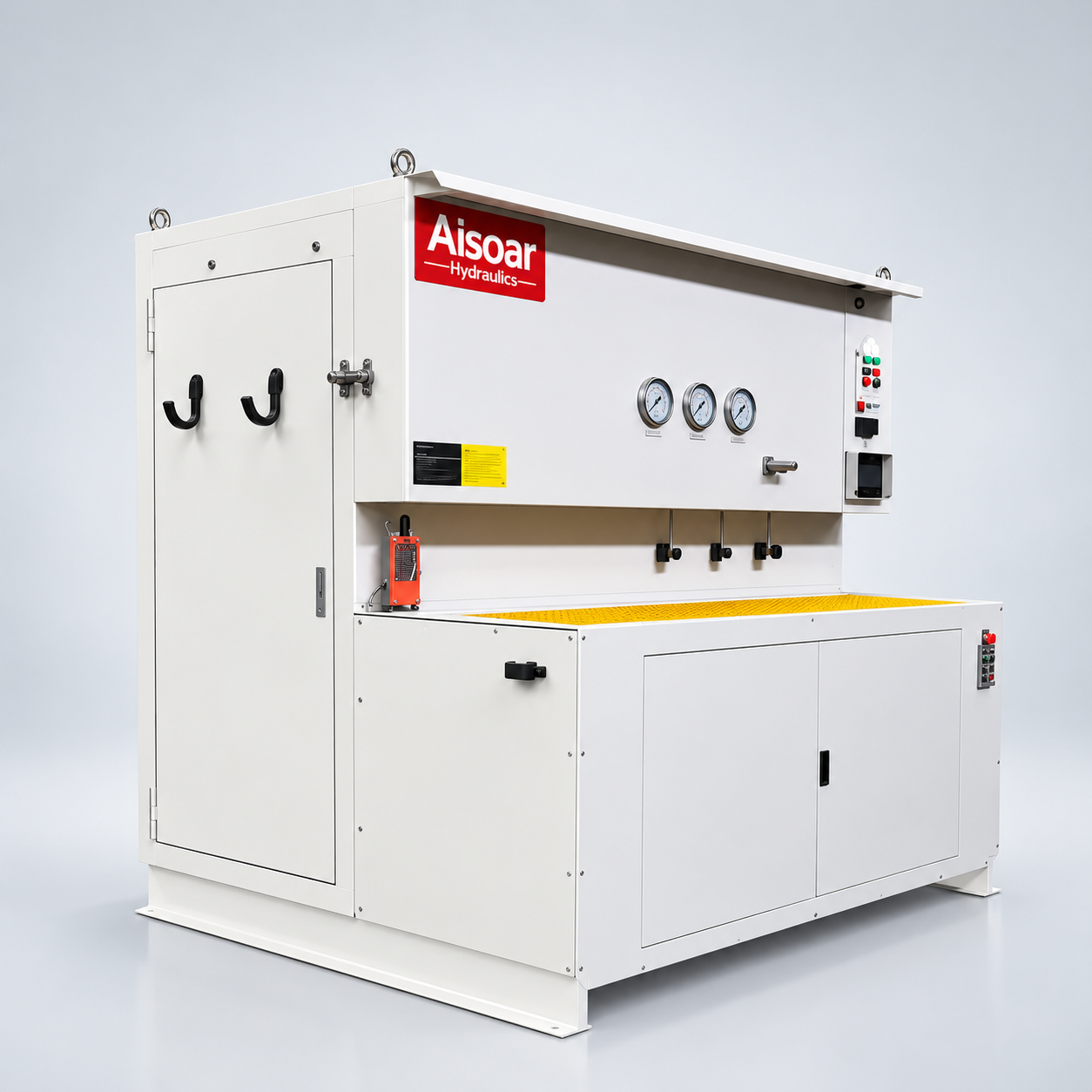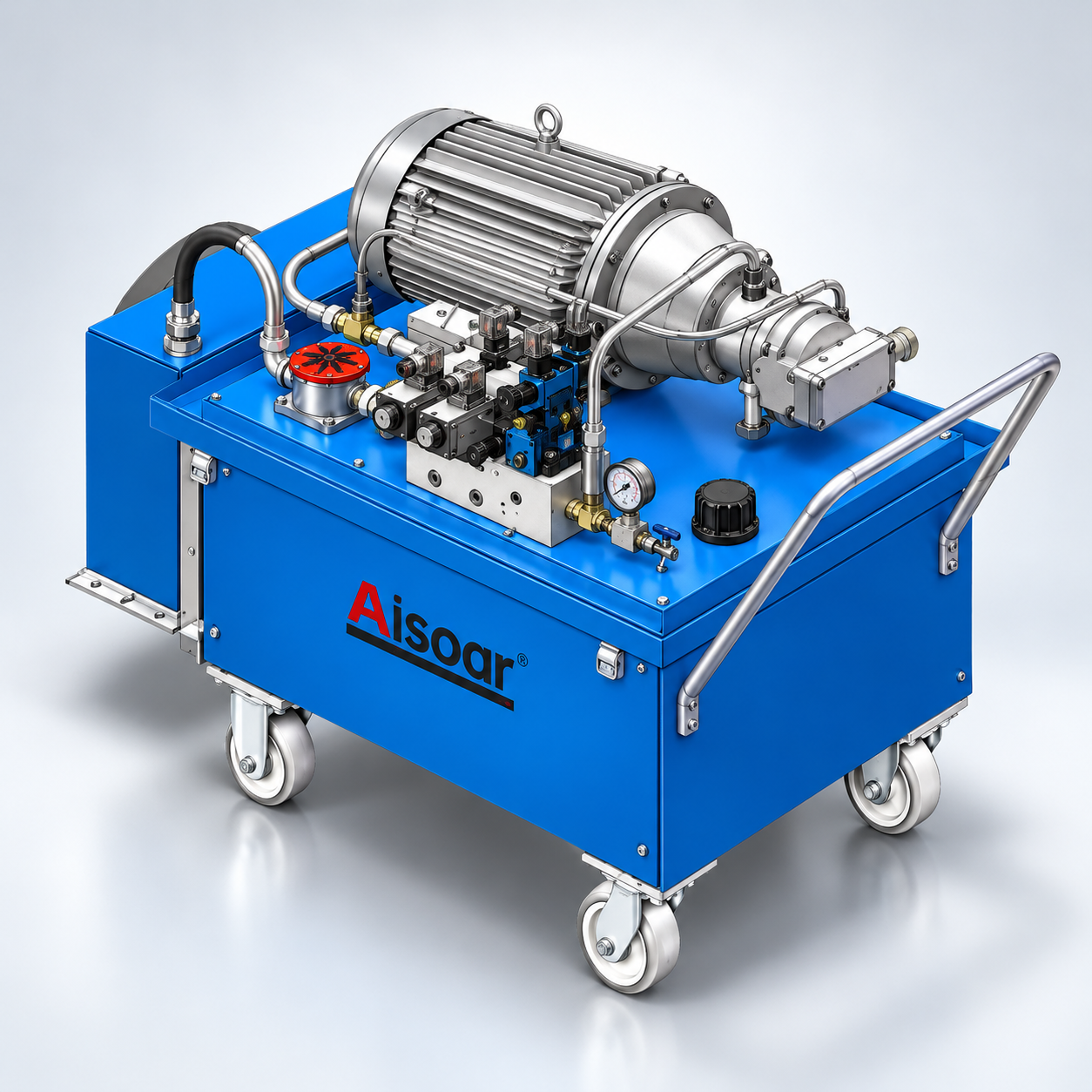
Hydraulic cylinder leakage can lead to pressure loss, cylinder drift, reduced output force, and unstable movement. To test hydraulic cylinder leakage, a test bench applies controlled hydraulic pressure and measures external oil leakage, pressure stability, and internal oil bypass under specified testing conditions.
Unlike testing directly on a machine, a hydraulic cylinder test bench isolates the cylinder from other hydraulic components. This helps manufacturers and repair workshops determine whether leakage originates from the cylinder itself before delivery or reinstallation.
Internal vs. External Hydraulic Cylinder Leakage
Hydraulic cylinder leakage can be divided into two main types: external leakage and internal leakage. Although both can affect cylinder performance, they occur in different locations and require different detection methods.
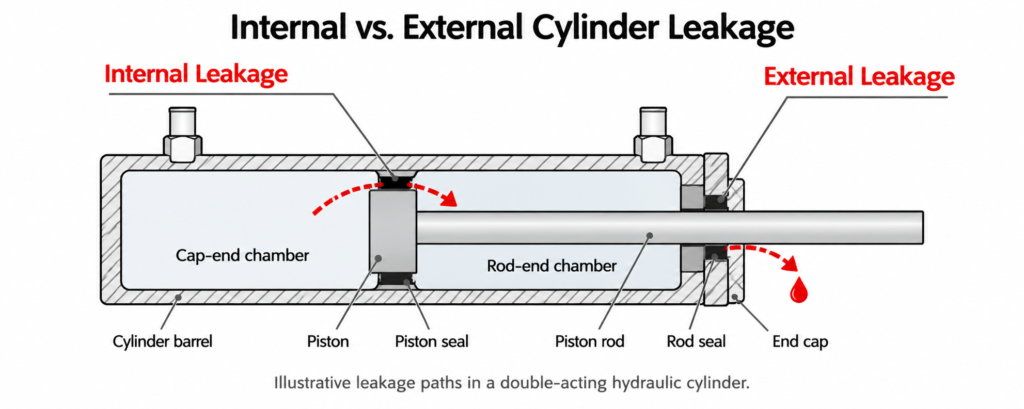
Fugas externas occurs when hydraulic oil escapes from the cylinder through rod seals, ports, end caps, welded joints, or other sealing areas. Fuga interna, also known as piston bypass in double-acting cylinders, occurs when oil passes across the piston seal from one chamber to another without escaping outside the cylinder.
| Característica | External Leakage | Internal Leakage |
|---|---|---|
| Leakage Location | Rod seals, ports, joints and welds | Across the piston seal |
| Visible Oil Leakage | Usually visible | Usually not visible |
| Common Symptoms | Visible oil loss | Cylinder drift, reduced force |
| Detection Method | Visual inspection | Bypass flow measurement |
| Possible Causes | Seal damage, loose fittings, damaged sealing surfaces | Piston seal damage, cylinder barrel wear |
How to Test Hydraulic Cylinder Leakage
Step 1: Test Preparation
Before testing, clean and inspect the cylinder, confirm its dimensions and specified test pressure, and select suitable mounting fixtures. The cylinder must be securely supported, and all hoses, fittings, and measuring instruments must be rated for the required test conditions.
Low-pressure cycling helps remove trapped air and verify basic cylinder movement. Proper guarding and safe operating procedures are essential, and hydraulic connections must never be loosened while the circuit is pressurized.
Step 2: External Leakage Inspection
During the specified pressure and movement tests, inspect the rod seal, port connections, end caps, welded joints, and other sealing areas from a safe position. Any visible oil leakage should be evaluated according to the applicable acceptance criteria.
Common causes of external leakage include damaged seals, scratched piston rods, incorrect seal installation, and damaged connection surfaces. Never use hands to locate a suspected high-pressure oil leak.
Step 3: Pressure Holding Test
A pressure holding test evaluates whether the cylinder can maintain pressure over a specified period. Pressure sensors or gauges monitor pressure variations under defined test conditions.
However, pressure decay does not necessarily indicate internal cylinder leakage. Oil temperature changes, trapped air, and leakage within the test circuit can also influence the results. Pressure holding should therefore be evaluated together with other leakage measurements.
Step 4: Internal Leakage or Piston Bypass Test
Internal leakage testing evaluates whether hydraulic oil passes across the piston seal inside a double-acting cylinder. A suitably configured test bench establishes a pressure differential between the cylinder chambers and measures bypass flow through a dedicated leakage measurement circuit.
The measurement should be evaluated after transient flow has stabilized. Test pressure, piston position, oil temperature, and measuring accuracy must be considered, particularly when detecting small leakage rates.
Step 5: Record the Test Results
After completing the test and safely depressurizing the system, record the test conditions, measured leakage, pressure variations, and inspection results. PLC-controlled and software-assisted test benches can also store test curves and generate reports when configured with these functions.
These records support production quality control, repair verification, customer acceptance, and product traceability.
How to Evaluate Hydraulic Cylinder Leakage Test Results
Leakage test results should be evaluated against the cylinder specifications, applicable standards, and agreed acceptance requirements. A single pressure drop or leakage rate should not be used as a universal acceptance limit for every hydraulic cylinder.
| Test Parameter | Unidad | Criterios de evaluación |
|---|---|---|
| Presión de prueba | bar / MPa | Specified test pressure |
| Holding Time | s / min | Required test duration |
| Pressure Drop | bar / MPa | Allowable pressure variation |
| Internal Leakage | mL/min | Specified leakage limit |
| External Leakage | Visual | Applicable acceptance criteria |
| Oil Temperature | °C | Specified test conditions |
| Final Result | PASS / FAIL | All required acceptance criteria |
Common Leakage Symptoms and Possible Causes
Hydraulic cylinder leakage may produce different symptoms during operation. However, similar symptoms can also result from valve leakage, insufficient supply pressure, trapped air, or other hydraulic circuit problems.
| Symptom | Causa Posible | Recommended Test |
|---|---|---|
| Oil around the piston rod | Rod seal or rod surface damage | External leakage test |
| Oil around the ports | Connection or sealing problems | External leakage test |
| Cylinder drift | Piston bypass or valve leakage | Internal leakage test and circuit isolation |
| Pressure decay | Leakage or temperature variation | Prueba de mantenimiento de presión |
| Reduced output force | Internal leakage or insufficient pressure | Bypass and pressure testing |
| Unstable movement | Trapped air, friction or circuit problems | Functional testing |
Testing the cylinder separately helps narrow down the possible causes and reduces unnecessary component replacement.
AISOAR Hydraulic Cylinder Leakage Test Bench Solutions
AISOAR Hydraulics provides standard and customized hydraulic cylinder test benches for manufacturing, repair workshops, and industrial maintenance applications. Depending on the required testing procedures, our equipment can incorporate pressure holding, external leakage inspection, internal leakage measurement, cylinder movement testing, and automatic test report generation.
Nuestras Banco de Pruebas de Cilindros Hidráulicos Integrados Series can be configured according to cylinder bore, stroke, weight, test pressure, measurement accuracy, and automation requirements.
Looking for a reliable hydraulic cylinder leakage testing solution? Share your cylinder specifications and leakage testing requirements with AISOAR. Our engineering team can help configure a suitable test bench for your application.