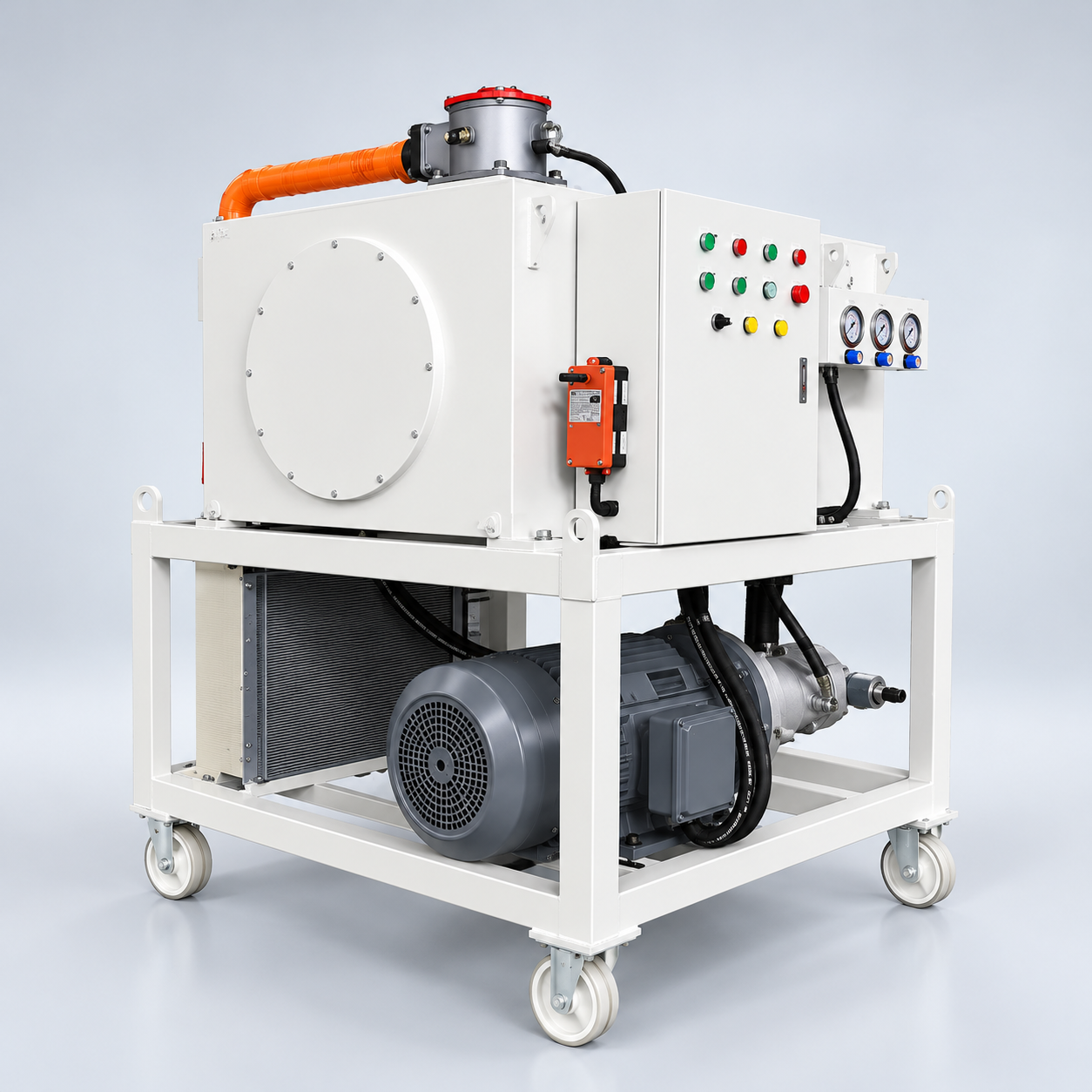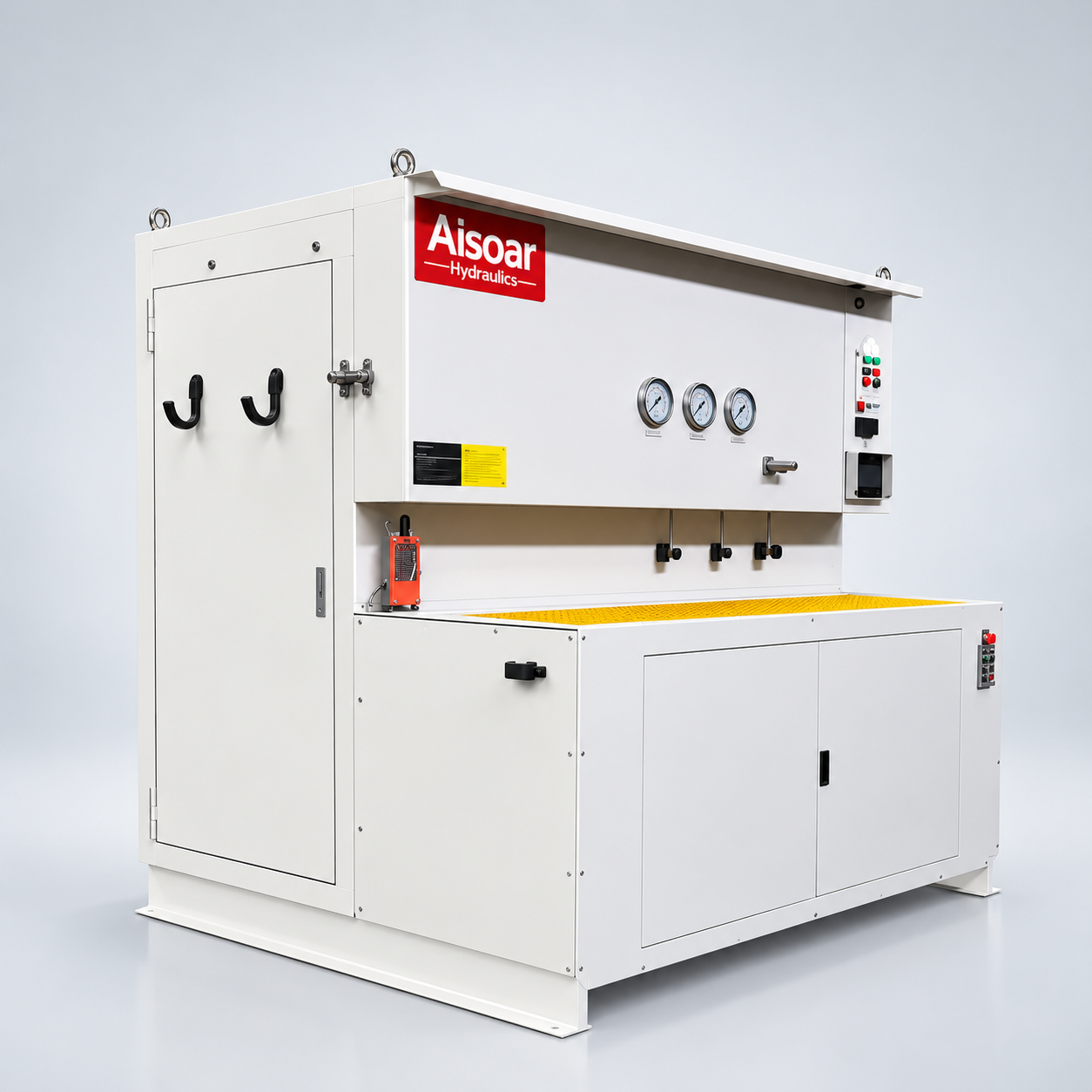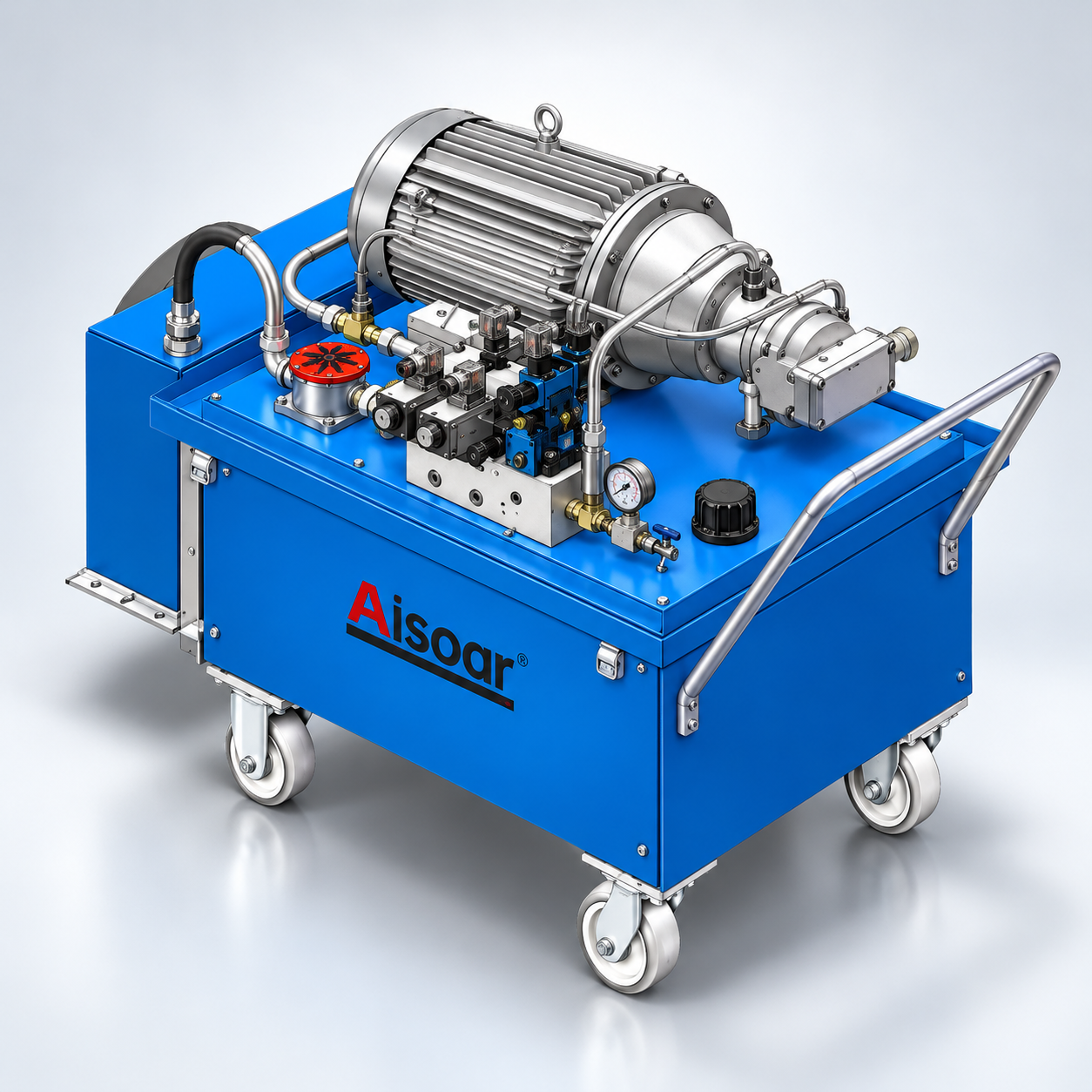
A hydraulic test bench is a specialized testing system used to inspect and evaluate the performance of hydraulic components and complete hydraulic systems. By providing controlled pressure, flow, and load conditions, it helps verify whether hydraulic products meet their required operating specifications before delivery, after repair, or during product development.
Hydraulic test benches are widely used by manufacturers, repair workshops, and equipment owners. They help identify problems such as internal leakage, unstable movement, insufficient pressure, and poor performance, reducing the risk of unexpected failures after installation.
¿Cómo funciona un banco de pruebas hidráulico?
A hydraulic test bench uses a hydraulic power unit to supply oil at a controlled pressure and flow rate. The component being tested is connected to the test circuit through hydraulic hoses, quick couplings, manifolds, or customized fixtures. During operation, the system applies the required testing conditions while measuring parameters such as pressure, flow, temperature, leakage, and movement.
A typical test bench consists of a hydraulic power unit, control valves, measuring instruments, mechanical fixtures, and a control system. Depending on the application, cooling and filtration units can also be included to maintain oil temperature and cleanliness during testing.
The testing process generally involves connecting the component, setting the required parameters, running the test procedure, and evaluating the measured results. For example, a hydraulic cylinder may undergo extension and retraction testing, pressure holding, and leakage inspection, while a hydraulic pump requires flow and pressure performance measurements.
¿Qué puede probar un banco de pruebas hidráulico?
Hydraulic test benches can be designed for individual components or configured as multi-purpose testing systems. The required testing functions depend on the component type, operating conditions, and inspection requirements.
| Test Object | Funciones de Prueba Típicas |
|---|---|
| Cilindros hidráulicos | Pressure, leakage, pressure holding, and movement |
| Hydraulic Pumps | Flow, pressure, speed, and volumetric efficiency |
| Hydraulic Motors | Speed, torque, and performance |
| Válvulas Hidráulicas | Pressure control, directional switching, and leakage |
| Unidades de potencia hidráulica | Pressure, flow, temperature, and functional testing |
| Complete Hydraulic Systems | System performance and functional verification |
For hydraulic cylinders, testing may also include stroke verification, cushioning performance, and synchronization of multiple cylinders. Pump and motor testing focuses more on flow output, operating pressure, speed, torque, and performance under load. For valves and complete hydraulic systems, the inspection may cover pressure regulation, directional control, leakage, and overall functional stability.
¿Por qué es importante un banco de pruebas hidráulico?
Hydraulic components often operate under high pressure and heavy loads, so problems that are not visible during a visual inspection can affect equipment performance and safety. A hydraulic test bench provides controlled testing conditions to identify potential issues before products are installed or returned to service.
For manufacturers, it supports quality inspection before shipment and helps maintain consistent product performance. Repair workshops use testing equipment to verify whether repaired components operate correctly, while OEM manufacturers rely on testing to validate hydraulic designs and system performance during product development.
By checking components under defined testing conditions, manufacturers and service providers can reduce the risk of repeated failures, unexpected downtime, and costly after-sales problems. Test data and inspection records can also support quality documentation and product traceability when the system is configured with data recording functions.
How to Choose the Right Hydraulic Test Bench?
Selecting a suitable hydraulic test bench starts with identifying the components to be tested and the procedures they need to undergo. Different products require different hydraulic circuits, measuring instruments, mechanical fixtures, and safety arrangements, so the equipment should be configured around the actual application rather than pressure requirements alone.
Before selecting a system, buyers should consider the required test pressure and flow rate, component dimensions and weight, testing functions, and installation space. Automation is another important factor: manual systems are suitable for simpler testing tasks, while PLC-controlled and software-assisted systems can support programmed test sequences, automatic monitoring, data recording, and report generation.
Standard test benches can meet common testing requirements, while customized systems offer greater flexibility for special pressure ranges, large cylinders, different hydraulic connections, and multiple testing procedures. For more detailed guidance, see our article: How to Choose the Right Type of Hydraulic Test Bench.
AISOAR Hydraulic Test Bench Solutions
AISOAR Hydraulics provides standard and customized hydraulic test bench solutions for cylinders, pumps, valves, motors, hydraulic power units, and complete hydraulic systems. Based on the customer’s application, our engineering team can configure the required pressure range, flow rate, testing circuits, mechanical fixtures, control methods, measurement systems, and safety functions.
Our product range includes compact testing machines for maintenance applications, integrated test benches for regular and production testing, and heavy-duty solutions for medium and large hydraulic cylinders. Different configurations can also incorporate cooling, filtration, PLC control, data recording, and test report functions according to project requirements.
Explore our hydraulic testing equipment:
- Máquina de Pruebas Hidráulicas OEM
- Banco de Pruebas de Cilindros Hidráulicos Integrados Series
- Estación de Pruebas de Cilindro Hidráulico Integrado y de Alta Resistencia
Looking for a hydraulic test bench for your application?
Contact AISOAR to discuss your testing requirements, including component specifications, pressure, flow rate, and required test functions. Our team can help evaluate your needs and develop a suitable hydraulic testing solution.
Preguntas frecuentes
What Is the Main Purpose of a Hydraulic Test Bench?
A hydraulic test bench verifies the performance, functionality, and reliability of hydraulic components under controlled testing conditions. It helps identify leakage, pressure problems, unstable movement, and other potential issues before installation or delivery.
Can One Hydraulic Test Bench Test Different Components?
Yes, a properly configured multi-purpose test bench can support different hydraulic components through suitable test circuits, connections, fixtures, and measuring instruments. However, the testing range and functions depend on the equipment configuration and the requirements of each component.
What Information Is Needed to Customize a Hydraulic Test Bench?
The main information includes the test object, required pressure and flow rate, component dimensions, testing procedures, and automation requirements. Drawings, hydraulic schematics, and details of the expected test reports can also help engineers develop a more suitable configuration.