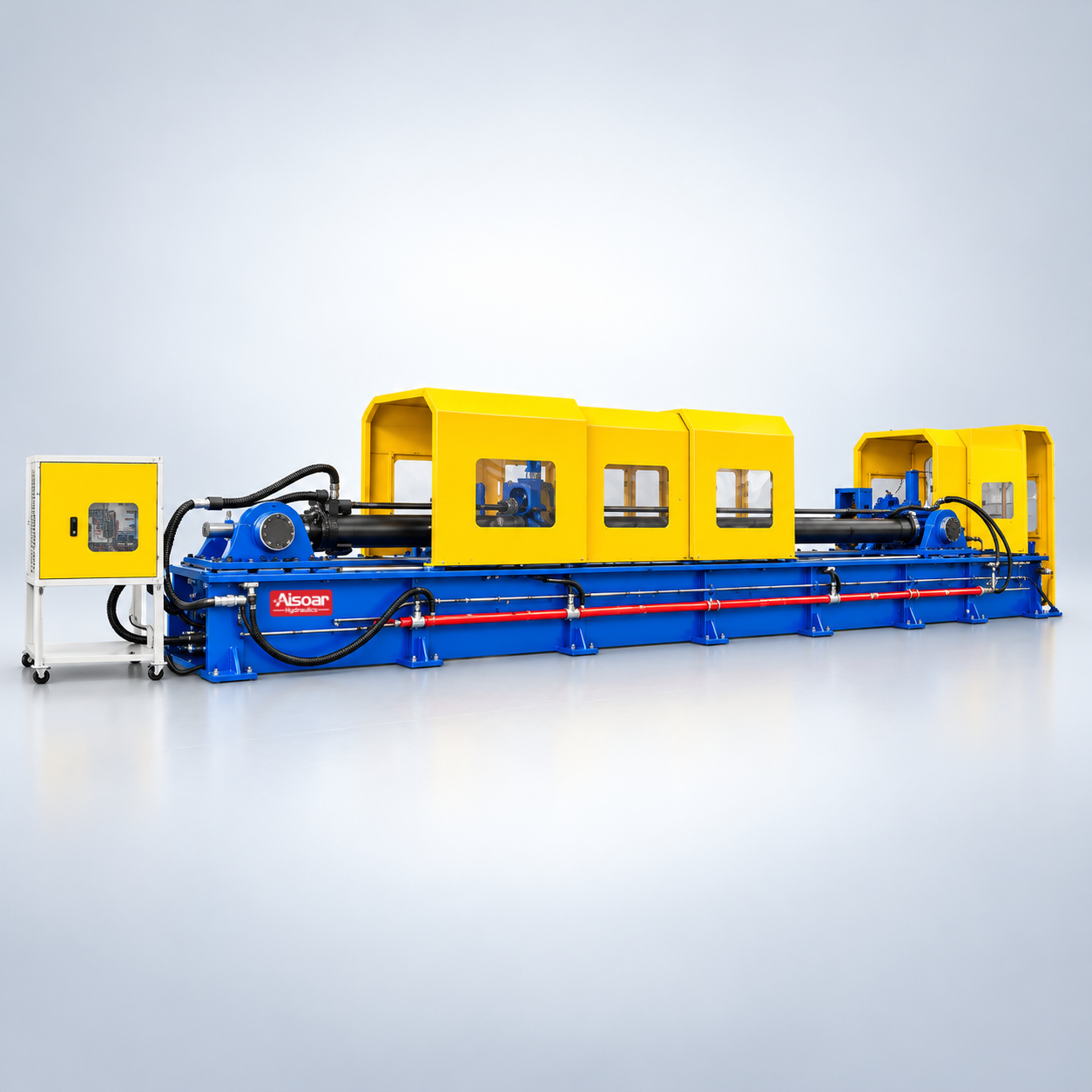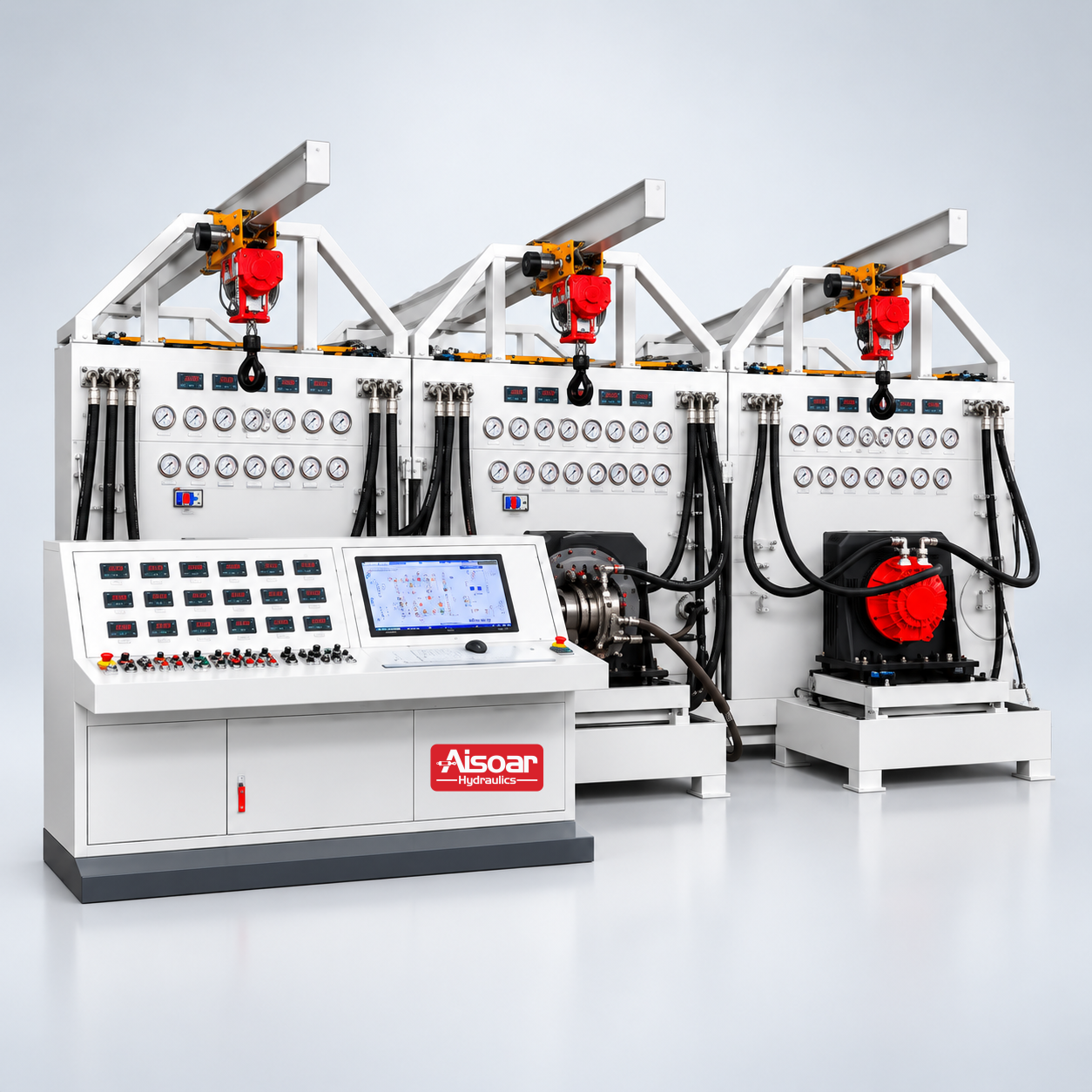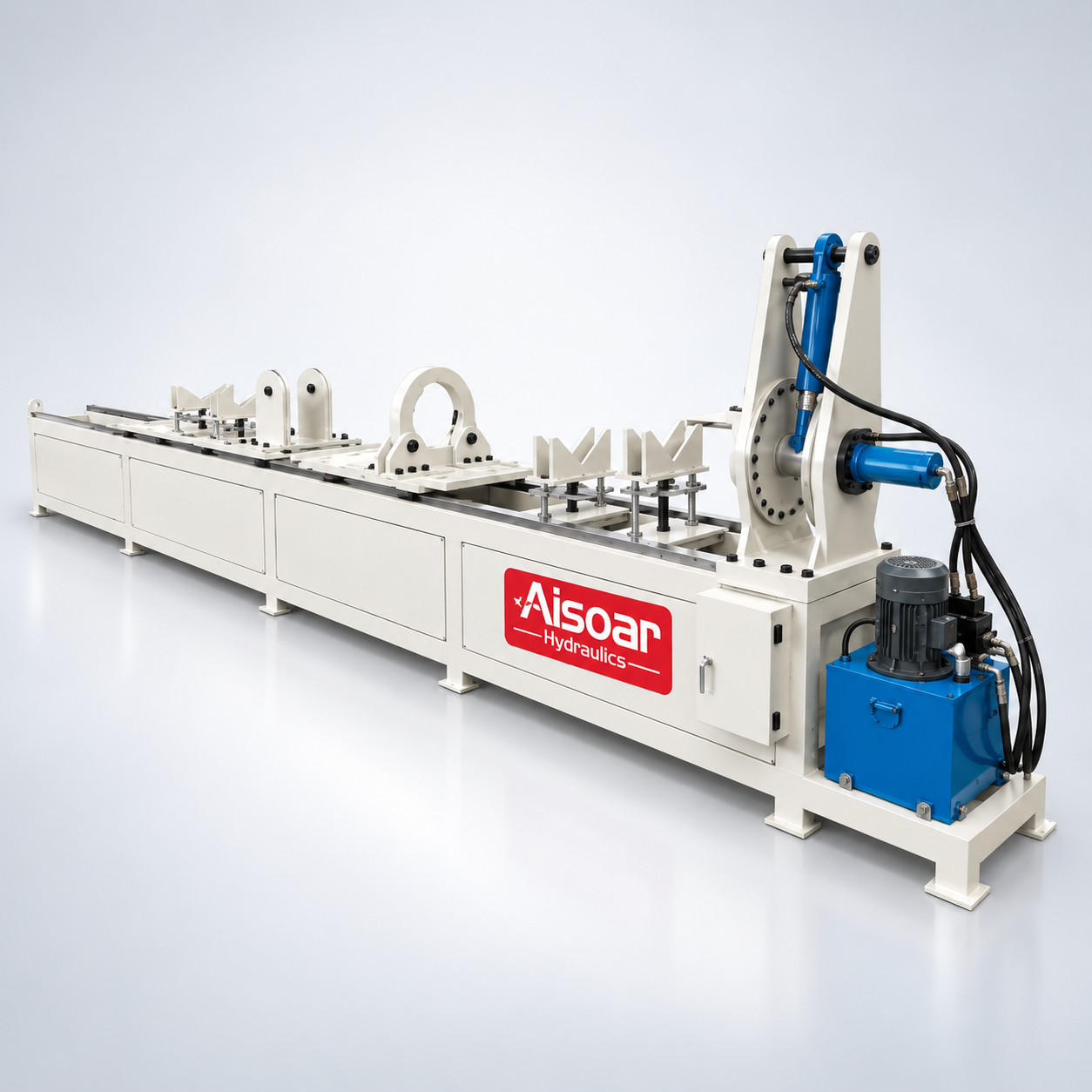
A hydraulic pump test bench is a specialized testing system designed to evaluate hydraulic pump performance under controlled operating conditions. Its main functions include pressure and flow testing, speed and torque measurement, efficiency evaluation, and, where applicable, case drain flow measurement.
Hydraulic pump manufacturers, repair workshops, and maintenance centers use test benches to verify pump performance before delivery, after repair, or before installation. Testing helps identify insufficient flow, excessive internal leakage, abnormal operating conditions, and reduced efficiency.
Bagaimana Cara Hydraulic Pump Test Bench Work?
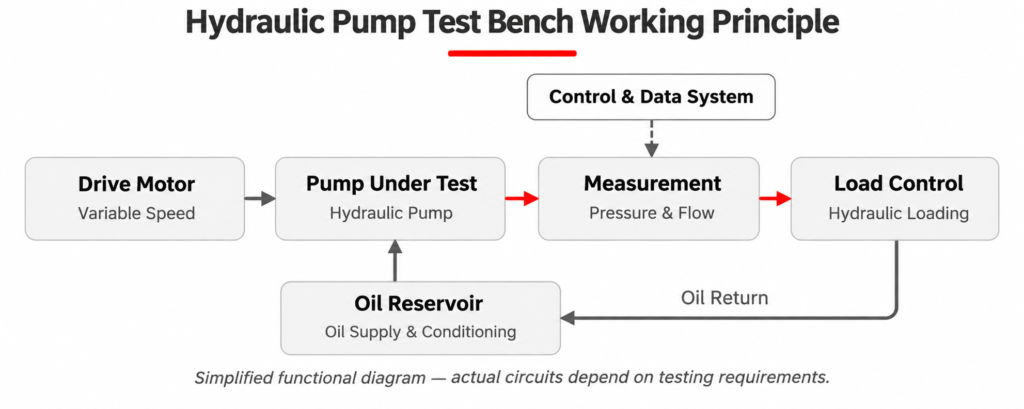
Unlike a hydraulic cylinder test bench, a hydraulic pump test bench requires a mechanical drive system to operate the pump at a specified rotational speed. The pump is connected to the drive motor through a suitable coupling, while the hydraulic circuit provides oil supply and controlled loading conditions.
During testing, the loading system adjusts outlet pressure while measuring instruments monitor flow, speed, temperature, and other operating parameters. Depending on the configuration, torque sensors and case drain flow meters can also be included to evaluate input power, efficiency, and internal leakage.
Cooling and filtration systems help maintain suitable oil temperature and cleanliness, while PLC control and data acquisition systems can support repeatable testing procedures and digital test reports.
Fungsi Utama Meja Uji Pompa Hidrolik
Hydraulic pump testing involves more than checking whether a pump can generate the required pressure. A comprehensive performance evaluation considers the relationship between pressure, flow, rotational speed, input power, and operating stability.
| Fungsi Pengujian | Testing Purpose |
|---|---|
| Pengujian Laju Aliran | Measure actual pump delivery at specified speeds and pressures |
| Pengujian Tekanan | Verify pump performance under controlled outlet pressure |
| Pengujian Efisiensi | Evaluate volumetric, mechanical, and overall efficiency |
| Speed & Torque Measurement | Monitor rotational speed and determine mechanical input power |
| Pengujian Aliran Saluran Kasus | Assess internal leakage in applicable pump designs |
| Pemantauan Suhu | Maintain suitable and repeatable testing conditions |
| Noise & Vibration Observation | Identify abnormal operating conditions |
| Load Simulation | Evaluate pump performance under different loading conditions |
| Data Recording & Reporting | Document test parameters and results |
Pressure and flow testing are fundamental functions for most pump testing applications. More advanced configurations can include efficiency calculation, case drain measurement, automatic loading, and performance curve generation.
The required functions should be selected according to the pump type, testing purpose, and applicable acceptance requirements. Not every pump test bench needs to support all testing functions.
Types of Hydraulic Pumps That Can Be Tested
Hydraulic pumps differ in their internal structure, displacement control, operating pressure, and hydraulic circuit requirements. A suitable test bench must accommodate these differences to provide reliable and meaningful test results.
| Hydraulic Pump Type | Main Testing Requirements |
|---|---|
| Gear Pump | Pressure, flow, leakage, and operating noise |
| Vane Pump | Flow stability, pressure performance, and efficiency |
| Axial Piston Pump | Pressure, flow, efficiency, and case drain flow where applicable |
| Radial Piston Pump | Pressure, flow, and performance under load |
| Variable Displacement Pump | Displacement control, flow adjustment, and efficiency |
| Load-Sensing Pump | Pressure compensation and flow response |
| Closed-Loop Pump | Bidirectional performance, charge pressure, and control response where applicable |
For fixed displacement pumps, testing mainly focuses on output performance at different speeds and pressures. Variable displacement and load-sensing pumps may require additional control circuits to evaluate their adjustment mechanisms and operating response.
Open-loop and closed-loop pumps also require different test circuit configurations, making pump identification an important step when selecting testing equipment.
Aplikasi Meja Uji Pompa Hidrolik
Dalam pump manufacturing, test benches support final product inspection and help verify pressure, flow, and performance before shipment. Automated testing and digital records can also improve consistency and traceability across production batches.
For repair workshops and equipment maintenance centers, pump testing helps verify repair results and identify whether performance problems originate from the pump or other hydraulic components. This can reduce unnecessary replacement and repeated maintenance.
Hydraulic pump test benches are also used in hydraulic power unit production and OEM equipment development. Engineers can evaluate whether a pump meets the intended system requirements, including pressure, flow demand, operating speed, and control characteristics.
AISOAR Hydraulic Pump Test Bench Solutions
Selecting a hydraulic pump test bench requires consideration of pump type, displacement, maximum test pressure, flow range, rotational speed, drive power, and required testing functions. The drive system, hydraulic loading circuit, cooling capacity, and measurement instruments must be configured to match the intended operating conditions.
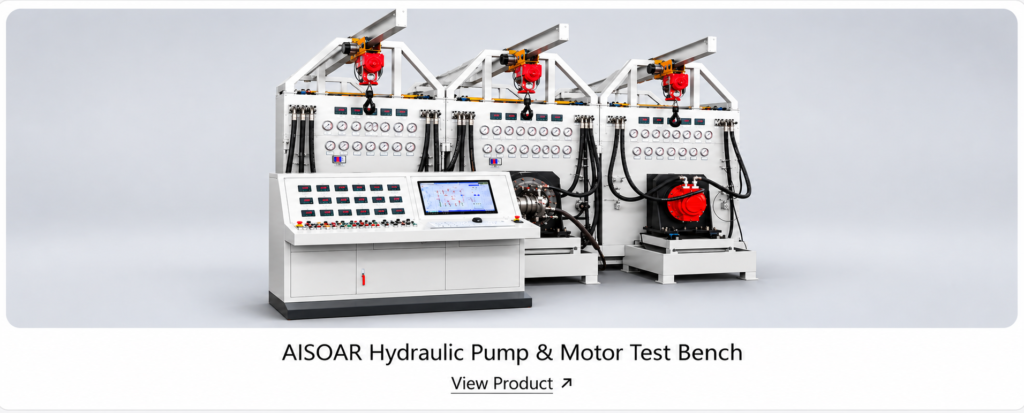
AISOAR provides customized Meja Uji Pompa dan Motor Hidraulik solutions for manufacturing, repair, maintenance, and quality inspection. Available configurations can include variable-speed drive, hydraulic loading, torque measurement, case drain flow testing, efficiency calculation, PLC control, and automatic test reporting.
Looking for a hydraulic pump test bench for your application? Share your pump specifications, required testing parameters, and test procedures with AISOAR. Our engineering team can help develop a suitable testing solution based on your actual requirements.