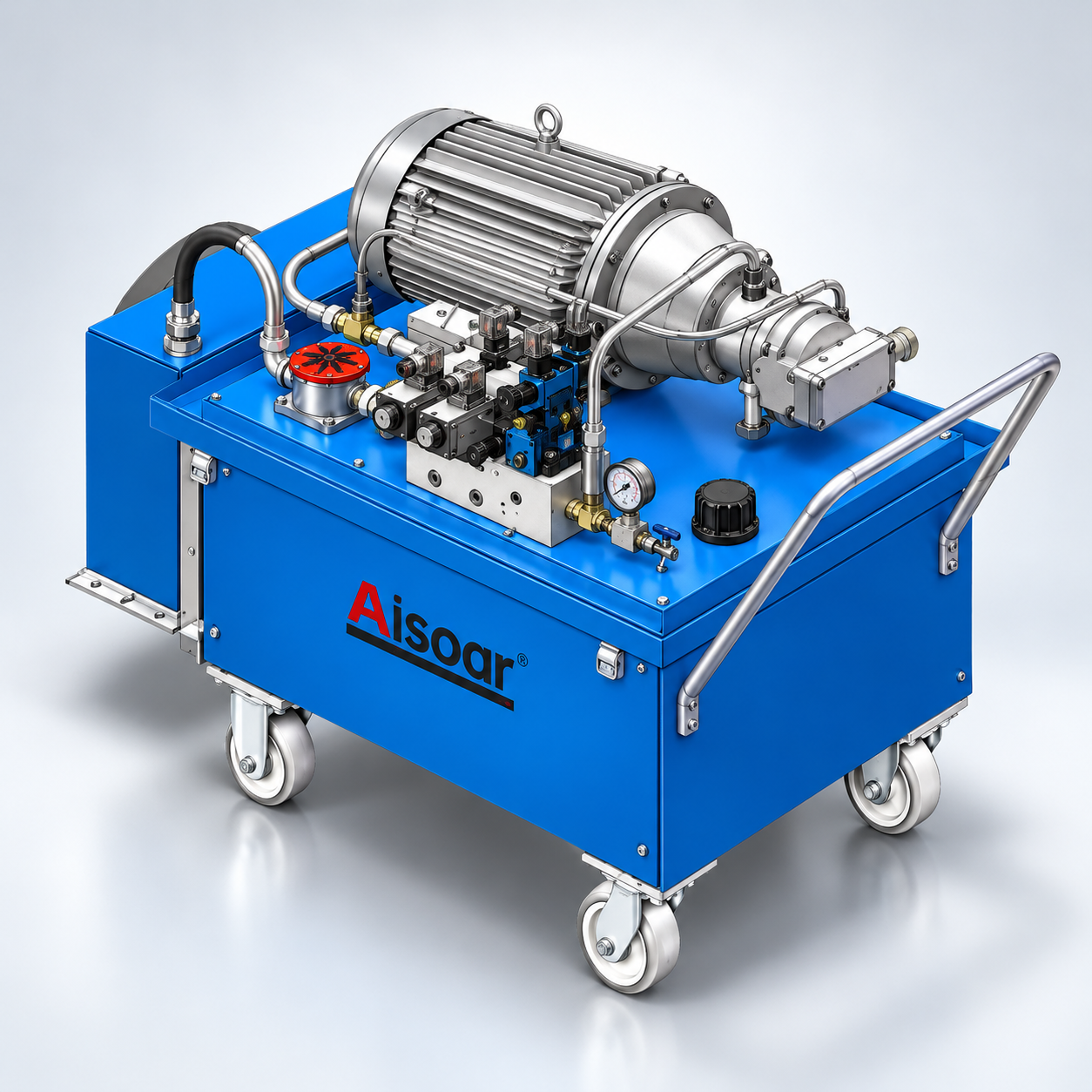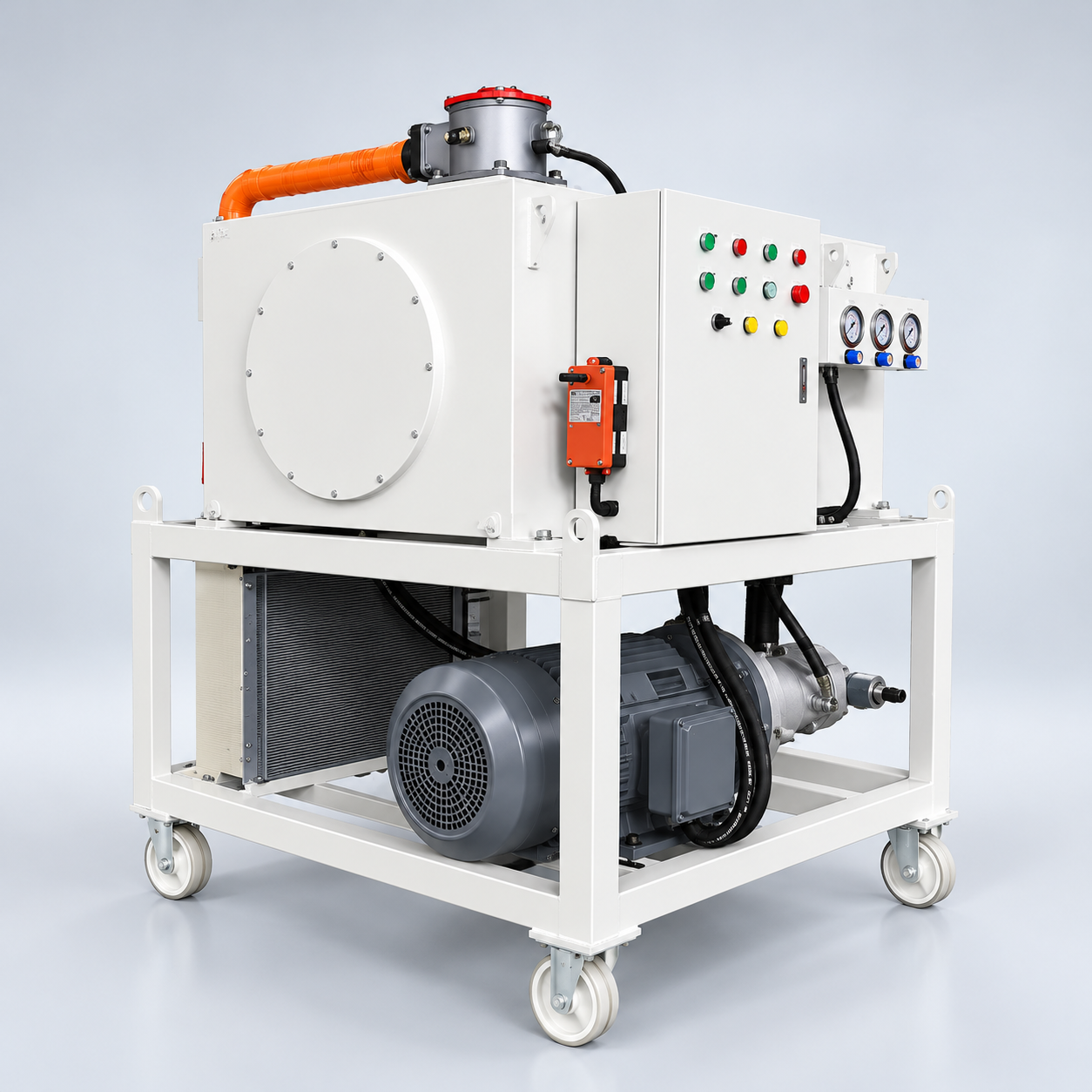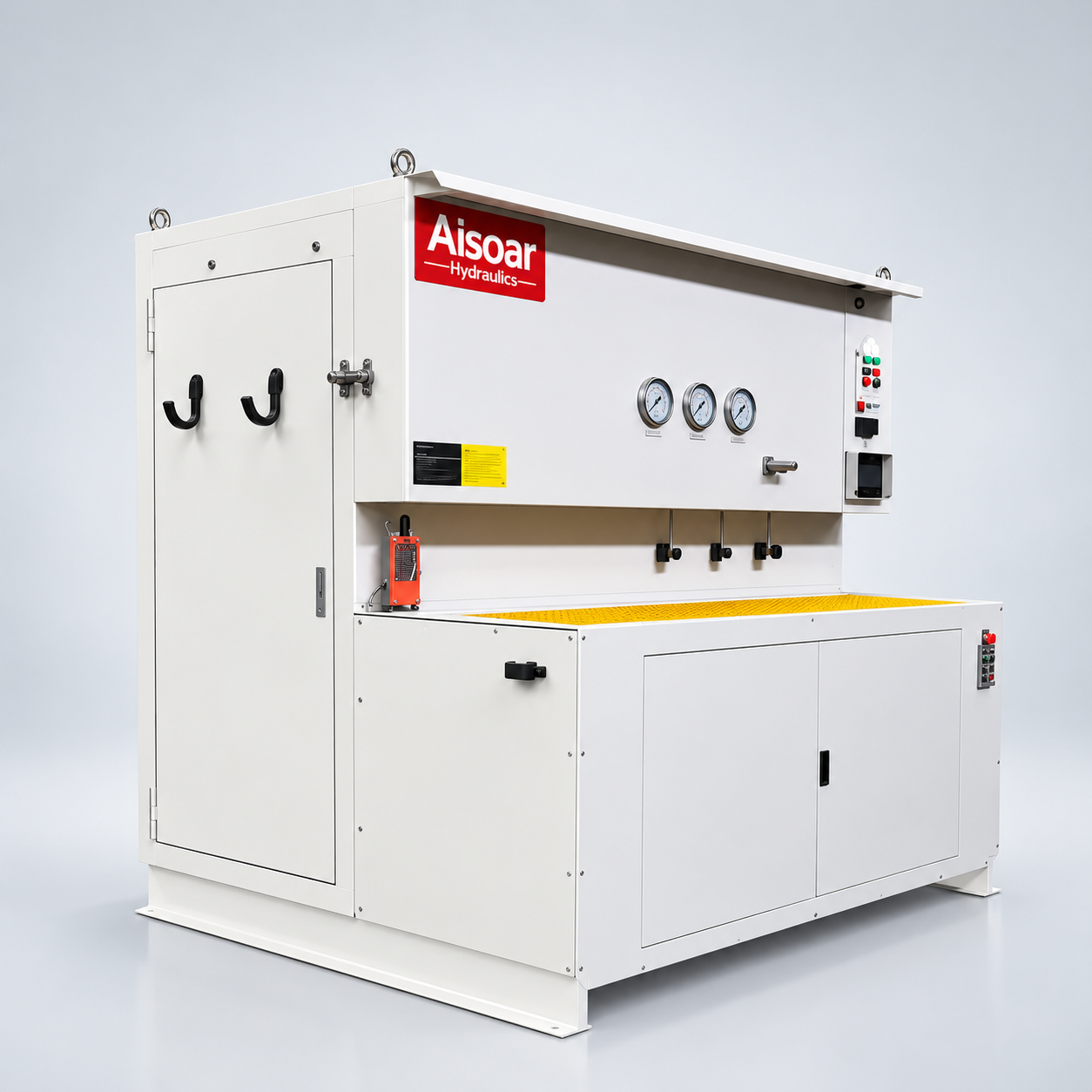
A hydraulic test bench can perform pressure testing, pressure holding, leakage testing, flow measurement, functional testing, and performance evaluation. Depending on its configuration, it can also support load simulation, temperature monitoring, oil cleanliness monitoring, and automatic test report generation.
Different hydraulic components require different testing procedures. Hydraulic cylinders mainly require pressure, leakage, and movement testing, while pumps, motors, and valves require additional measurements to evaluate their operating performance.
Pressure, Pressure Holding & Leakage Testing
Pressure and leakage testing are among the most common functions of a hydraulic test bench. Although these tests are closely related, they serve different purposes and provide different information about the condition of a hydraulic component.
| Test Type | Testing Purpose |
|---|---|
| Ensaios de pressão | Verify pressure resistance and structural integrity |
| Ensaio de manutenção da pressão | Evaluate pressure stability over a specified period |
| Teste de fuga externa | Identify oil leakage from seals, ports, welds, and connections |
| Internal Leakage Test | Measure oil leakage across internal sealing areas |
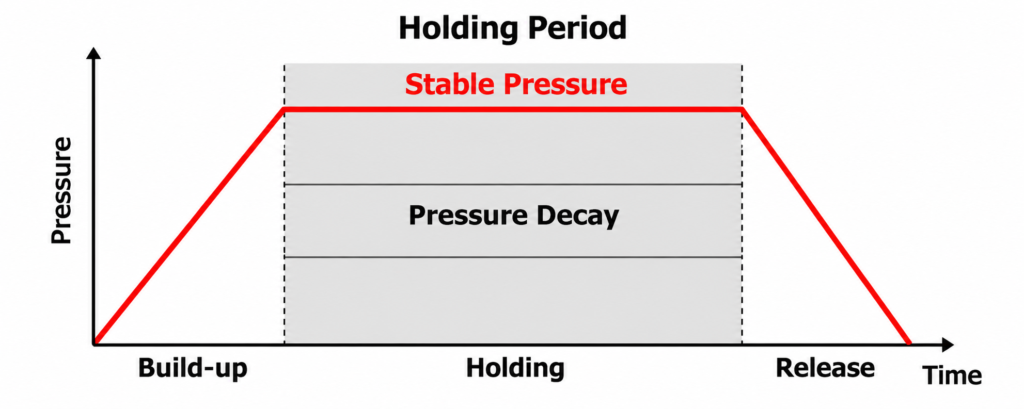
Ensaios de pressão verifies whether a component can withstand the specified test pressure, while pressure holding evaluates its ability to maintain pressure over time. However, pressure decay does not necessarily indicate internal leakage, as oil temperature changes, trapped air, and leakage within the test circuit can also affect the results.
For hydraulic cylinders, leakage testing is particularly important for evaluating piston seals, rod seals, and other sealing areas. Acceptance and functional testing can be specified with reference to ISO 10100:2020 and the applicable customer requirements.
Flow & Functional Testing
Flow testing measures how much hydraulic oil a component can deliver, control, or allow to pass under specified conditions. For hydraulic pumps, it helps evaluate output flow at different pressures and speeds. For hydraulic valves, it can verify flow capacity and pressure drop.
Functional testing focuses on whether a component operates as intended. For hydraulic cylinders, this typically includes extension and retraction, stroke verification, movement stability, and cushioning performance where applicable. Valve testing may involve directional switching, pressure adjustment, and flow control, while hydraulic power unit testing covers pump operation, valve logic, and system response.
Together, these tests help identify operating problems that may not be detected during static pressure testing.
Performance & Load Testing
Unlike basic functional testing, performance testing evaluates how well a hydraulic component operates under defined working conditions. Typical measurements include pump efficiency, motor speed and torque, cylinder output force, valve response, and operating stability.
Some hydraulic test benches can also incorporate load simulation to reproduce selected working conditions. This allows engineers to evaluate cylinder pushing and pulling force, pump performance under pressure, or motor performance under different loads.
Advanced testing functions such as force measurement, torque measurement, efficiency evaluation, and endurance testing require appropriate loading devices, sensors, mechanical fixtures, and control systems. These functions should be selected according to the actual testing requirements.
Monitoring & Data Recording
Reliable hydraulic testing requires more than pressure and flow measurements. Oil temperature and cleanliness can influence viscosity, sealing performance, component wear, and test repeatability. Depending on the application, a test bench may include cooling systems, filtration units, temperature sensors, and particle monitoring devices.
PLC-controlled and software-assisted test benches can also collect test data, display real-time curves, store historical records, and generate test reports. These functions are particularly valuable for batch production, quality inspection, customer acceptance, and product traceability.
Required Tests for Different Hydraulic Components
Not every hydraulic test bench needs to perform every test. The required testing functions should be determined by the component type, operating conditions, and applicable inspection criteria.
| Função de teste | Cilindro | Bomba | Motor | Válvula | HPU |
| Ensaios de pressão | ✓ | ✓ | ✓ | ✓ | ✓ |
| Pressure Holding | ✓ | — | — | ○ | ○ |
| Teste de estanqueidade | ✓ | ○ | ○ | ✓ | ○ |
| Flow Measurement | ○ | ✓ | ✓ | ✓ | ✓ |
| Stroke Testing | ✓ | — | — | — | — |
| Testes funcionais | ✓ | ✓ | ✓ | ✓ | ✓ |
| Testes de eficiência | — | ✓ | ✓ | — | ○ |
| Torque Measurement | — | ○ | ✓ | — | — |
| Load Simulation | ○ | ○ | ○ | ○ | ○ |
✓ Common test ○ Application-dependent — Not typically required
HPU: Hydraulic Power Unit.
Before selecting a test bench, buyers should define the required test pressure, flow rate, component dimensions, testing procedures, measurement accuracy, and data recording requirements. A well-configured system should match the actual testing application rather than simply provide the maximum number of functions.
AISOAR Hydraulic Test Bench Solutions
AISOAR Hydraulics provides standard and customized hydraulic testing solutions for manufacturing facilities, repair workshops, and industrial quality inspection.
Our hydraulic test benches can be configured for pressure testing, pressure holding, leakage inspection, functional testing, and performance verification. Depending on project requirements, additional functions such as automatic testing, oil drainage, temperature control, data acquisition, and test report generation can also be integrated.
Looking for a hydraulic test bench with specific testing functions? Share your component specifications, required test parameters, and testing procedures with AISOAR. Our engineering team can help develop a suitable testing solution based on your application.