Customizing a hydraulic power unit for your machine is not only about choosing a motor, pump, and oil tank. A suitable hydraulic power unit must match the machine’s pressure, flow, actuator size, working cycle, control method, oil temperature, installation space, and working environment.
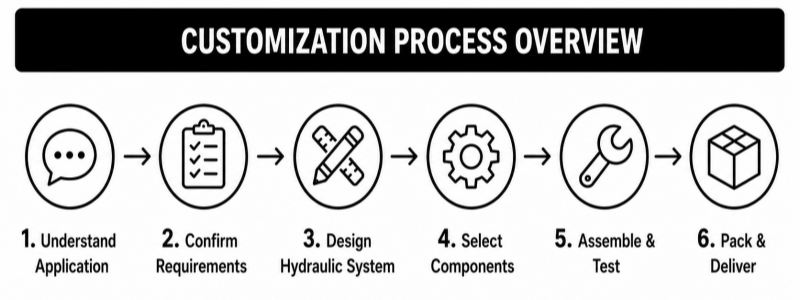
Many hydraulic problems come from incorrect power unit selection. The machine may move too slowly, fail to reach the required force, overheat during repeated operation, or have unstable pressure because the hydraulic power unit was not designed around the real application.
To customize a hydraulic power unit correctly, engineers need to understand how the machine works, what movement is required, and what hydraulic components are needed to support that movement safely and reliably.
Start with the Machine Application
Define the machine application
A hydraulic power unit for a hydraulic press is different from one used for a waste compactor, dock leveler, lifting platform, construction machine, test bench, or material handling equipment. Each machine has different requirements for pressure, flow, control, duty cycle, safety, and installation layout.
-1024x576.png)
Before designing the power unit, the manufacturer should understand:
- What machine will the HPU drive?
- What movement does the machine need?
- Is the movement lifting, pressing, pushing, tilting, clamping, or rotating?
- Is the application indoor or outdoor?
- Is the machine stationary or mobile?
- Does the machine work occasionally or continuously?
Without this basic application information, the hydraulic power unit can only be roughly selected, not properly customized.
Confirm the Actuator Requirements
A hydraulic power unit usually drives one or more hydraulic cylinders or hydraulic motors. The actuator data is very important for proper selection.
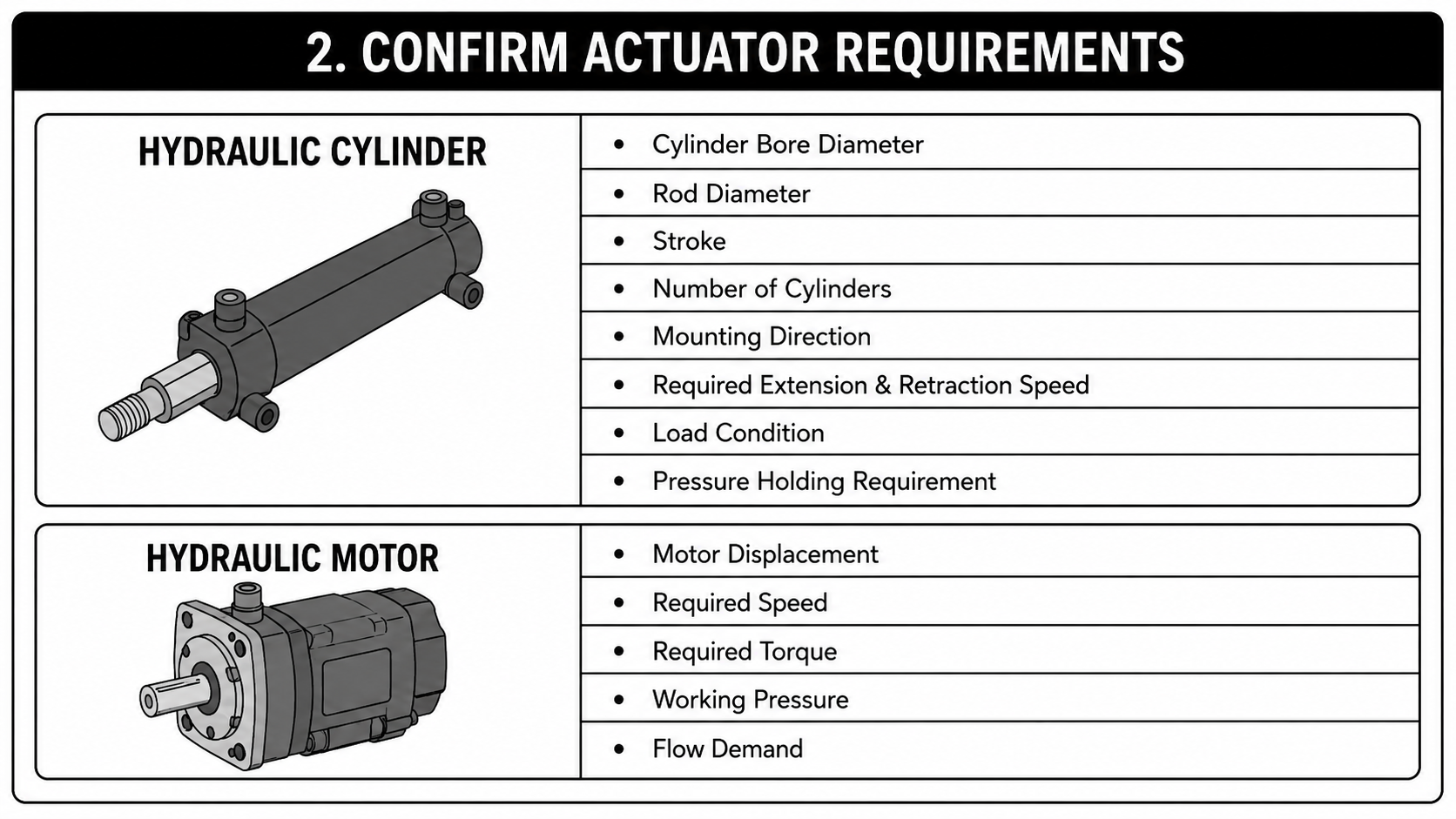
The cylinder bore and working pressure affect force. The stroke and cylinder volume affect oil demand. The required speed affects pump flow. This is why actuator information is one of the most important parts of hydraulic power unit customization.
Determine Pressure and Flow
Pressure and flow are two key parameters in a hydraulic power unit.
Pressure is related to force or load resistance. If the machine needs to lift a heavy load, press a workpiece, or push against strong resistance, the hydraulic system must generate enough pressure to move the actuator.
Flow mainly affects speed. If the pump flow is too small, the cylinder may move too slowly. If the flow is too large for the circuit, the system may create heat, noise, or unstable movement.
A common mistake is choosing a hydraulic power unit only by maximum pressure. In real machines, pressure and flow must be considered together. Motor power, pump size, valve capacity, hose size, oil temperature, and working cycle should all match the pressure and flow requirement.
Select the Motor and Power Supply
The motor provides mechanical power to drive the hydraulic pump. The motor type depends on the machine and power source.
Common options include:
- AC motor
- DC motor
- Diesel engine drive
- Gasoline engine drive
Industrial machines often use AC motors, such as 220V, 380V, or other local voltage standards. Mobile equipment may use 12V or 24V DC motors. Outdoor equipment or remote applications may use engine-driven hydraulic power units when stable electricity is not available.
Motor power should not be selected randomly. It should match the required pressure, flow, duty cycle, and working condition. A larger motor is not always better if the pump, valve circuit, and tank design are not suitable.
Choose the Oil Tank Capacity and Layout
The oil reservoir stores hydraulic oil and helps with heat dissipation, air release, and stable system operation.
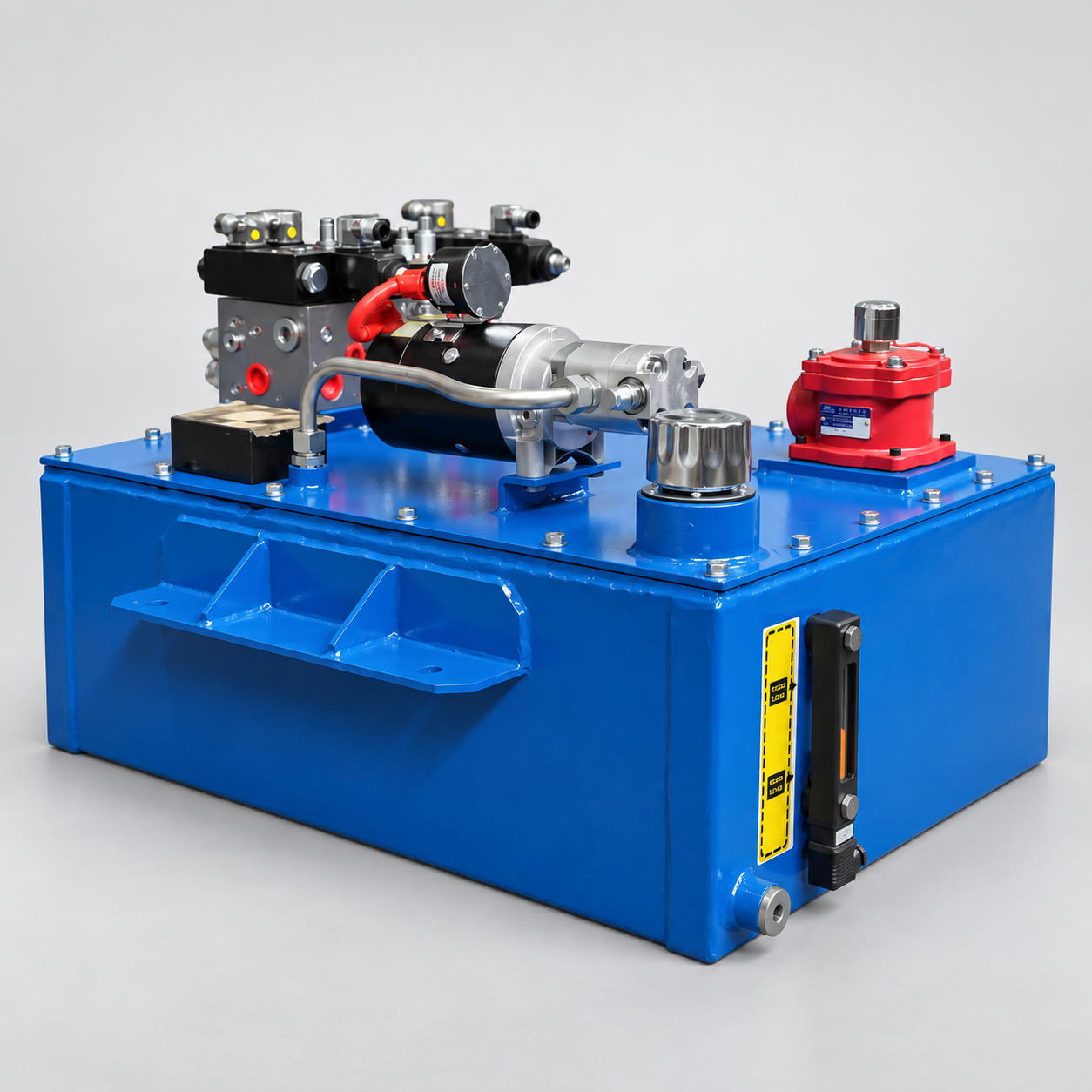
Tank capacity depends on oil volume demand, working cycle, cooling requirement, installation space, and system design. A compact machine may need a small tank, while an industrial machine with repeated operation may require a larger reservoir or additional cooling.
The tank layout should also be customized. Engineers may need to adjust:
- Tank shape
- Motor position
- Pump mounting position
- Valve block position
- Port direction
- Drain position
- Oil level gauge position
- Maintenance access
A good layout should fit the machine while allowing easy inspection, oil filling, filter replacement, and future maintenance.
Design the Valve Function
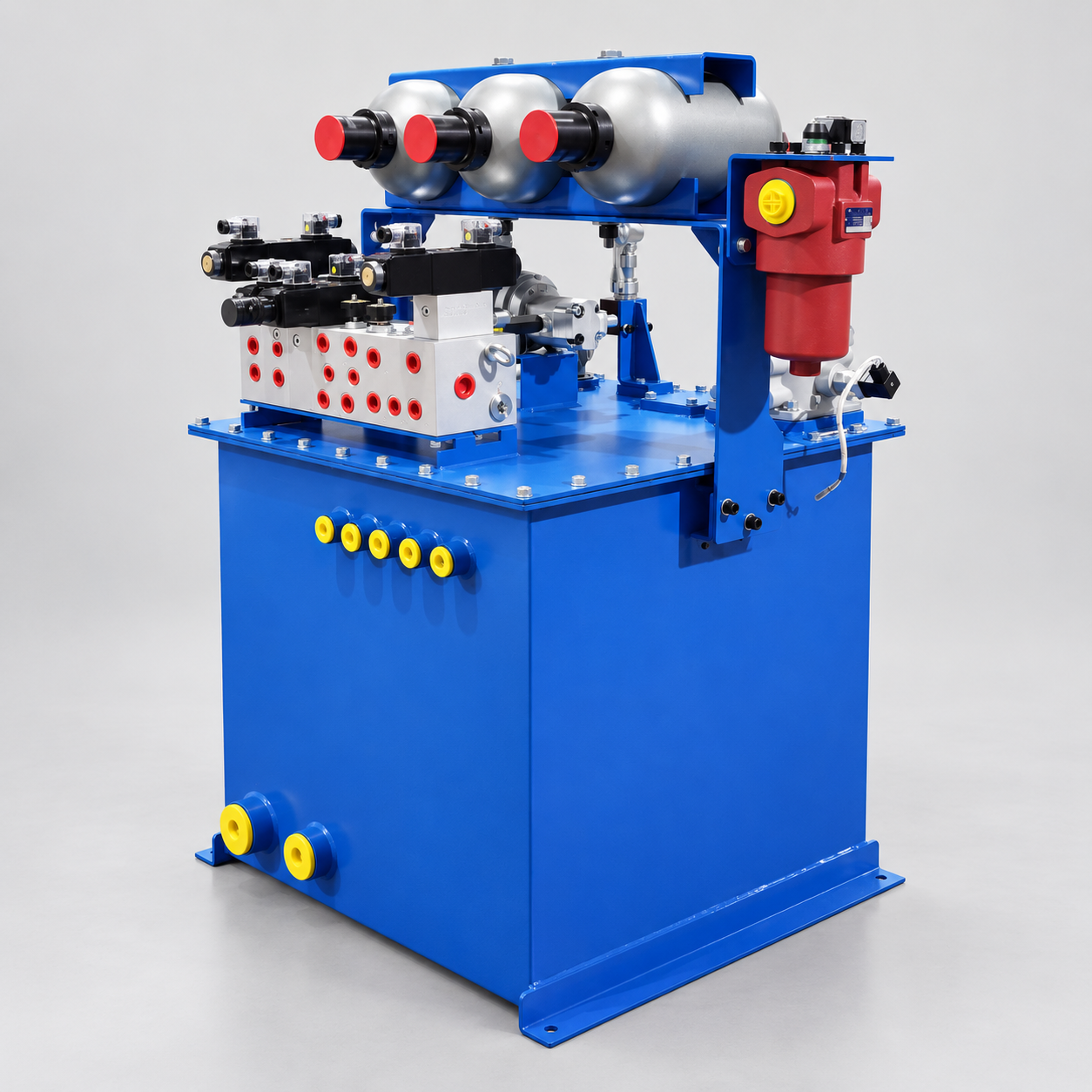
Valves make hydraulic power controllable. The valve circuit should match the machine movement.
Common valve functions include:
| Valve Function | Purpose |
|---|---|
| Direction control | Controls cylinder extension and retraction |
| Pressure relief | Protects the system from excessive pressure |
| Flow control | Adjusts actuator speed |
| Check valve | Prevents reverse flow |
| Counterbalance or load holding | Helps hold loads safely |
| Pressure reducing | Controls pressure in part of the circuit |
| Proportional control | Provides smoother speed or pressure adjustment |
For example, a lifting platform may need safe lowering and load holding. A hydraulic press may need pressure holding. A waste compactor may need strong extension and reliable return movement. A test bench may need pressure adjustment and monitoring.
This is why valve function should be designed according to the working cycle, not copied from another machine.
Consider Cooling and Filtration
Cooling and filtration are especially important for industrial hydraulic power units.
Hydraulic systems generate heat during operation. Heat may come from pressure loss, flow restriction, continuous running, or repeated working cycles. If oil temperature becomes too high, oil viscosity changes and seals may wear faster.
Filtration helps protect pumps, valves, cylinders, and hydraulic motors from contamination. Dirt, metal particles, and damaged seal material can affect hydraulic performance and shorten component life.
For machines with frequent or continuous operation, engineers should consider:
- Return filter
- Suction strainer
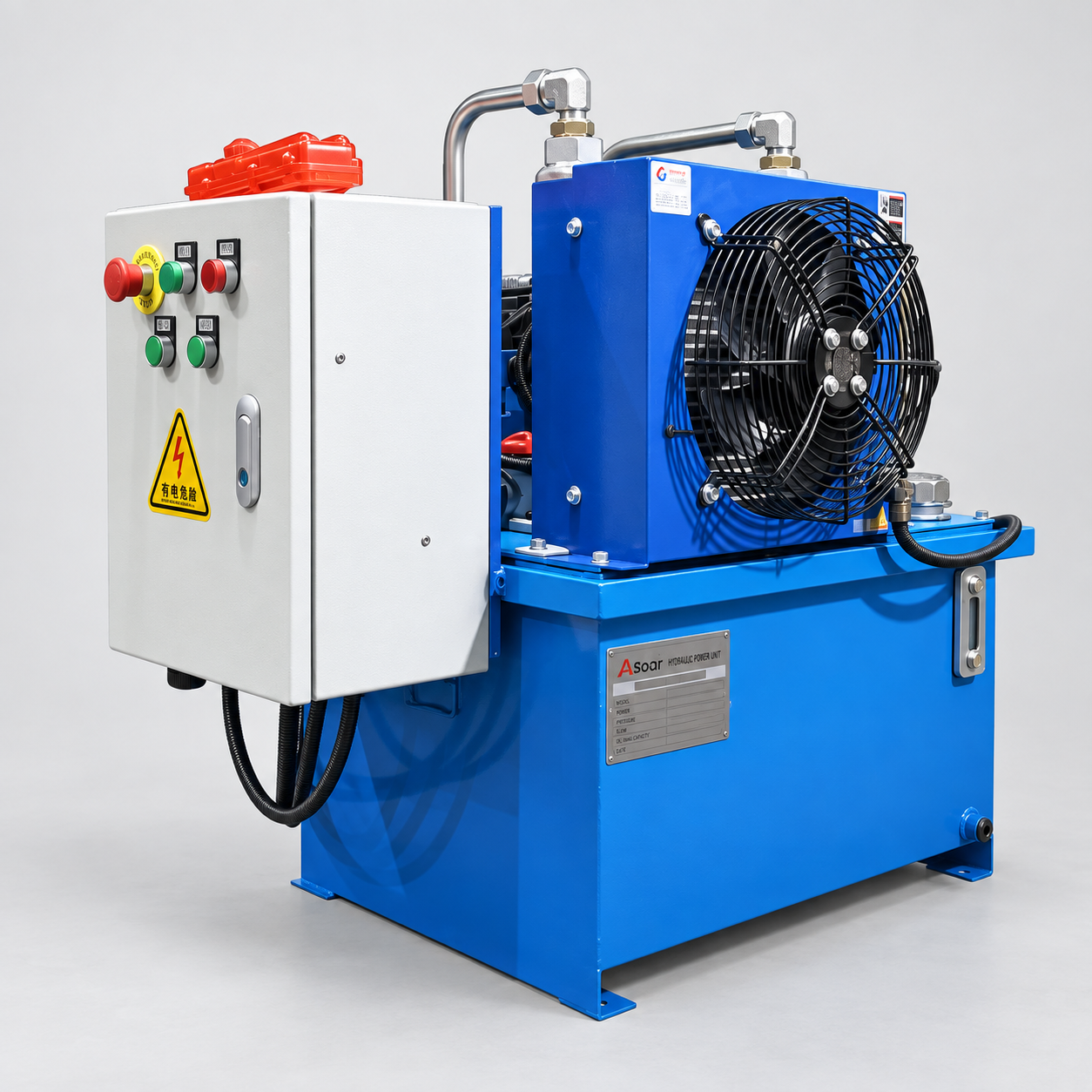
- Air cooler
- Oil temperature sensor
- Larger oil tank
- Better oil return design
A compact power unit may not always need a cooler, but heavy-duty or repeated-cycle applications should evaluate cooling carefully.
Decide the Control Method
The control method depends on how the machine operates.
Simple equipment may use manual valve control. More automated machines may require solenoid valves, pushbutton control, remote control, sensors, pressure switches, or PLC control.
Common control options include:
- Manual control
- Solenoid valve control
- Pendant control
- Remote control
- Pressure switch control
- PLC control
- Sensor feedback
- Electrical control cabinet
The electrical system should match the hydraulic function. For example, if the machine needs automatic cycles, the hydraulic power unit may need an electrical control cabinet and signal connection with the main machine.
Check Installation Space and Environment
A custom hydraulic power unit must fit the actual machine.
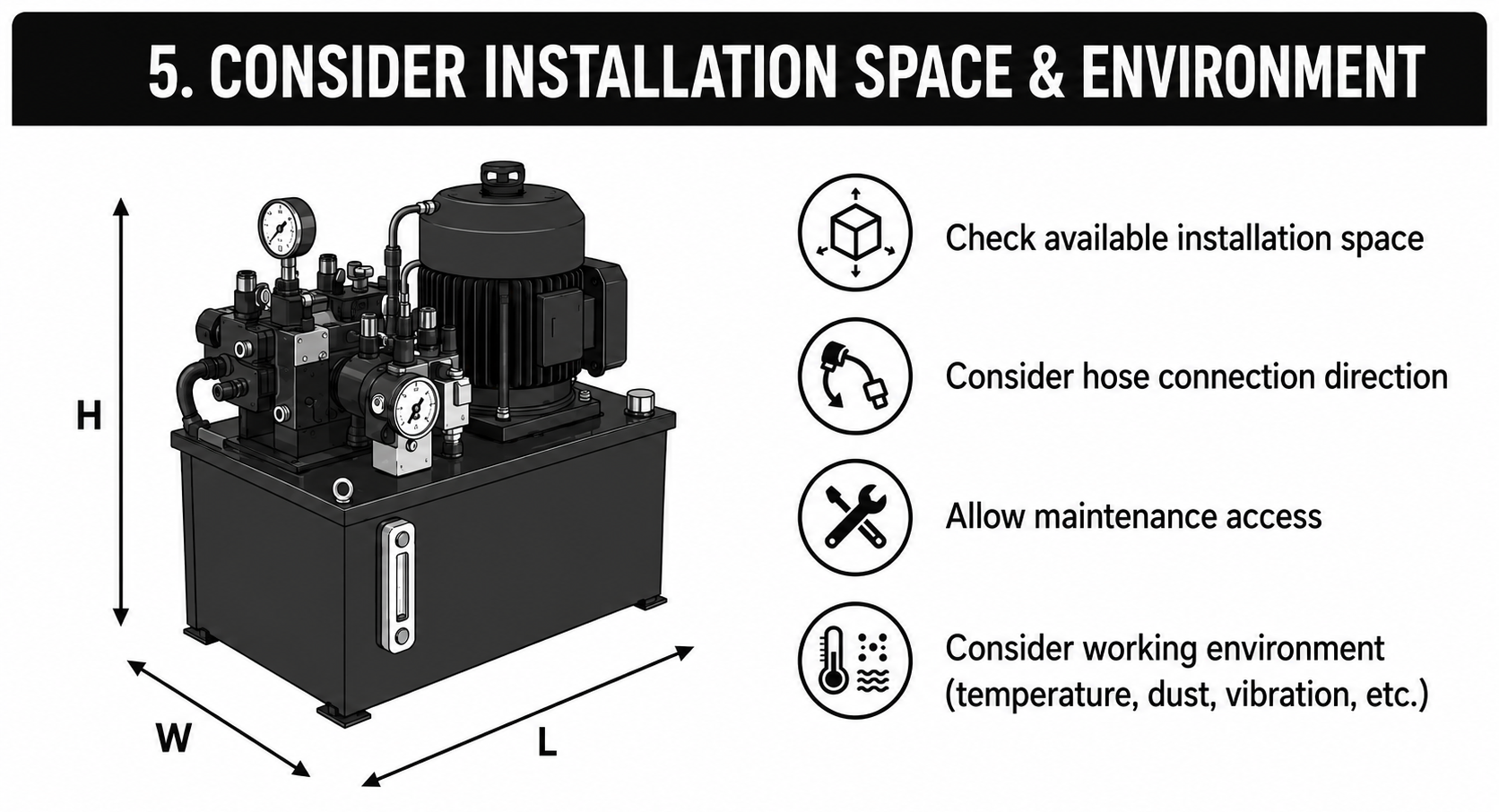
Before design, buyers should provide installation dimensions, mounting direction, hose connection direction, and available space. If the unit will be installed outdoors or on mobile machinery, vibration, dust, rain, temperature, and maintenance access should also be considered.
For harsh environments, engineers may need to consider stronger tank structure, better protection for electrical parts, anti-corrosion treatment, reinforced mounting, or improved filtration.
Information Needed for Customization
Before requesting a custom hydraulic power unit, prepare the following information:
- Machine type and application
- Required working pressure
- Required flow rate
- Cylinder bore, rod diameter, and stroke
- Hydraulic motor data, if used
- Number of actuators
- Working cycle or duty cycle
- Voltage and frequency
- Motor type
- Tank capacity or space limitation
- Valve function requirements
- Control method
- Cooling requirement
- Filtration requirement
- Port size and hose direction
- Installation drawing or hydraulic schematic, if available
The more complete the information, the easier it is for engineers to design a suitable hydraulic power unit.
Common Mistakes to Avoid
One common mistake is only providing motor power or tank size. For example, saying “we need a 3kW hydraulic power unit” is not enough. Engineers still need pressure, flow, cylinder size, speed, duty cycle, voltage, and valve function.
Another mistake is copying a power unit from a different machine. Even if two machines look similar, the load, speed, stroke, control method, and working cycle may be different.
Some buyers also ignore cooling and filtration. This may not cause problems at the beginning, but it can lead to overheating, unstable performance, or shorter component life during long-term operation.
Summary
To customize a hydraulic power unit for your machine, engineers need to understand the application, actuator data, pressure, flow, motor power, tank capacity, valve function, cooling, filtration, control method, installation space, and working environment.
A good custom hydraulic power unit should not only fit the machine physically. It should also match the real working conditions and support stable, safe, and reliable operation.
Need help customizing a hydraulic power unit for your machine? Send your machine requirements, hydraulic schematic, cylinder data, working pressure, flow rate, voltage, installation space, and working cycle. An engineer can help review a suitable hydraulic power unit configuration.
FAQ
Can a hydraulic power unit be customized?
Yes. A hydraulic power unit can be customized by pressure, flow, motor power, tank capacity, voltage, valve function, cooling, filtration, control method, port direction, and installation layout.
What information is needed to customize a hydraulic power unit?
Useful information includes machine type, working pressure, flow rate, cylinder size, stroke, voltage, duty cycle, valve function, control method, installation space, and hydraulic schematic.
Is a custom hydraulic power unit better than a standard one?
A standard unit may be enough for simple applications. A custom unit is usually better for special machines, limited installation space, heavy-duty cycles, or specific control requirements.
How do I choose the oil tank size?
Oil tank size depends on oil volume demand, duty cycle, heat generation, installation space, and system design. It should be confirmed according to the actual machine.
Does every hydraulic power unit need a cooler?
Not always. Intermittent-duty or small power units may not need a cooler. Continuous or heavy-duty applications should evaluate oil temperature and cooling requirements.