Choosing a hydraulic power unit manufacturer involves more than comparing quotations. The unit must match the machine’s hydraulic performance, electrical requirements, operating cycle, temperature conditions, control sequence, and available installation space.
Whether the buyer is an OEM, distributor or project contractor, the supplier should review the application before quotation and verify the completed power unit before shipment. This includes confirming the circuit, selecting matched components, checking the assembly and completing functional tests.
A hydraulic power unit is more than a motor, pump and reservoir. It determines how much force the machine can produce, how quickly the actuators move and how consistently the system responds. An incorrectly sized or poorly assembled unit may cause slow movement, insufficient force, overheating, leakage or unstable operation.
What Does a Hydraulic Power Unit Manufacturer Do?
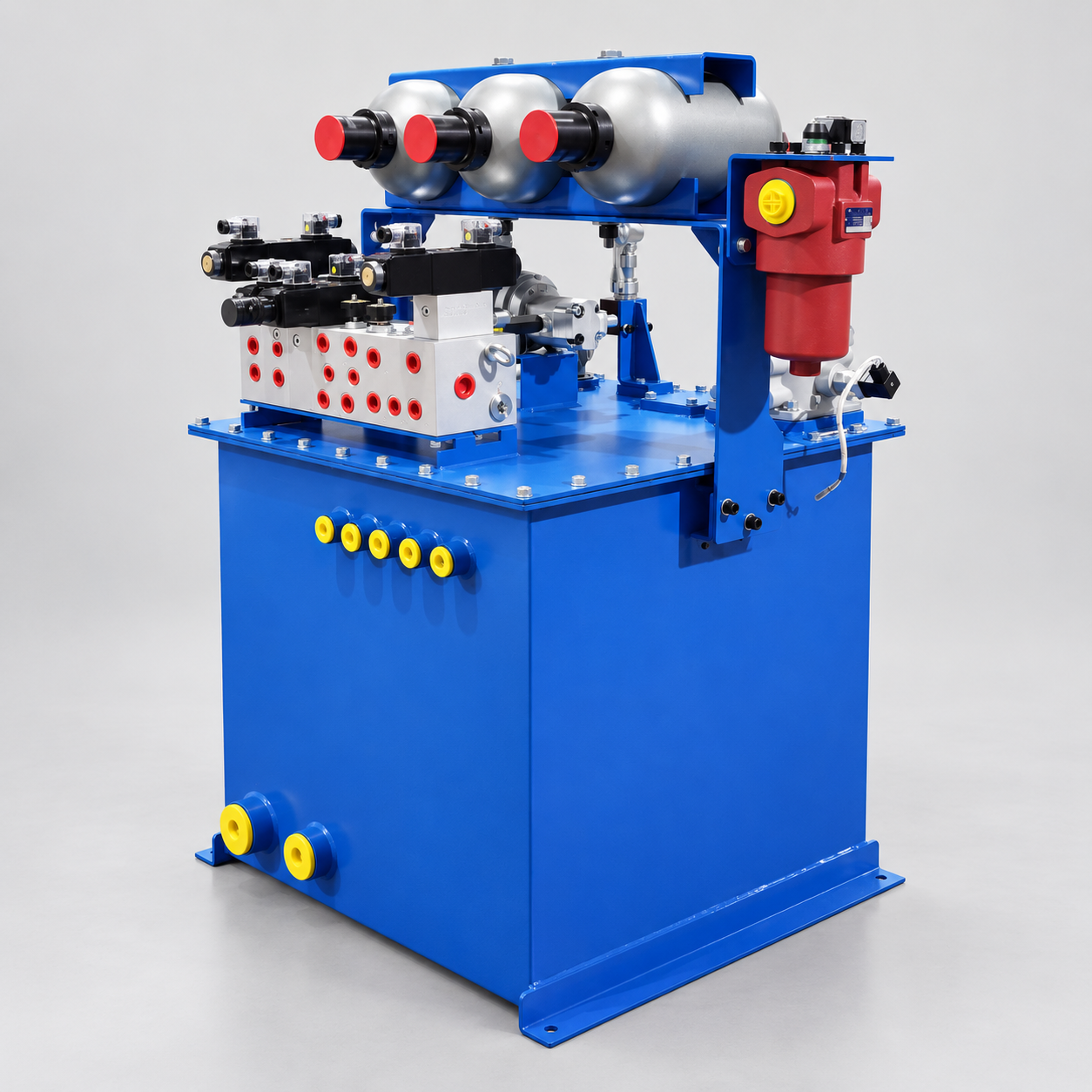
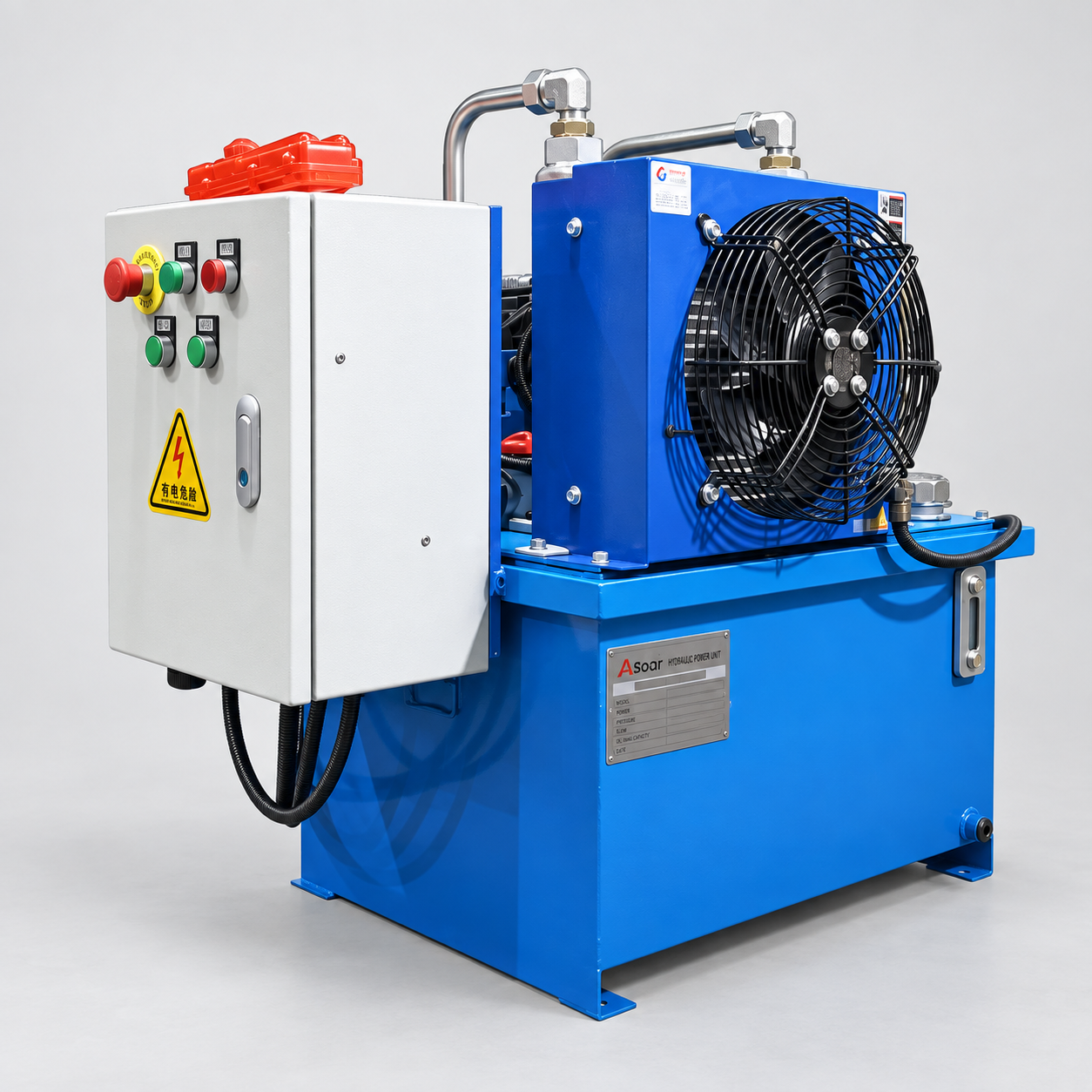
A hydraulic power unit manufacturer is responsible for more than assembling purchased components. The supplier must size the pump and motor, design or select the valve circuit, arrange the reservoir and pipework, integrate the controls and verify that the complete unit performs as required. Depending on the application, the system may also include filtration, cooling, sensors and an electrical control cabinet.
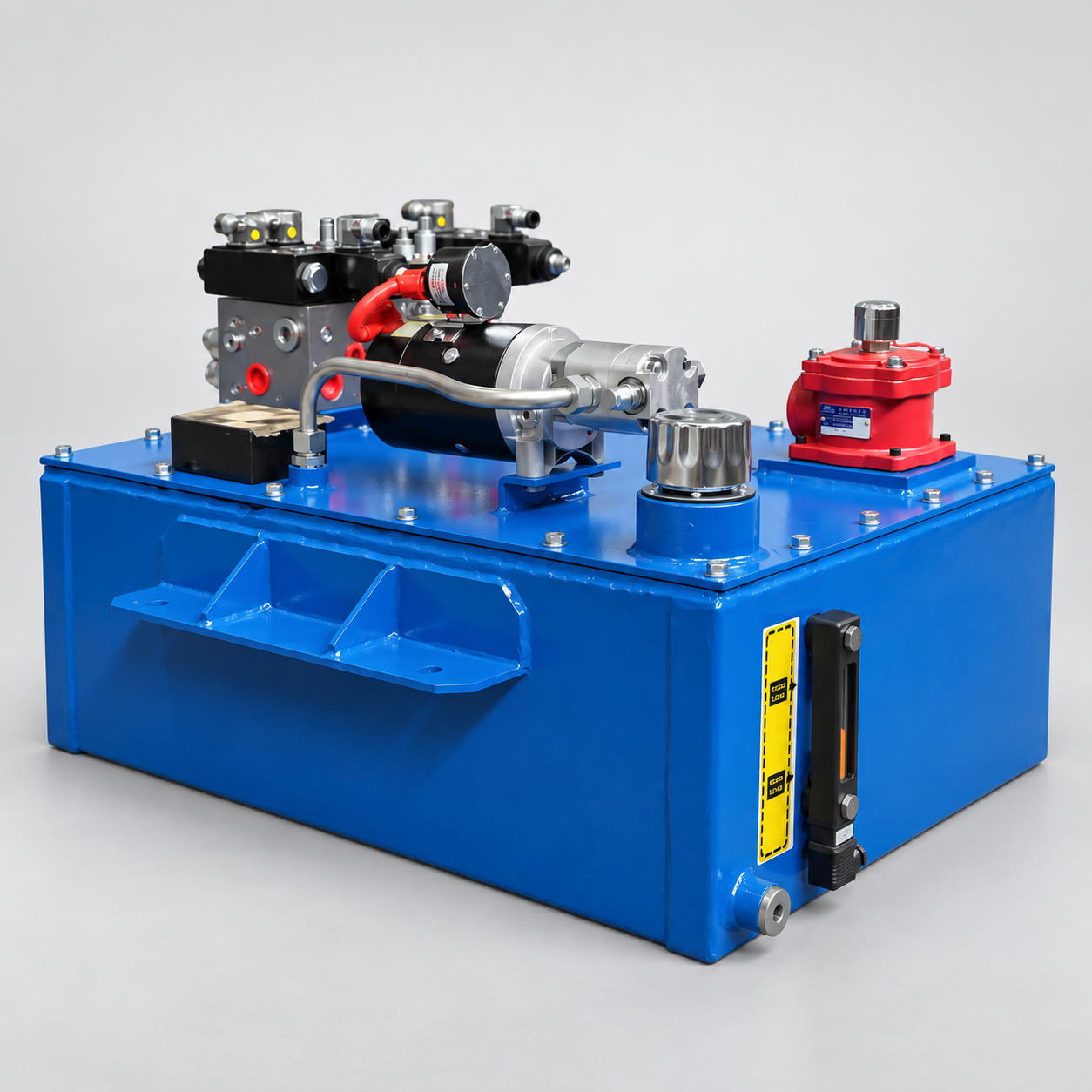
Some suppliers specialize in standardized mini power packs for applications such as dump trailers, car lifts and dock levelers. Others manufacture larger or customized hydraulic power units for presses, compactors, test benches, construction equipment and automated machinery. Buyers should confirm which type of project the supplier handles regularly.
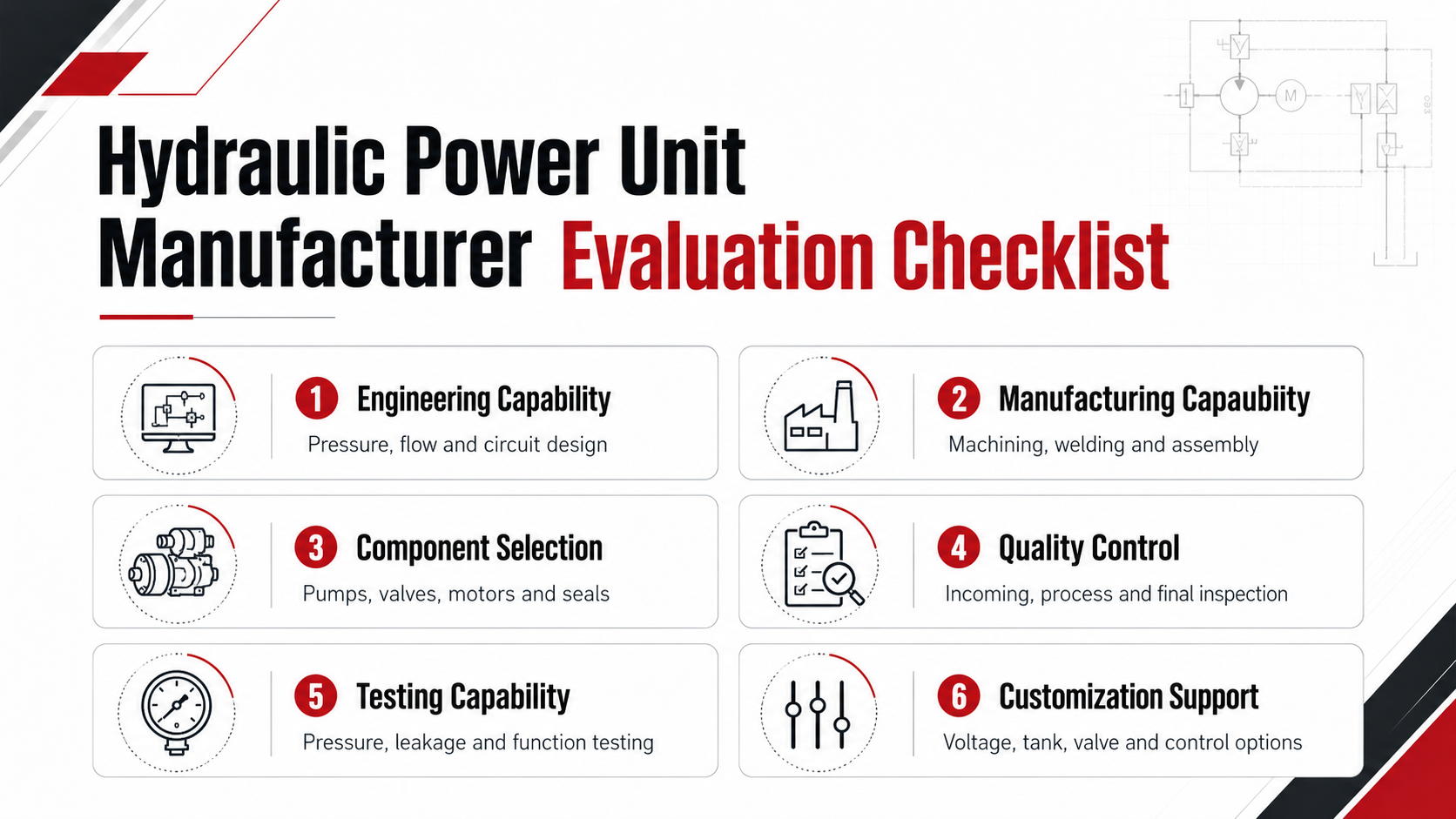
Check Engineering Support
Pay attention to the questions the supplier asks before preparing a quotation. Motor power and reservoir capacity alone are not enough to size a power unit. The engineer should also review the actuator data, required pressure and speed, duty cycle, electrical supply, operating sequence and available installation space.
The questions will vary by application. A press may require stable pressure holding and controlled approach speed, while a waste compactor must tolerate repeated high-load cycles and heat generation. Dock levelers place more emphasis on compact installation and controlled lowering, whereas test benches may require pressure monitoring, sensors and data recording.
If these operating conditions are not reviewed, the completed unit may provide the wrong actuator speed, fail to hold the load, overheat during repeated operation or require costly modifications during installation.
Check Pressure and Flow Matching
Pressure determines available force, while flow largely determines actuator speed.
The required pressure should be calculated from the actuator size, mechanical load and system losses. Flow should then be selected according to the required cylinder or motor speed. Insufficient flow slows the machine, while excessive flow can increase throttling losses, heat generation, noise and component cost.
Ask the supplier to show how the proposed pressure and flow were determined. For cylinders, the calculation should consider bore, rod diameter, stroke, quantity, load and required travel time. For hydraulic motors, displacement, speed, torque and expected pressure loss should be reviewed. These values should support the proposed pump displacement and motor power.
Do not compare units only by their maximum pressure rating or motor kilowatt value. Maximum pressure may only describe the relief-valve setting, not the pressure the unit can maintain continuously. Pump displacement, motor loading, valve capacity, reservoir design and duty cycle must be evaluated together.
Check Valve Integration Capability
The valve manifold determines how the machine starts, stops, changes direction, controls speed and holds a load. It also provides pressure protection and may manage lowering, operating sequences or proportional movement.
A basic power pack may use only a directional valve and relief valve. More demanding equipment can require load-holding checks, counterbalance valves, flow controls, pressure-reducing valves, proportional cartridges or a machined manifold that combines several functions.
Buyers should ask for a hydraulic schematic or valve-function description before approving the design. The document should show how the system protects against overload, holds the actuator when the valve is neutral and controls movement under an overrunning load.
The ability to design and verify these valve functions is a useful way to distinguish a component assembler from a supplier with hydraulic circuit experience.
Check Component Selection
A hydraulic power unit is only reliable when its components are properly selected and matched.
Review the proposed component list rather than accepting a general description such as “standard pump” or “high-quality valve.” The quotation or technical sheet should identify the main pump, motor, valve and filtration specifications. For OEM projects, buyers should also confirm whether replacement components are locally available and whether equivalent brands can be approved in advance.
Oversizing is not automatically safer. An unnecessarily large motor or reservoir increases cost, weight and installation space without correcting an unsuitable pump or valve circuit. The complete configuration should reflect the machine’s actual load, cycle time and operating environment.
Check Manufacturing and Testing Capability
During a factory review, look for consistent reservoir fabrication, controlled welding, internal tank cleaning, protected hydraulic ports, orderly hose routing and correctly supported pipework. Wiring and component labels should be clear. A compact layout is useful, but filters, gauges, filling points, drain ports and adjustable valves must remain accessible for maintenance.
Confirm what the factory test actually includes. At minimum, the unit should be checked for motor rotation, pump output, relief-pressure setting, valve response, external leakage, return flow and abnormal noise. Electrically controlled units should also be tested for solenoid operation, sensor feedback, interlocks and control sequence. For custom projects, ask whether the test pressure, test duration and results can be recorded in an inspection report.
Check Customization Capability
A standard catalogue unit may be suitable for a simple lifting function, but OEM machinery often requires changes to the circuit, layout or electrical controls.
Customization may involve hydraulic changes such as pressure, flow, filtration and valve functions; mechanical changes such as reservoir shape, port orientation and mounting arrangement; or electrical changes such as voltage, sensors, control cabinets and PLC communication.
Where installation space is limited, the supplier may need to reposition the motor, manifold, ports and hose connections or redesign the reservoir. Equipment with frequent or continuous cycles may also require additional oil capacity, cooling and finer filtration. Before production, buyers should request an approved outline drawing showing dimensions, port locations and maintenance clearances.
How AiSoar Supports Hydraulic Power Unit Projects
For custom projects, AiSoar reviews the machine application, actuator data, hydraulic schematic and installation restrictions before confirming the configuration. Based on this review, the engineering team can propose the pump and motor combination, reservoir arrangement, valve circuit, filtration, cooling method and control interface.
AiSoar manufactures both compact power packs and customized industrial hydraulic units for lifting, pressing, material-handling, mobile-equipment and test applications. Projects can range from a reservoir-mounted pump and valve assembly to a complete skid with filtration, cooling, sensors and electrical controls.
Before shipment, each completed unit is checked according to the agreed project requirements. The inspection can include motor rotation, pressure setting, valve operation, leakage, electrical response, oil circulation and visual checks of the pipework, wiring and component installation.
Information Buyers Should Prepare
| Information Category | Details to Provide |
| Machine and function | Equipment type, required movements and operating sequence |
| Cylinder data | Bore, rod diameter, stroke, quantity and required speed |
| Hydraulic motor data | Displacement, required speed and torque, if applicable |
| Operating conditions | Load, working pressure, cycle frequency and ambient temperature |
| Electrical requirements | Voltage, frequency, phase and control method |
| Installation requirements | Available space, mounting position, port direction and hose arrangement |
| Existing documents | Hydraulic schematic, drawings, photos or reference samples |
Complete application data reduces repeated revisions and helps the supplier prepare a more accurate circuit, component list, layout and quotation.
Summary
The lowest quotation is not necessarily the lowest-cost solution. Before placing an order, compare how each supplier reviews the application, explains the proposed configuration, documents the components and verifies the completed unit.
A capable manufacturer should deliver more than an assembled motor, pump and reservoir. The proposed unit should produce the required force and speed, maintain acceptable oil temperature, control the load correctly and fit the machine without extensive modification.
Planning a new hydraulic power unit or replacing an existing system? Send AiSoar your application details, actuator data, available installation space and hydraulic schematic. Our engineering team will review the operating requirements and propose a suitable configuration for further discussion.