Selecting the wrong hydraulic power source can increase costs, waste installation space, and reduce system performance. Understanding the differences helps engineers choose the right hydraulic solution.
A hydraulic power unit is a broad category of hydraulic power systems, while a mini hydraulic power pack is a compact version designed for smaller equipment, lower flow requirements, and limited installation space. Their differences mainly involve size, power, oil capacity, and applications.
Understanding these differences can help OEM manufacturers, engineers, and equipment designers select the most suitable hydraulic solution.
What Is a Hydraulic Power Unit?
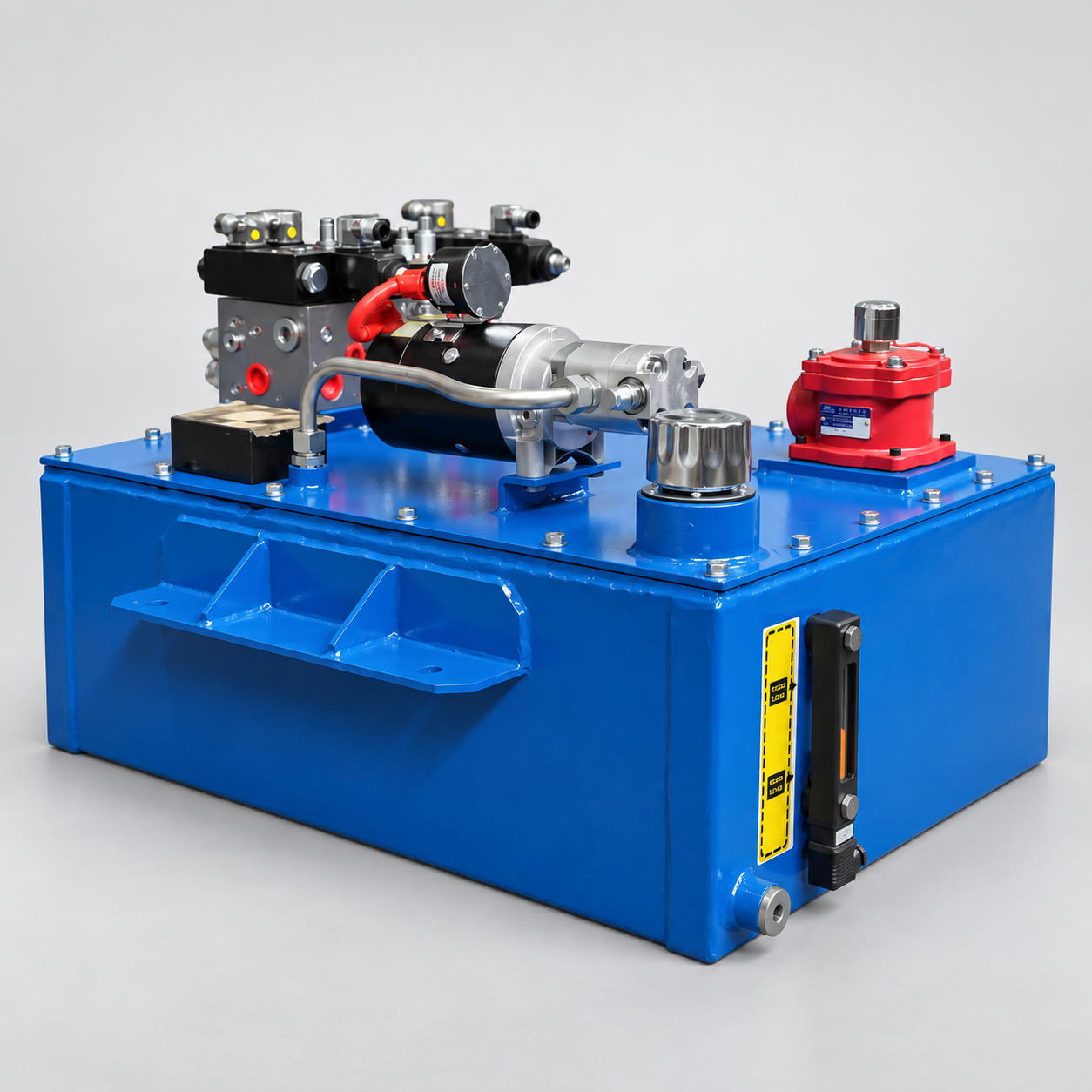
A hydraulic power unit (HPU) is a complete hydraulic system that generates hydraulic energy to drive cylinders, motors, or other actuators.
A typical hydraulic power unit consists of:
- Electric motor or engine
- Hydraulic pump
- Oil reservoir
- Directional control valves
- Pressure relief valves
- Filters
- Hydraulic manifold
- Electrical control system
Hydraulic power units can range from very small systems to large industrial stations.
Industrial HPUs may have tank capacities exceeding several hundred liters and motor powers ranging from several kilowatts to over 100 kW.
In simple terms, a hydraulic power unit is the general category that includes many different hydraulic power systems.
What Is a Mini Hydraulic Power Pack?
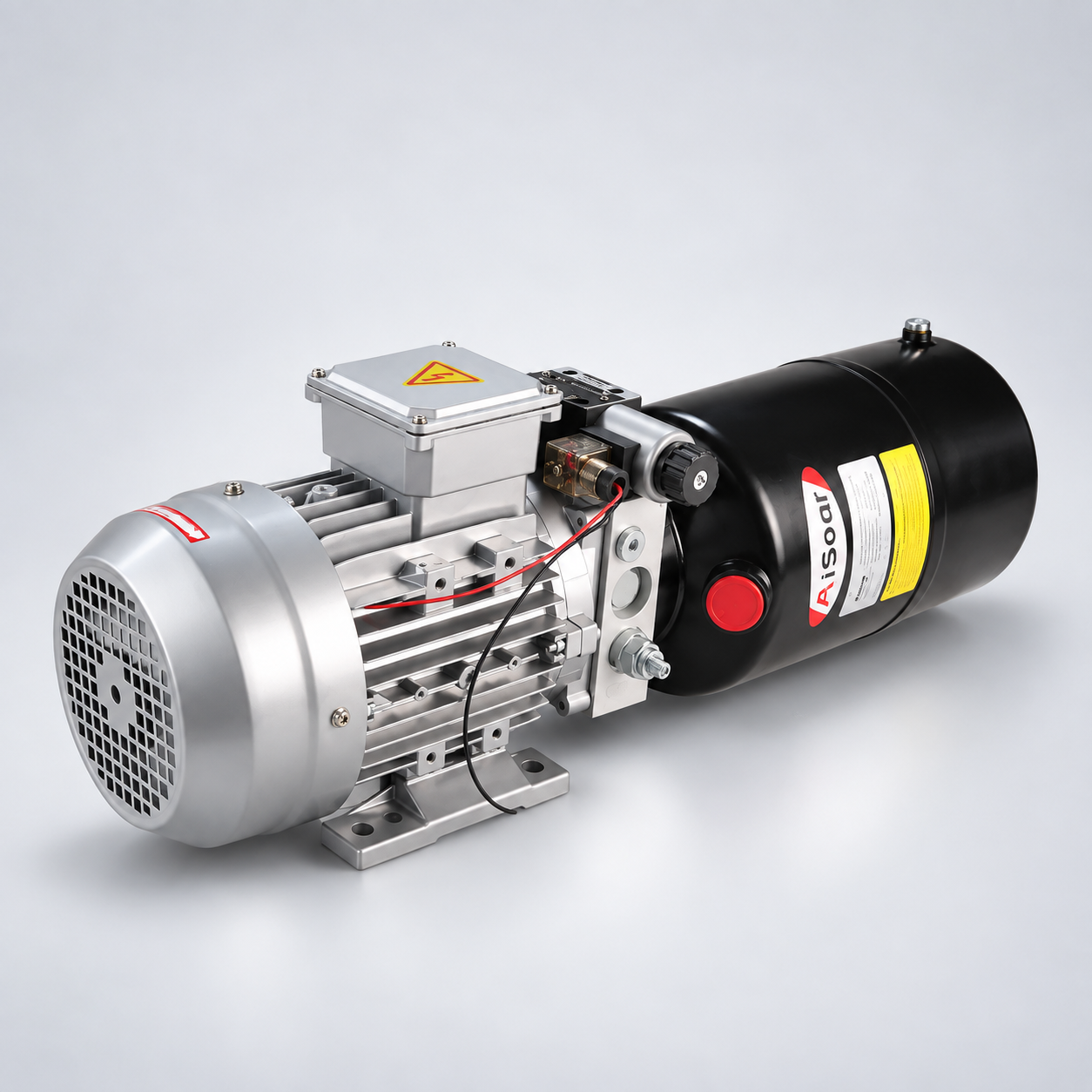
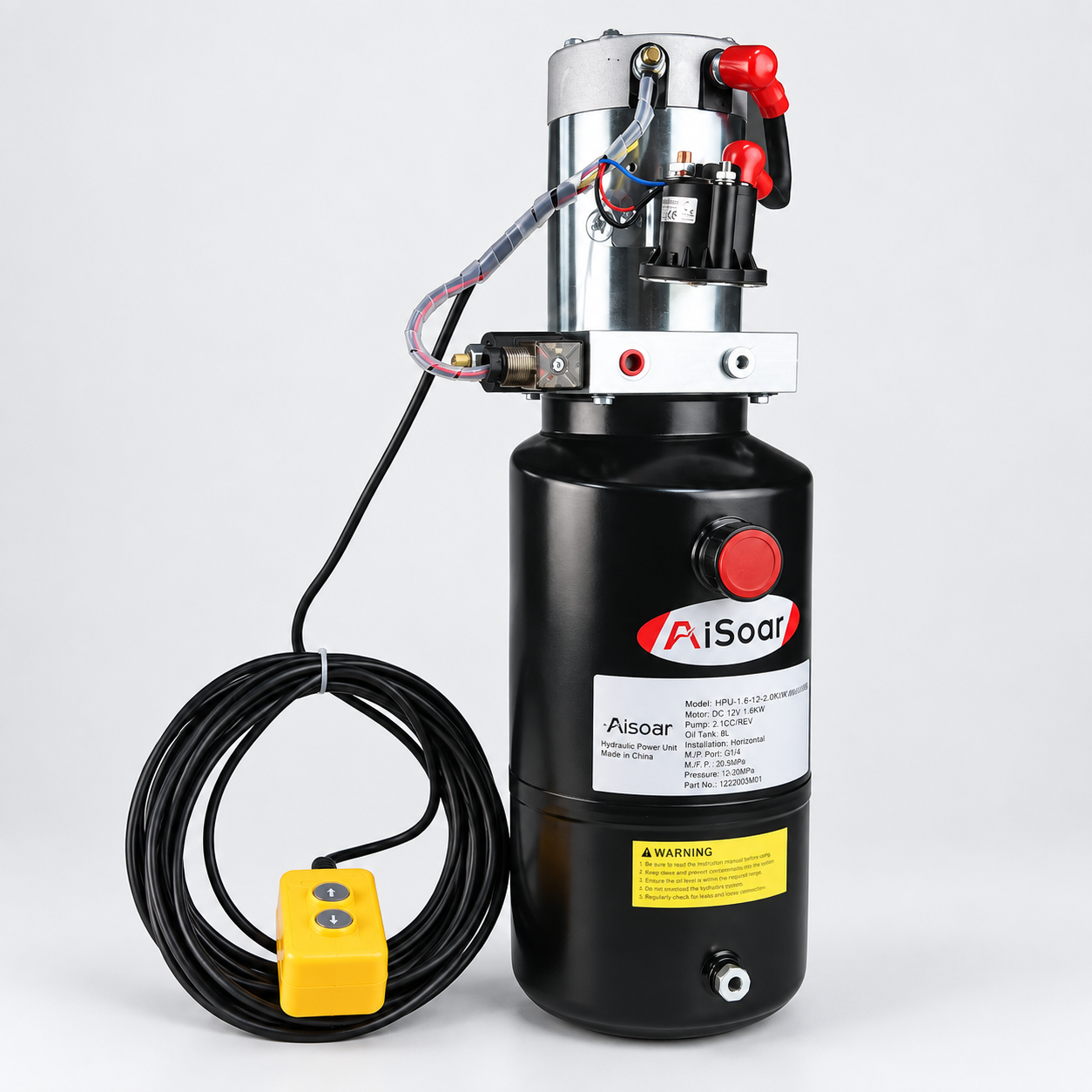
A mini hydraulic power pack is a compact hydraulic power unit designed for mobile and light-duty applications.
Mini power packs generally feature:
- DC motors (12V or 24V)
- Small AC motors
- Compact oil tanks
- Integrated manifolds
- Cartridge valves
- Simple hydraulic circuits
These units are designed to save installation space while delivering sufficient hydraulic power.
Most mini hydraulic power packs have:
- Tank capacity: 1–20 liters
- Motor power: 0.8–4 kW
- Pressure: 160–250 bar
- Flow rate: 1–15 L/min
Their compact design makes them ideal for mobile equipment and OEM applications.
Is a Mini Hydraulic Power Pack a Hydraulic Power Unit?
Yes.
A mini hydraulic power pack is a type of hydraulic power unit.
The relationship can be understood as:
- Hydraulic Power Unit = General category
- Mini Hydraulic Power Pack = Small and compact subtype
Just as all SUVs are vehicles but not all vehicles are SUVs, all mini hydraulic power packs are hydraulic power units, but not all hydraulic power units are mini power packs.
This misunderstanding often occurs because different industries use different terminology.
European manufacturers often use the term:
- Mini Hydraulic Power Pack
North American manufacturers commonly use:
- Hydraulic power unit
Both terms may refer to similar equipment depending on the application.
What Are the Main Differences Between Them?
| Item | Hydraulic Power Unit | Mini Hydraulic Power Pack |
|---|---|---|
| Size | Large to very large | Compact |
| Reservoir Capacity | 20–1000+ L | 1–20 L |
| Motor Power | 2–100+ kW | 0.8–4 kW |
| Flow Rate | High | Low to medium |
| Installation | Fixed industrial equipment | Mobile equipment |
| Voltage | AC, diesel, hydraulic drive | 12V, 24V, AC |
| Circuit Complexity | Complex | Simple |
| Weight | Heavy | Lightweight |
| Maintenance | More extensive | Relatively simple |
| Cost | Higher | Lower |
The biggest differences are physical size, output capacity, and application requirements.
HOW DO YOU CHOOSE BETWEEN THEM?
To decide between a standard hydraulic power unit and a mini hydraulic power pack, evaluate the following five factors comprehensively:
Hydraulic Flow Requirement
Equipment that drives multiple hydraulic cylinders and operates continuously for long periods shall adopt a large hydraulic power unit.
INSTALLATION SPACE
If the reserved mounting space of the complete machine is limited, a mini hydraulic power pack is the only viable solution.
Duty Cycle
Standard hydraulic power units are recommended for continuous industrial production scenarios which require large-capacity oil tanks and heat dissipation systems; mini power packs are suitable for intermittent short-cycle operations.
POWER SUPPLY CONDITION
Mobile vehicle-mounted equipment usually adopts 12V/24V DC power supply, while stationary industrial equipment generally uses AC power.
BUDGET AND MAINTENANCE
Mini power packs feature lower upfront procurement costs and simpler routine maintenance procedures.
Conclusion
Hydraulic power units and mini hydraulic power packs perform the same fundamental function of generating hydraulic energy, but they serve different application requirements.
Hydraulic power units represent the entire category of hydraulic power systems, ranging from small units to large industrial stations. Mini hydraulic power packs are compact versions designed for mobile equipment and light-duty applications.
The differences mainly involve size, oil capacity, power output, flow rate, duty cycle, and installation requirements.
Understanding these distinctions allows equipment manufacturers, engineers, and end users to select the most suitable hydraulic solution for their applications, improving performance, reliability, and overall operating efficiency.