Project Info
Project Name: Dock Leveler Hydraulic Power Unit & Hydraulic Cylinders
Client Industry: Logistics & Warehouse Equipment
Requirement: The client required a reliable hydraulic system for dock leveler operation under high-frequency loading cycles.
Key requirements included:
1. Stable lifting of the platform and reliable lip control
2. Smooth, safe lowering without sudden drop
3. Compact design for pit installation constraints
4. Long service life under heavy-duty warehouse use
5. Low maintenance and easy service access
Project Overview
Dock levelers are critical equipment at warehouse loading bays, enabling smooth transfer between dock and truck bed.
To ensure safe and efficient cargo handling, this solution combines a compact hydraulic power unit with application-matched cylinders for platform lifting and lip actuation.
The system is engineered to deliver:
- Stable lifting force for heavy-duty operation
- Controlled lowering speed for operator safety
- Reliable load holding and repeatable cycle performance
- This solution is suitable for fixed dock levelers, telescopic lip levelers, and heavy-duty loading platforms in logistics centers, distribution hubs, and industrial warehouses.
How Does a Dock Leveler Hydraulic System Work?
A hydraulic dock leveler uses a compact hydraulic power unit and hydraulic cylinders to raise and lower the platform, allowing safe loading and unloading between a warehouse dock and a truck trailer.
When the operator presses the UP button, the hydraulic power unit starts and delivers pressurized oil to the lift cylinder. The lift cylinder raises the dock platform to the desired height. Depending on the dock leveler design, a secondary lip cylinder or mechanical lip mechanism extends the lip onto the truck bed.
Once loading is complete, the platform lowers in a controlled manner through the hydraulic circuit. The integrated relief valve, check valve, and lowering control valve ensure smooth movement, safe operation, and reliable load holding throughout the cycle.
This hydraulic system design is widely used in warehouses, logistics centers, manufacturing facilities, and distribution hubs where high-frequency loading operations require dependable performance.
AiSoar Hydraulic Solution
AiSoar provided a complete dock leveler hydraulic package including:
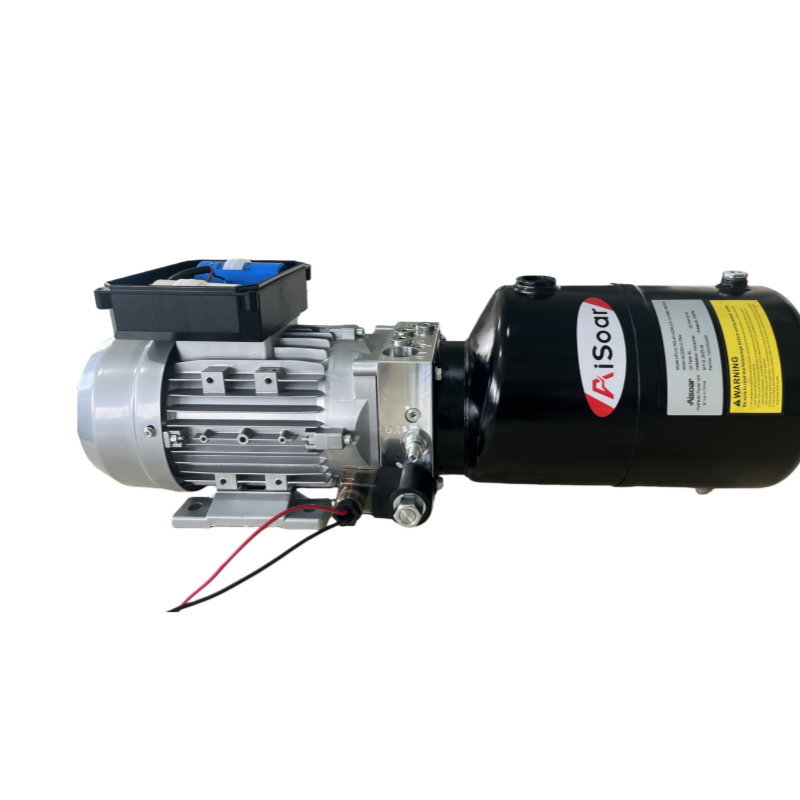
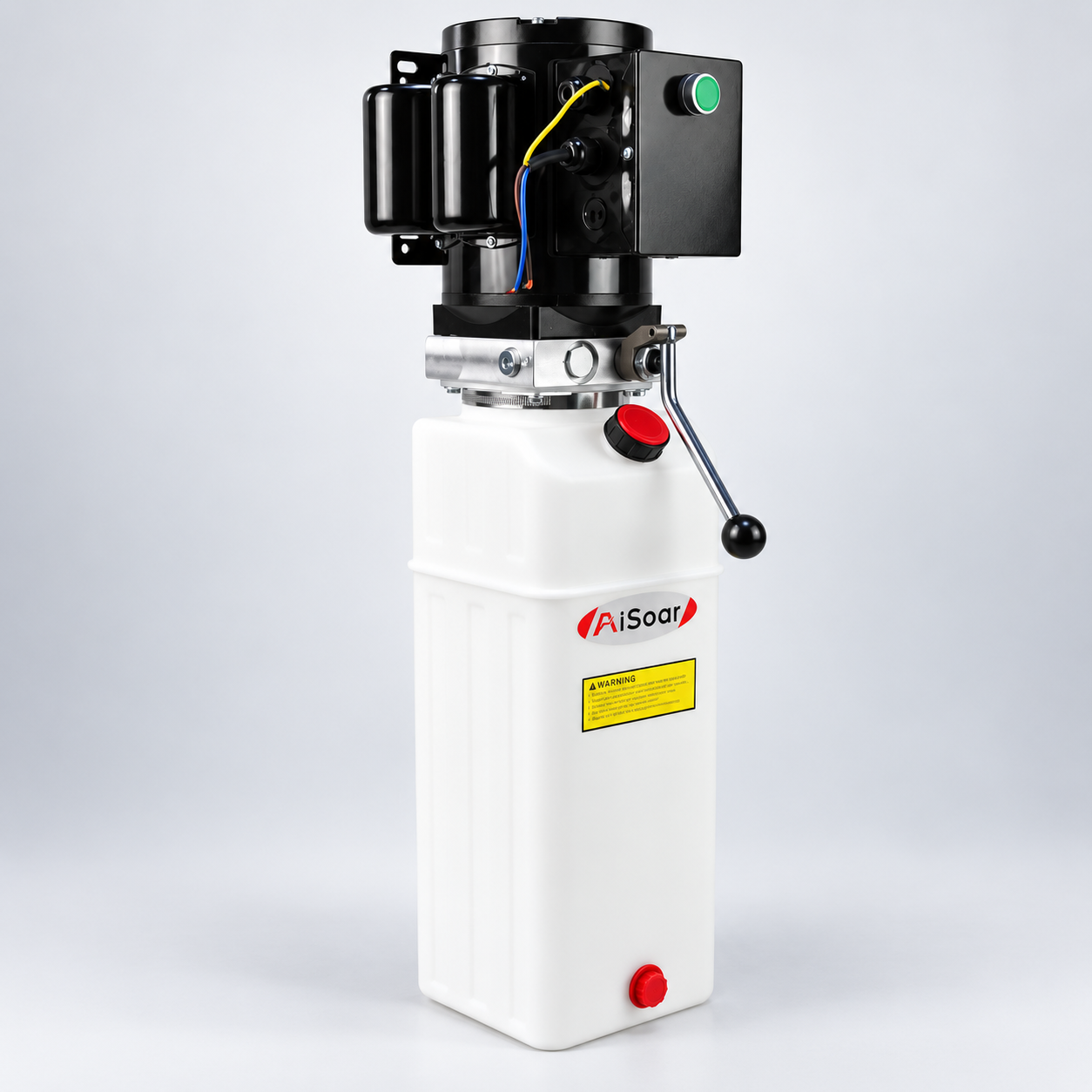
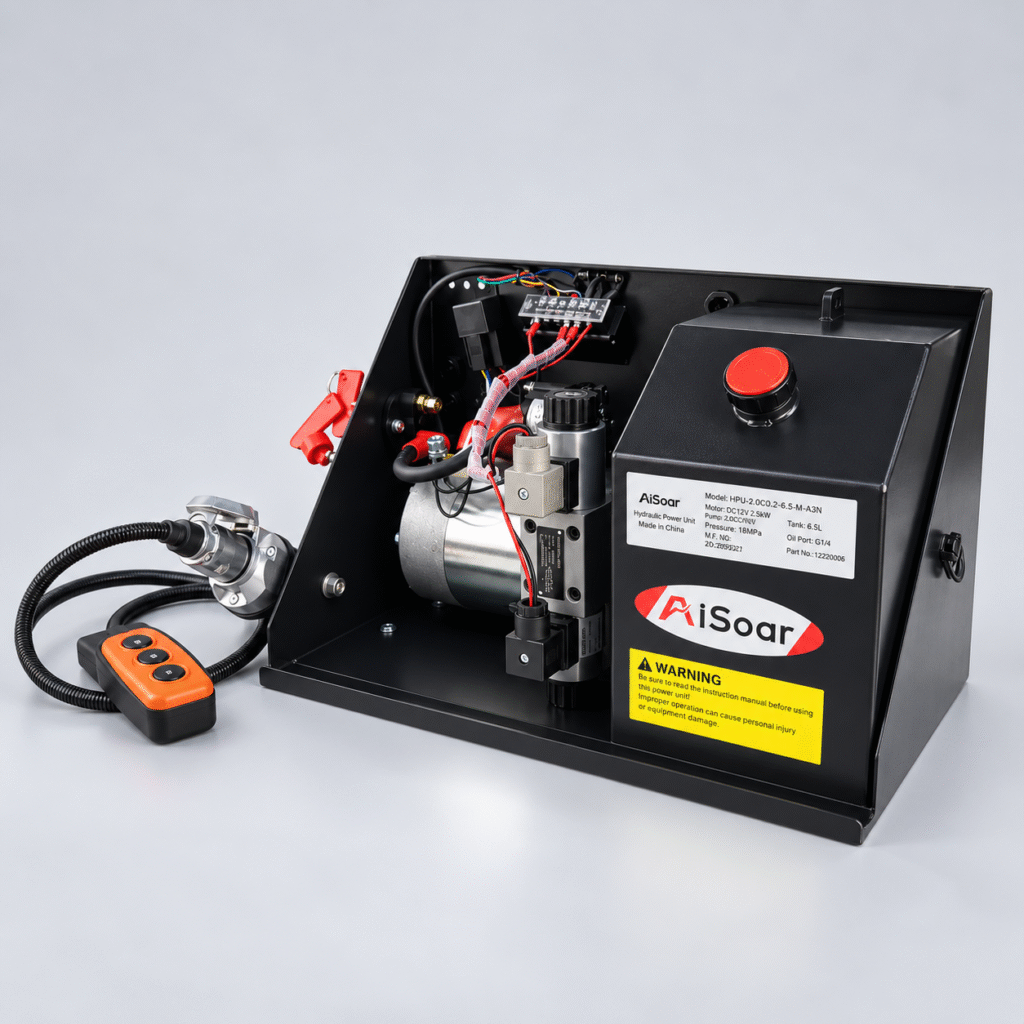
Dock Leveler Hydraulic Power Pack (HPU)
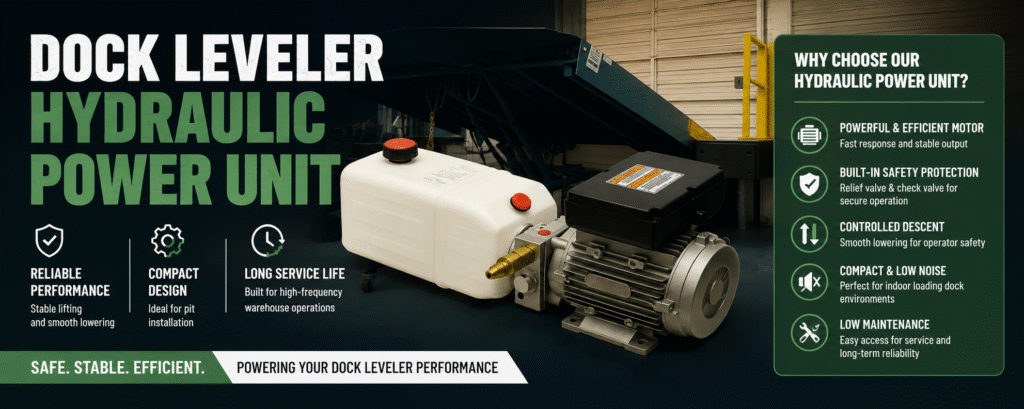
AiSoar’s Dock Leveler Hydraulic Power Pack (HPU) is engineered to deliver fast response, stable pressure, and reliable daily performance for warehouse loading bays. Built with an optimized motor-pump configuration, the unit provides smooth platform lifting and consistent hydraulic output, even in high-cycle dock operations.
The compact power pack features an integrated hydraulic manifold with a relief valve, check valve, and solenoid directional control valve, ensuring overload protection, secure load holding, and precise movement control. A dedicated controlled descent function enables safe and stable platform return, reducing sudden drop risk and improving operator safety.
To match different installation requirements, this dock leveler hydraulic power unit is available with single-phase and three-phase AC power options. Its compact, low-noise design makes it ideal for indoor loading dock environments where space efficiency and noise control are critical.
Whether for new dock leveler systems or retrofit projects, AiSoar’s hydraulic power pack helps improve uptime, reduce maintenance needs, and lower total operating cost for logistics and warehouse operators.
| Dock Leveler Mini Hydraulic Power Unit Parameters | ||||||
| Model | Volt | Power | Speed | Displacement | Pressure | Tank |
| HPU-0.75T-2P-A380-1.6-15-HP/5-Y15-G1/4 | 380VAC | 0.75kW | 2800RPM | 1.6CC/REV | 15MPa | 5L |
| HPU-1.1S-4P-A220-3.2-15-HP/5-Y15-G1/4 | 220VAC | 1.1kW | 1400RPM | 3.2CC/REV | 15MPa | 5L |
| HPU-1.1T-4P-A380-4.2-15-HP/5-Y15-G1/4 | 380VAC | 1.1kW | 1400RPM | 4.2CC/REV | 15MPa | 6L |
Typical hydraulic power unit configurations for dock leveler applications are shown below. Power, displacement, and reservoir size can be customized according to lifting capacity and duty cycle requirements.
Dock Leveler Hydraulic CylindersTypes
Different dock leveler designs may use different hydraulic cylinder configurations.
| Cylinder Type | Function |
|---|---|
| Lift Cylinder | Raises and lowers the platform |
| Lip Cylinder | Controls lip extension |
| Single-Acting Cylinder | Gravity-assisted return |
| Double-Acting Cylinder | Powered extension and retraction |
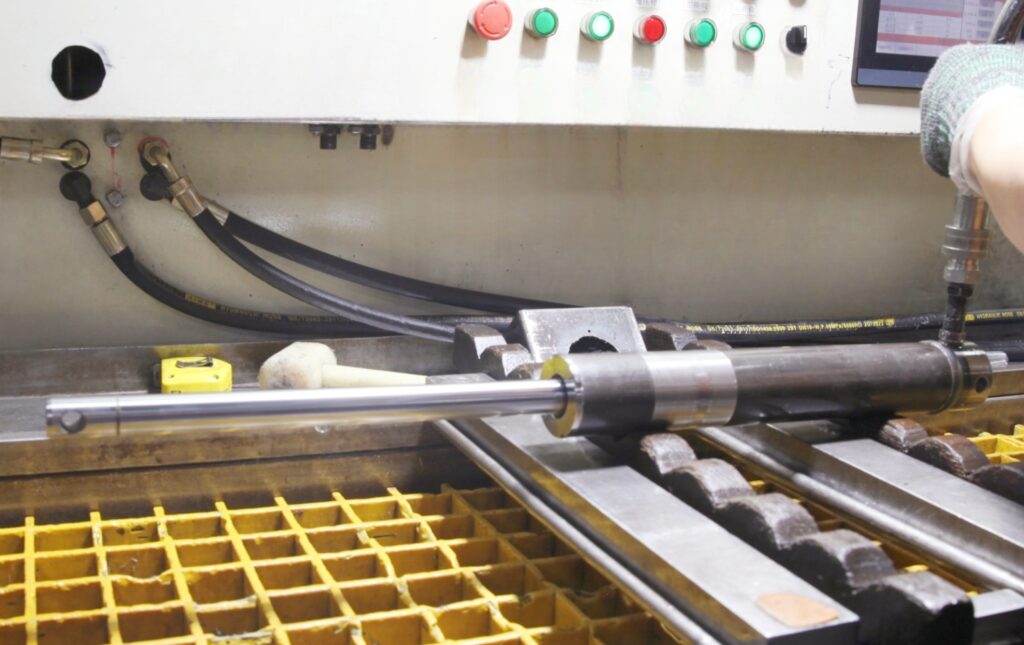
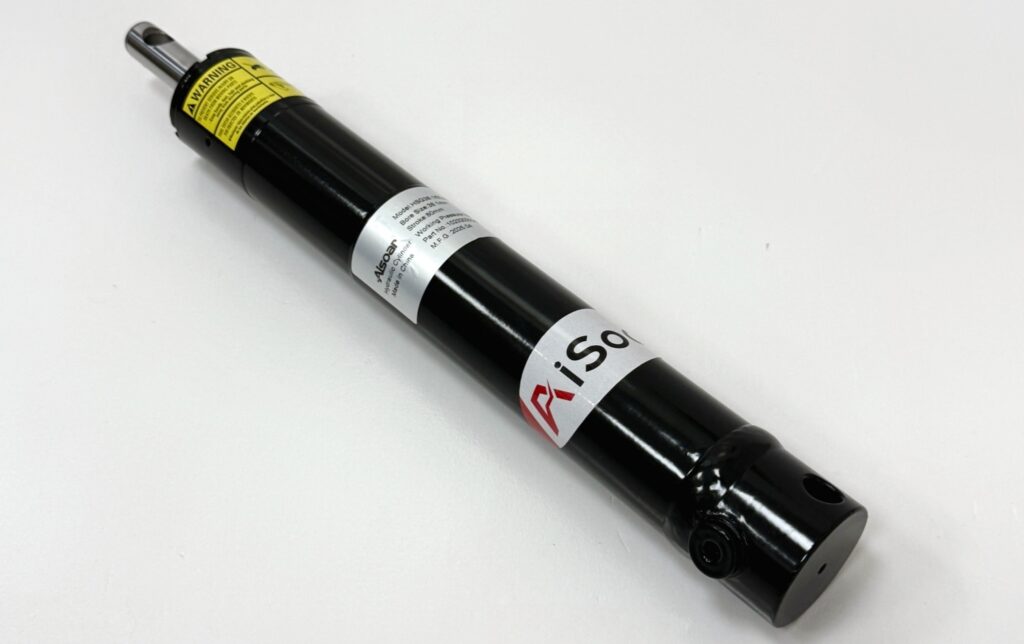
AiSoar can customize cylinder bore, stroke length, mounting style, operating pressure, and sealing systems according to specific dock leveler designs and duty cycles.
- High-strength tube and rod designed for frequent cycling
- Reliable sealing system to minimize leakage and pressure loss
- Customized bore, stroke, and mounting dimensions for platform/lip mechanism
- Optional cushioning design to reduce end-of-stroke impact
- Single-acting or double-acting cylinder options according to control strategy
Projected Results / Customer Value
By adopting AiSoar’s integrated dock leveler hydraulic solution, customers can achieve safer and smoother platform operation, more reliable lifting and holding performance, and reduced leakage-related maintenance.
The compact and application-matched design helps shorten installation and commissioning time while improving uptime in high-frequency loading environments.
Overall, the solution supports higher loading efficiency, lower maintenance burden, and reduced total lifecycle cost for warehouse and logistics operators.
Electro-Hydraulic and Electric Actuators: Alternatives to Traditional Hydraulic Systems
In addition to traditional hydraulic power units and cylinders, modern equipment manufacturers are increasingly adopting electro-hydraulic cylinders and electric linear actuators as integrated alternatives.
Electro-hydraulic cylinders combine the cylinder, pump, motor, and reservoir into a single self-contained unit, while electric linear actuators eliminate hydraulic components altogether by converting electric motor power directly into linear motion. Both solutions can reduce system complexity, simplify installation, and minimize maintenance requirements compared to conventional hydraulic power unit and cylinder systems.
For a detailed comparison of these technologies and their applications, read our dedicated articles on electro-hydraulic cylinders and electric linear actuators.