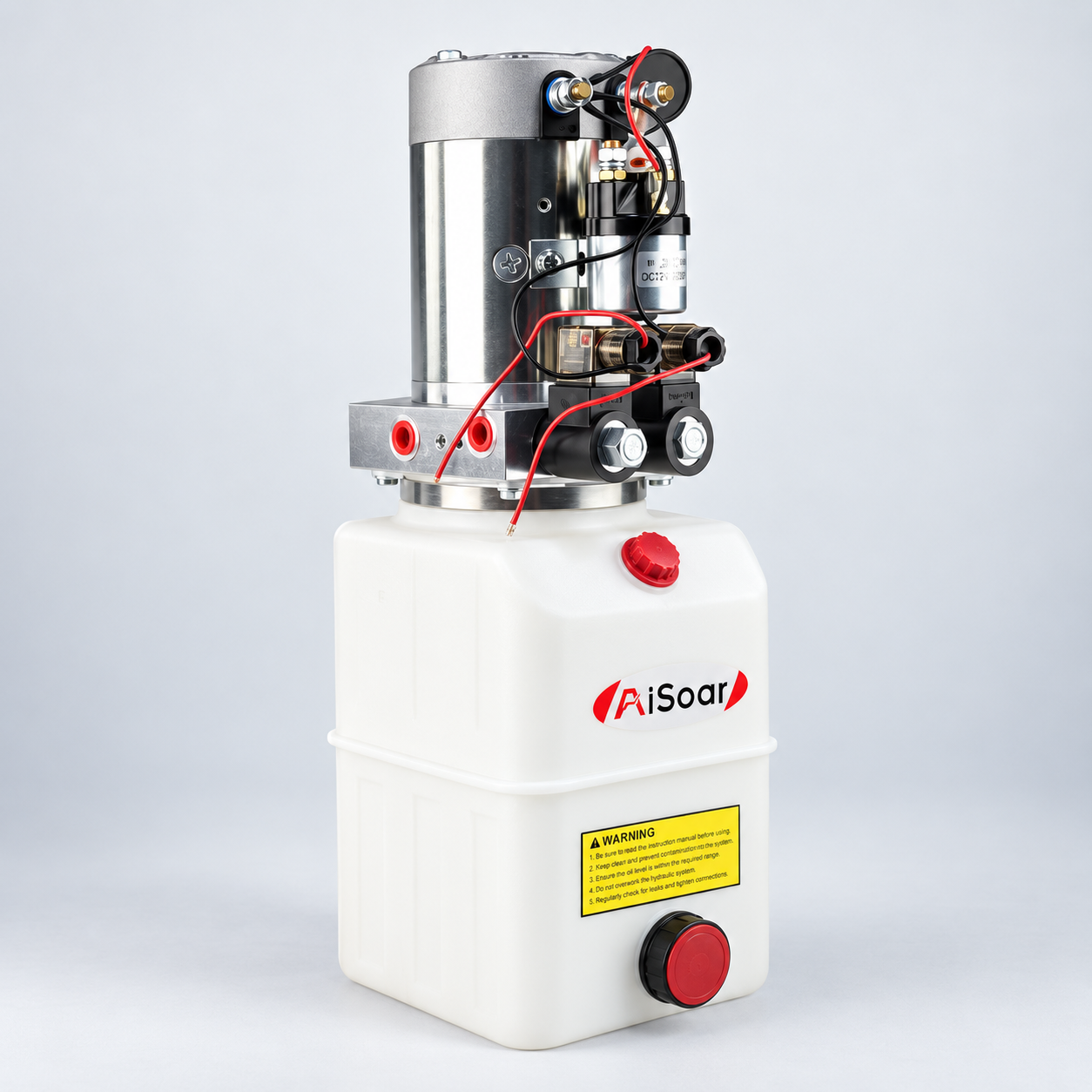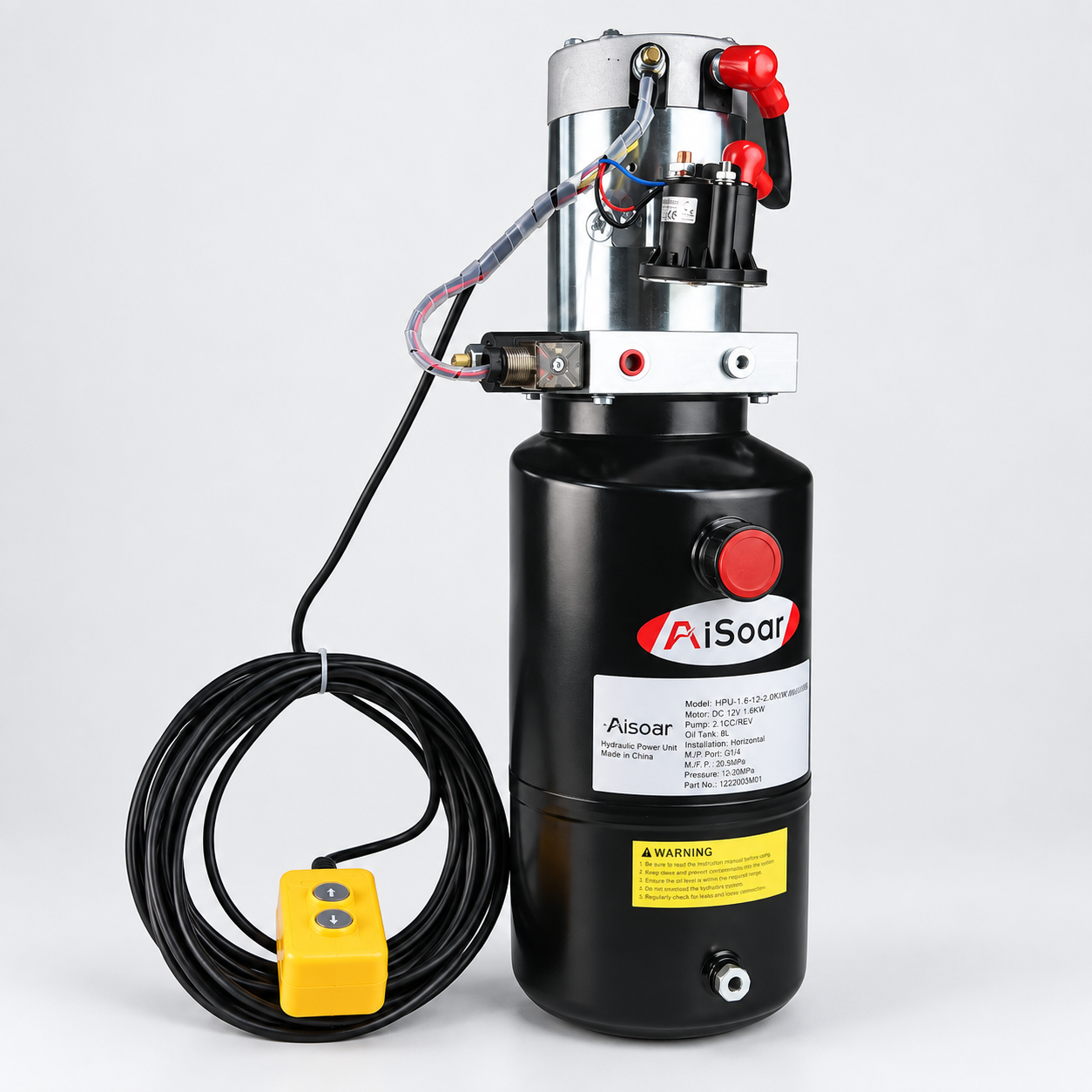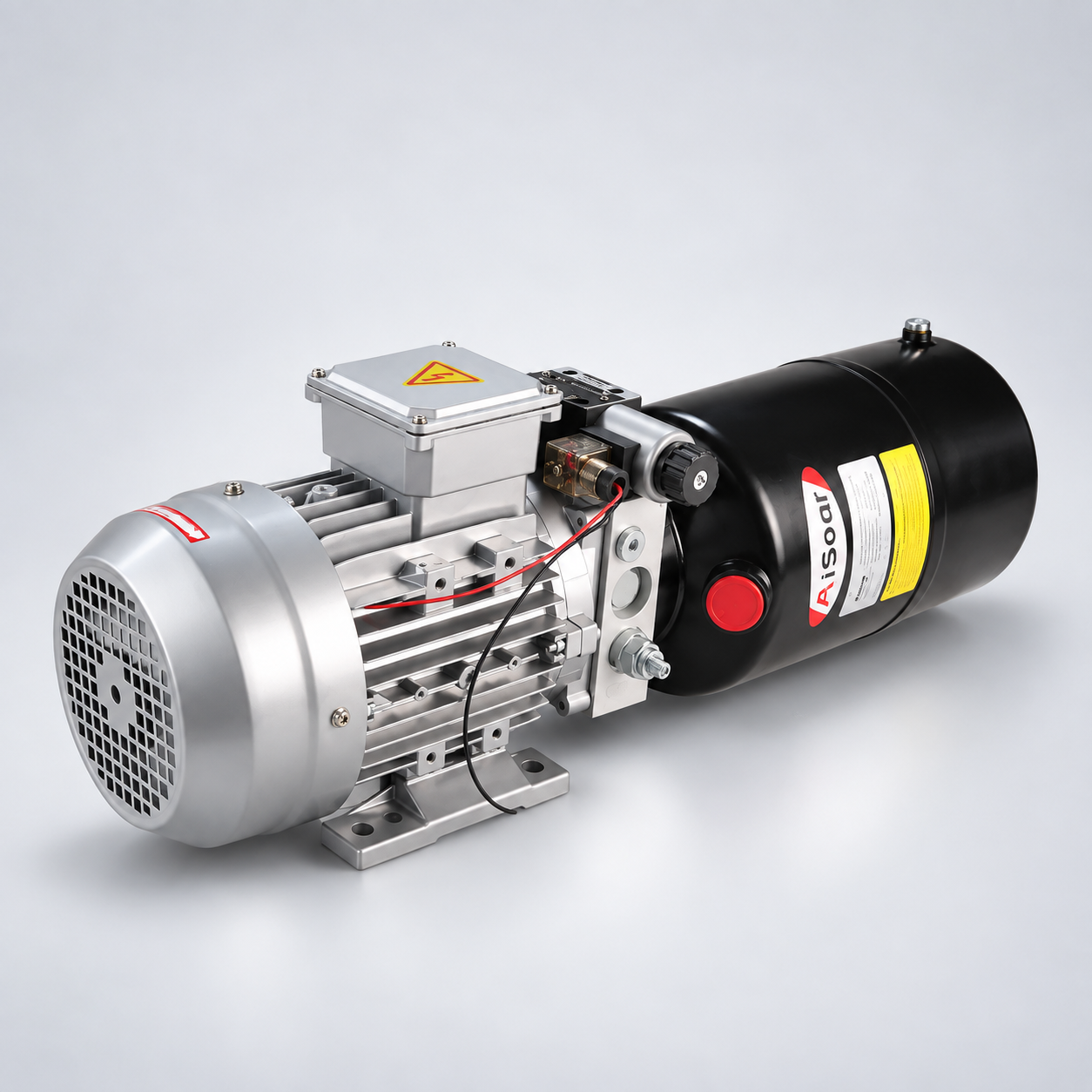
Selecting the correct mini hydraulic power unit is critical for achieving reliable performance, efficient operation, and long service life. An undersized hydraulic power unit may not provide enough force or speed, while an oversized system can increase costs and energy consumption.
This guide explains the key factors involved in sizing a mini hydraulic power unit and provides practical formulas to help you choose the right configuration for your application.
Table of Contents
ToggleWhy Proper Sizing Matters
A properly sized mini hydraulic power unit offers several benefits:
- Consistent hydraulic performance
- Faster cycle times
- Lower energy consumption
- Reduced component wear
- Longer system lifespan
- Lower maintenance costs
Whether you’re designing a system for a dump trailer, lift table, scissor lift, agricultural machine, or industrial equipment, proper sizing starts with understanding the application requirements.
Step 1: Determine the Required Hydraulic Force
The first step is calculating how much force the hydraulic cylinder must generate.
Formula
F=P×A
Where:
- F = Force (N or lbs)
- P = Hydraulic Pressure
- A = Cylinder Area
Example
Suppose a dump trailer requires:
- Lifting force: 10,000 lbs
- Cylinder bore: 3 inches
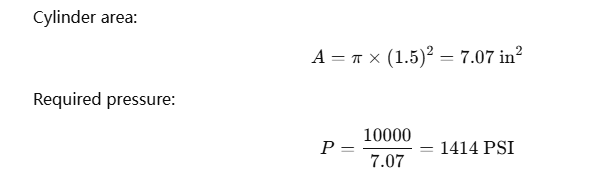
In practice, a safety factor is recommended, so a power unit rated for 2000–2500 PSI would be suitable.
Step 2: Calculate the Required Flow Rate
Flow rate determines how fast the hydraulic cylinder moves.
Formula
Q=(A×Stroke) /Time
Where:
- Q = Flow rate
- A = Cylinder area
- Stroke = Cylinder travel distance
- Time = Desired extension time
Example
Cylinder specifications:
| Parameter | Value |
|---|---|
| Bore | 3 in |
| Stroke | 20 in |
| Extension Time | 10 sec |
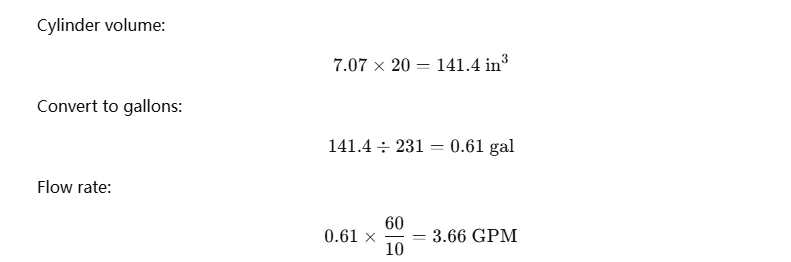
A hydraulic power unit with approximately 4 GPM flow would satisfy this requirement.
Step 3: Select the Operating Pressure
Pressure determines the available lifting force.
Common Mini Hydraulic Power Unit Pressure Ratings
| Application | Typical Pressure |
|---|---|
| Lift Tables | 160 Bar |
| Dump Trailers | 180-210 Bar |
| Scissor Lifts | 180-220 Bar |
| Agricultural Equipment | 160-210 Bar |
| Industrial Machinery | 210-250 Bar |
Pressure Selection Guidelines
- Choose the minimum pressure needed for the load.
- Include a safety margin of 15–25%.
- Avoid continuously operating at maximum pressure.
Step 4: Calculate Motor Power Requirements
Motor size depends on both pressure and flow.
Formula

Example
| Parameter | Value |
|---|---|
| Pressure | 210 Bar |
| Flow | 5 L/min |
Calculation:
Power=210×5600=1.75kWPower=\frac{210\times5}{600}=1.75kWPower=600210×5=1.75kW
Recommended motor:
- 2.0 kW motor
- 12V DC
- 24V DC
- AC motor depending on application
Step 5: Select Reservoir Capacity
The hydraulic oil tank must hold sufficient oil for the system.
General Rule
Reservoir size should be:
| Duty Cycle | Recommended Tank Size |
|---|---|
| Intermittent Use | 1-2 × cylinder volume |
| Medium Duty | 2-3 × cylinder volume |
| Continuous Operation | 3-5 × cylinder volume |
Common Tank Capacities
| Tank Size | Typical Applications |
|---|---|
| 1 Liter | Small actuators |
| 3 Liter | Lift tables |
| 5 Liter | Dump trailers |
| 8 Liter | Scissor lifts |
| 12 Liter | Industrial equipment |
Step 6: Choose the Correct Voltage
Mini hydraulic power units are available with different motor voltages.
| Voltage | Typical Applications |
|---|---|
| 12V DC | Dump trailers, utility trailers |
| 24V DC | Heavy trucks, mobile equipment |
| 110V AC | Workshop equipment |
| 220V AC | Industrial machinery |
| 380V AC | Factory automation systems |
Selection Tips
- Use DC units for mobile equipment.
- Use AC units for stationary machines.
- Verify available power supply before selecting the motor.
Mini Hydraulic Power Unit Sizing Chart
| Application | Pressure | Flow Rate | Motor Power | Tank Capacity |
|---|---|---|---|---|
| Dump Trailer | 180-210 Bar | 3-6 L/min | 1.6-3.0 kW | 3-8 L |
| Lift Table | 160-180 Bar | 2-5 L/min | 1.0-2.2 kW | 3-5 L |
| Scissor Lift | 180-220 Bar | 4-8 L/min | 2.2-4.0 kW | 5-12 L |
| Dock Leveler | 180-210 Bar | 3-6 L/min | 1.5-3.0 kW | 3-8 L |
| Agricultural Equipment | 160-210 Bar | 2-6 L/min | 1.5-3.0 kW | 3-8 L |
Common Sizing Mistakes to Avoid
Choosing Pressure Based on Guesswork:Always calculate the required cylinder force before selecting system pressure.
Ignoring Flow Requirements: Pressure creates force, but flow controls speed. Many systems suffer from slow operation due to insufficient flow.
Undersized Oil Reservoir: A tank that is too small can cause overheating and poor oil conditioning.
No Safety Margin: Include additional capacity for unexpected loads and future system upgrades.
Over-Sizing the Motor: Excessively large motors increase costs without improving performance.
Information Required When Requesting a Custom Hydraulic Power Unit
To help manufacturers size a mini hydraulic power unit accurately, provide:
| Required Information | Example |
|---|---|
| Application | Dump Trailer |
| Cylinder Bore | 3 in |
| Cylinder Stroke | 20 in |
| Load Weight | 10,000 lbs |
| Desired Speed | 10 sec extension |
| Operating Voltage | 12V DC |
| Duty Cycle | Intermittent |
| Available Space | Installation dimensions |
Providing these details allows engineers to recommend the most suitable motor, pump, pressure setting, flow rate, and reservoir configuration.
Conclusion
Sizing a mini hydraulic power unit requires balancing force, speed, pressure, flow rate, motor power, and reservoir capacity. By calculating the cylinder requirements and operating conditions first, you can select a hydraulic power unit that delivers reliable performance while minimizing energy consumption and maintenance costs.
For OEM projects and custom hydraulic systems, working with an experienced mini hydraulic power unit manufacturer can help ensure the unit is correctly engineered for your specific application.