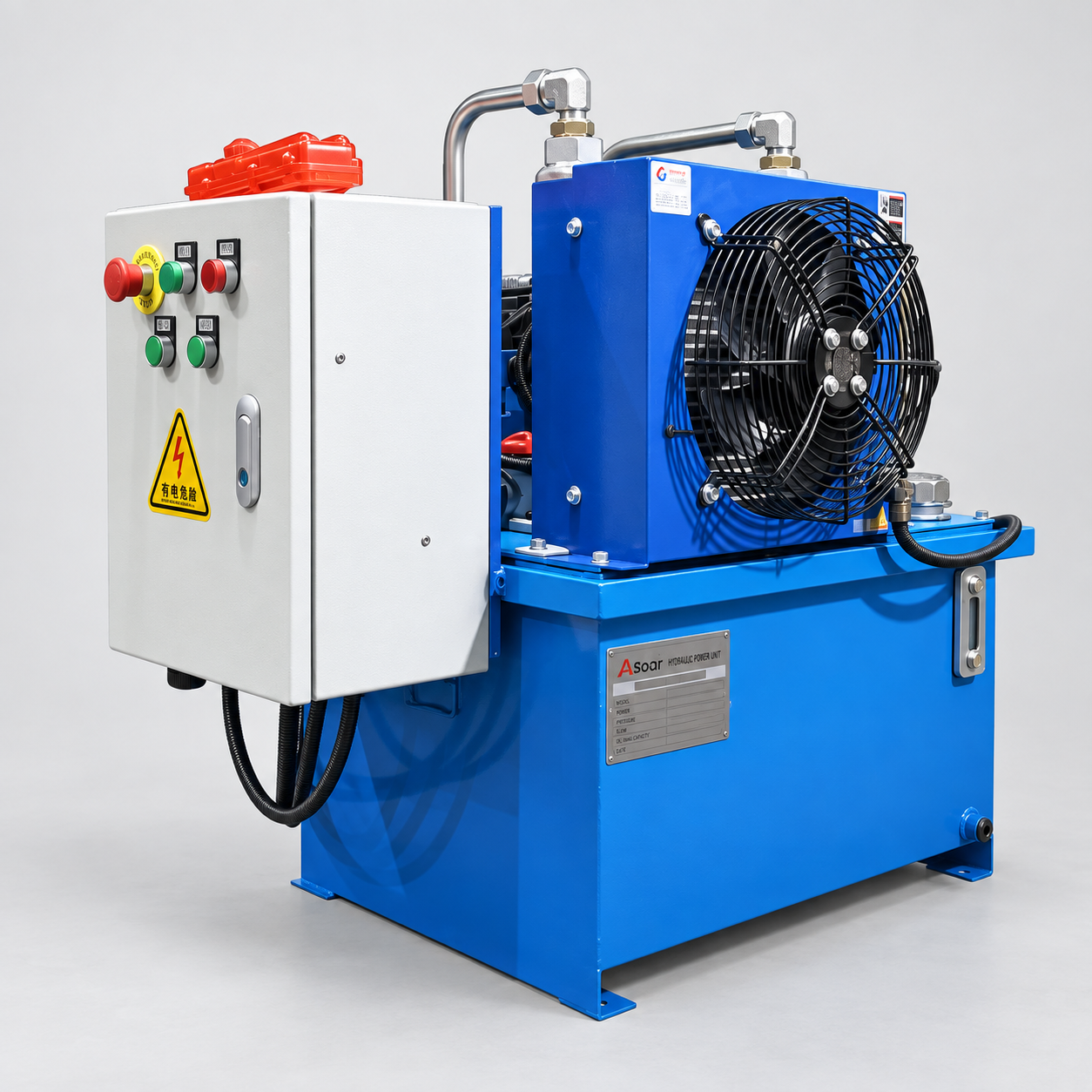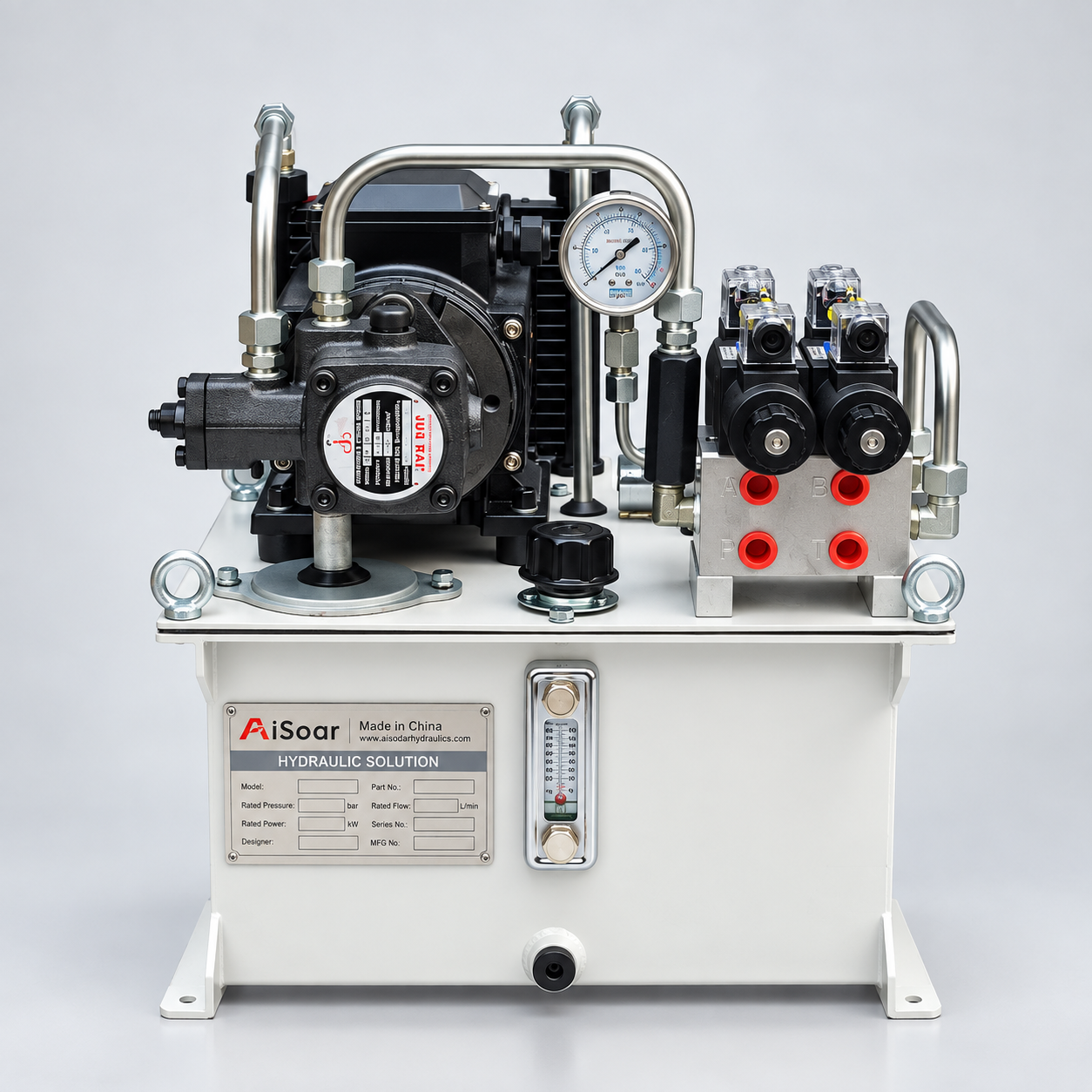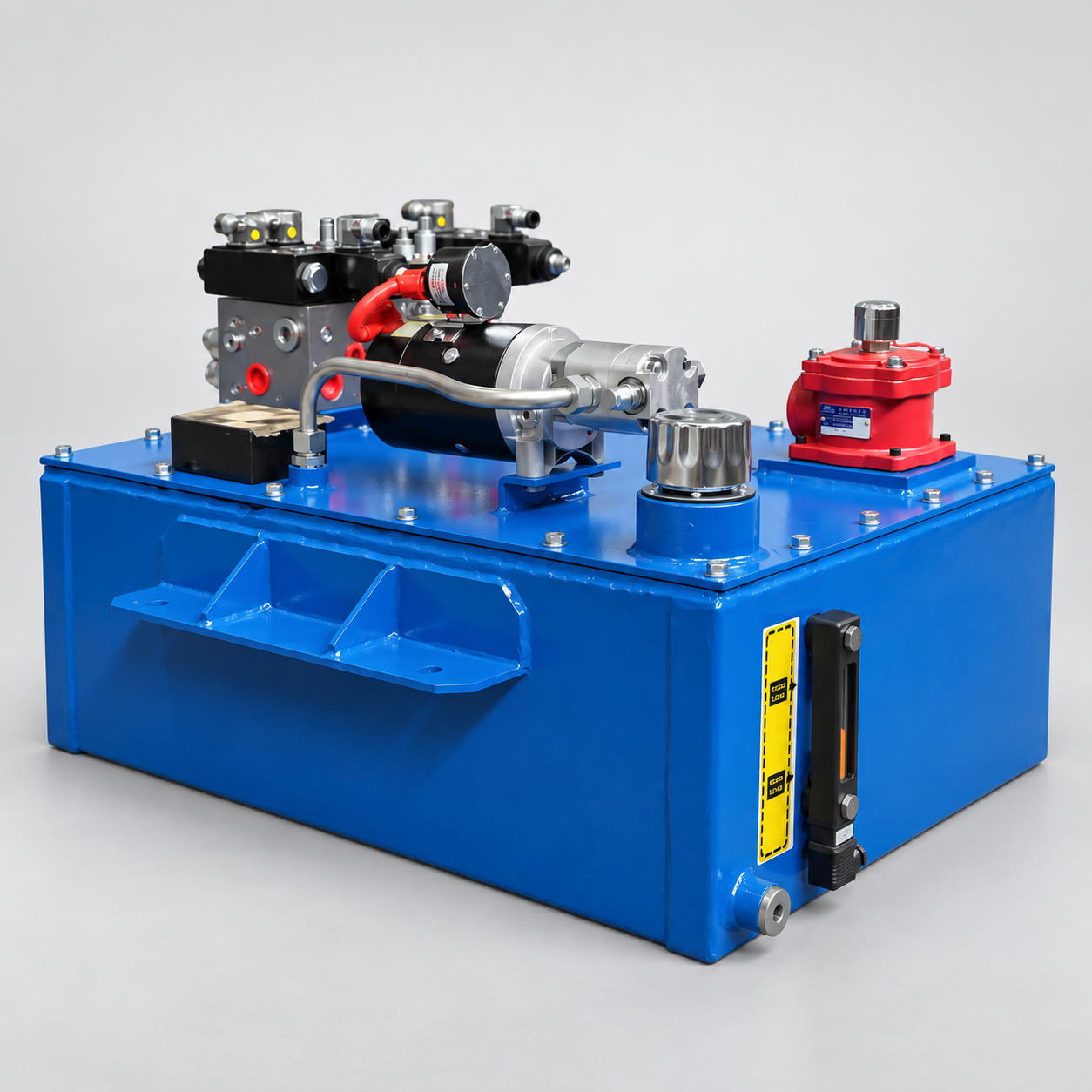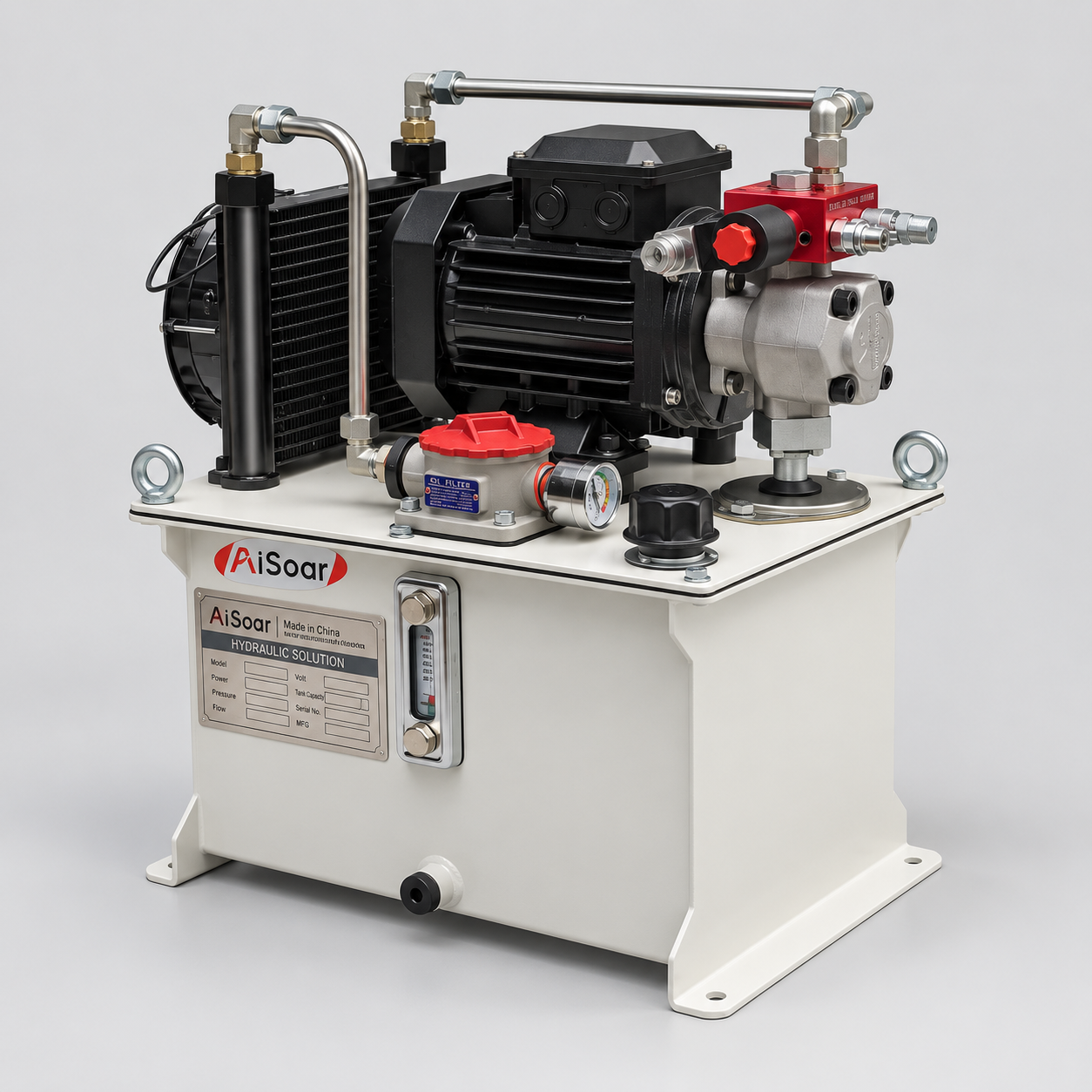
Undersized hydraulic systems stall production, overheat oil, and fail early. Oversized units waste energy and budget. This hydraulic power unit sizing guide shows exact steps to size correctly.
A hydraulic power unit must be sized from real pressure, flow, duty cycle, and thermal load—not nameplate guesses. Calculate hydraulic power first, then select pump, motor, reservoir, filtration, cooling, and controls as one system. Correct sizing improves uptime, efficiency, and lifecycle cost while reducing overheating, cavitation, and unplanned downtime.
Keep reading to learn the practical sizing workflow engineers use to build a reliable Hydraulic power unit from requirements to optimization.
Why Hydraulic Power Unit (HPU) Sizing Matters
Proper sizing is the foundation of hydraulic reliability. A Hydraulic power unit is not just a pump and motor package; it is an energy conversion system that must match your machine’s real operating profile. If flow is too low, actuator speed drops, cycle times lengthen, and production throughput suffers. If pressure is misjudged, cylinders may fail to develop required force, or relief valves may constantly dump flow, generating heat and wasting power. Both cases create hidden costs that are often far larger than initial equipment cost.
A properly sized hydraulic power unit (HPU) helps you:
- Deliver stable pressure and flow under peak load
- Improve system response and reliability
- Reduce energy consumption and heat generation
- Extend service life of pumps, valves, seals, and hydraulic oil
- Prepare for future system expansion
In short, accurate HPU sizing improves both performance and long-term operating cost.
Define System Requirements Before You Calculate
Before selecting components, gather complete operating data:
1) Required working pressure (bar or psi)
2) Required flow rate (L/min or GPM)
3) Actuator type (cylinders, motors) and motion profile
4) Duty cycle (continuous, intermittent, high-frequency)
5) Ambient temperature and cooling conditions
6) Installation constraints (space, noise, power supply)
Incomplete input data is one of the most common reasons for sizing errors in hydraulic power unit (HPU) projects.
Basic Power Calculation for HPU Sizing
Once requirements are clear, begin with hydraulic power. The core relationship is:
- Hydraulic power (kW) = Pressure (bar) × Flow (L/min) ÷ 600
- Motor power (kW) = Hydraulic power ÷ Overall efficiency
Overall efficiency includes pump volumetric/mechanical efficiency and motor/drive losses. In many practical designs, using a realistic combined efficiency range (for example 0.75–0.90 depending on technology and operating point) gives a reliable first estimate. Afterward, validate with vendor curves at your actual pressure and speed.
Example: if the system needs 180 bar and 90 L/min at the main work phase, hydraulic power is 180 × 90 ÷ 600 = 27 kW. If assumed overall efficiency is 0.82, motor input is about 27 ÷ 0.82 = 32.9 kW. You would then select the nearest suitable motor rating with an engineering margin based on duty profile and overload behavior, not arbitrary oversizing.
Also check transient conditions: startup, simultaneous actuator motion, pressure spikes, and low-temperature high-viscosity operation. These can temporarily increase required torque. For pump displacement sizing, use flow and rotational speed:
Flow ≈ Displacement × Speed × Volumetric efficiency.
This helps determine whether you need fixed or variable displacement and what operating speed window is acceptable. Good hydraulic power unit sizing guide practice includes iterative validation: calculate, simulate duty phases, verify thermal balance, and refine component choices before procurement.
Selecting the Right Hydraulic Power Unit Components
| Component | Why It Matters |
| Pump | The pump defines how much flow and pressure your hydraulic power unit (HPU) can deliver. Correct pump type improves efficiency, control, and system life. |
| Motor | Motor sizing affects power stability and energy use. A properly matched motor prevents overload, reduces downtime, and supports reliable operation. |
| Reservoir (Tank) | A well-sized reservoir supports cooling, de-aeration, and contamination settling, which helps protect hydraulic fluid and components. |
| Filtration | Clean oil is essential for HPU reliability. Proper filtration reduces wear, prevents valve sticking, and extends service intervals. |
| Cooling System | Temperature control prevents oil breakdown and seal damage. Effective cooling keeps the hydraulic power unit (HPU) efficient under heavy duty cycles. |
| Valves | Valves control pressure, direction, and flow. Correct valve selection improves response time, safety, and motion accuracy. |
| Sensors & Monitoring | Monitoring pressure, temperature, and oil level enables predictive maintenance and reduces unplanned shutdowns. |
| Manifold / Piping | Good piping and manifold design lowers pressure loss, minimizes leak risk, and improves overall system efficiency. |
Final Thoughts
Effective hydraulic power unit (HPU) sizing is more than a single formula—it requires a full-system view of load demand, duty cycle, thermal behavior, and component compatibility.By combining correct calculations with practical design margins and efficient component selection, you can build an HPU system that is reliable, efficient, and ready for long-term operation.For complex applications—such as continuous heavy-duty service, precision control, or harsh environments