
Facing unpredictable equipment movement or load drift in hydraulic systems can lead to costly damage and safety risks. Failing to control these forces may result in accidents and wasted resources. Counterbalance valves offer precise load control and operational safety—discover how they protect your system.
Counterbalance valves, also known as hydraulic counterbalance valves, are load-holding devices installed in hydraulic systems to prevent uncontrolled load movement, ensuring safety, stability, and performance in demanding applications.
Don’t miss these key insights into counter balance valve technology and its critical safety roles.
What Is a Counterbalance Valve?
A counterbalance valve is a hydraulic component designed specifically to hold and control a load in a hydraulic system. Also called a hydraulic counterbalance valve, its job is to maintain a preset pressure in a portion of the circuit, thus preventing a load (such as a boom, platform, or actuator) from dropping or moving unexpectedly under the force of gravity or external loads.
The construction of a counterbalance valve includes a relief section set to a specific pressure, a load port, and a pilot line. It is typically mounted directly on or near a hydraulic actuator—such as a cylinder or motor—ensuring immediate reaction to load-induced movement. By responding only when pilot pressure is applied, the valve ensures the load is lowered safely and at a controlled rate. This function is essential in vertical lifting equipment, mobile machinery, and industrial presses, where load safety and precise movement are paramount.
Specifically, the counter balance valve prevents uncontrolled descent by blocking or restricting hydraulic flow from the actuator until a controlled release is triggered, guarding against equipment failure and accidents.
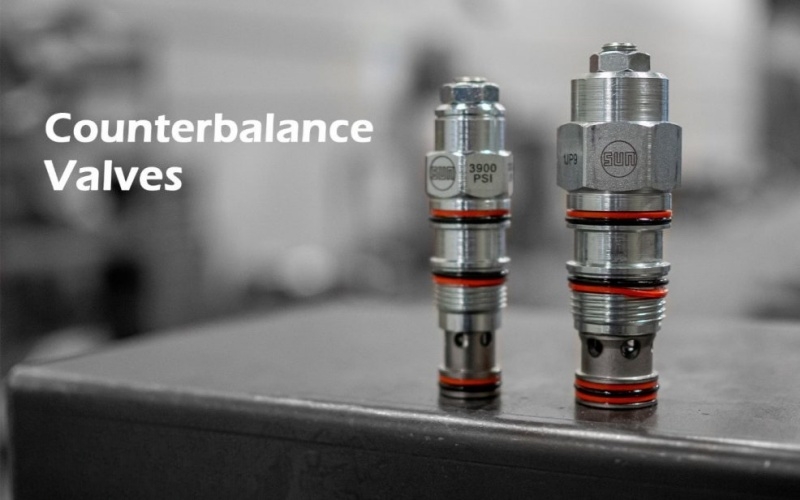
Functions of Counterbalance Valves
The core function of counterbalance valves in hydraulic systems is load holding—ensuring a load does not move when hydraulic control is lost or only partial power is applied. This protects both the equipment and operators from unexpected motion.
In detail, counterbalance valves perform several critical roles:
- Load Holding: They secure the load in position even when directional control valves are centered, or system pressure is lost.
- Load Control: By modulating the flow rate, these valves enable smooth, controlled lowering of heavy equipment, platforms, or booms, preventing sudden drops and shock loads on the hydraulic system.
- Overrunning Load Prevention: When an actuator is subject to an overrunning load (where load force exceeds actuator force), the valve throttles the flow, avoiding instability and maintaining smooth operation.
- System Efficiency: They improve the efficiency of hydraulic circuits by reducing overspeed conditions that could damage actuators and by minimizing energy waste from constant pumping against overpressure.
Hydraulic counterbalance valves are thus indispensable in applications demanding high stability, precise movement, and safety, including cranes, aerial lifts, excavators, and industrial presses.
Counterbalance Vs. Pilot-operated Check Valves
Counterbalance valves and pilot-operated check valves are often confused, but they serve distinct purposes within a hydraulic system. Both function as load-holding devices, but their control mechanisms and applications differ significantly.
- Counterbalance Valves are dynamic load-holding and control valves. They regulate flow based on system pressure and pilot signal, allowing controlled motion and damping for a stable, safe descent of loads. The ability to fine-tune the pressure setting makes them ideal for controlling load lowering speed and avoiding runaway conditions.
- Pilot-operated Check Valves act as one-way valves that lock a load in position until a pilot pressure signal opens them. They are passive and only allow load movement when pilot pressure is applied. While excellent for locking loads in position, they lack the controlled release and speed modulation functionality found in counterbalance valves.
In short:
- Use a counterbalance valve when you need controlled lowering and load holding, especially with over-center (over-running) loads.
- Use a pilot-operated check valve when you simply need to lock a load in place without needing precise speed control during release.
Each type has its place, but only the counterbalance valve offers both holding and controlled descent, making it vital in active load-handling applications.
Where to Use Counterbalance Valves in Hydraulic System
Counterbalance valves are used wherever load control, safety, and motion stability are essential. Their typical application points include:
- Vertical Actuators: Lifting cylinders in cranes, manlifts, aerial work platforms, and industrial hoists, where loss of pressure could result in sudden, dangerous load descent.
- Booms and Telescoping Arms: Mobile machines like excavators, forestry equipment, or loader booms, preventing over-speeding and unstable movement when booms extend or retract under load.
- Industrial Presses: Hydraulic presses that require load holding at specific positions for manufacturing processes or safety.
- Material Handling: Forklifts, lifting tables, and dump vehicles, securing load positions even when the system is powered down.
- Marine and Offshore Applications: Winches and lifting arms exposed to wind and tilt forces, needing reliable position holding against external factors.
In all these environments, the hydraulic counterbalance valve is strategically placed near or directly on the actuator to maximize safety, efficiency, and reliability. Its integration is often a key requirement for regulatory compliance and operational best practices.
Conclusion
Counterbalance valves are foundational hydraulic components that provide secure load holding and controlled lowering in high-stakes applications. By preventing uncontrolled movement, these valves safeguard equipment, personnel, and productivity. The distinction between counterbalance and pilot-operated check valves underscores the importance of selecting the right device for each load-holding requirement. For any hydraulic system where gravity, suspension, or load instability can compromise safety, installing a hydraulic counterbalance valve is not only recommended—it’s essential.