A Practical Guide to Hydraulic Motor Selection and System Efficiency
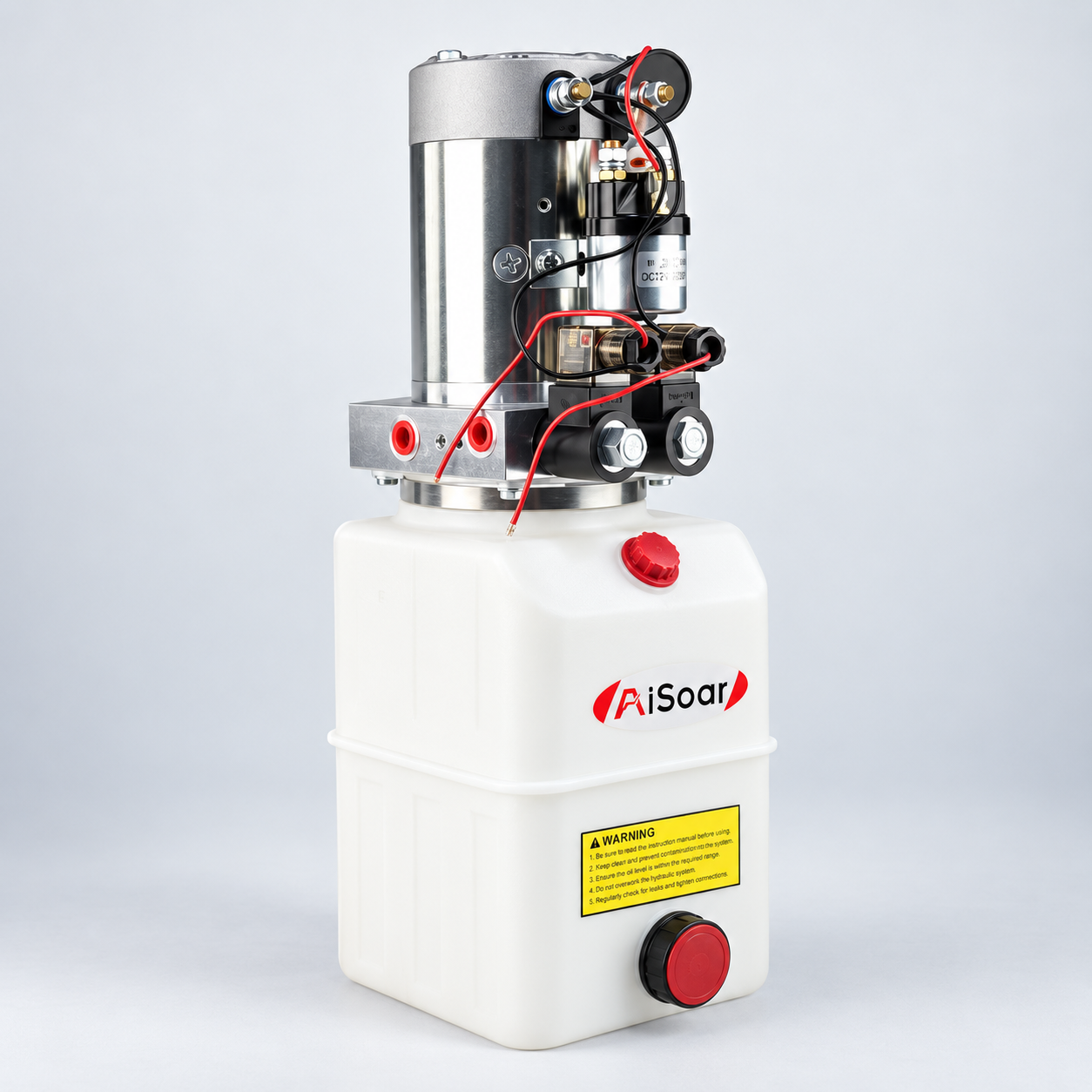
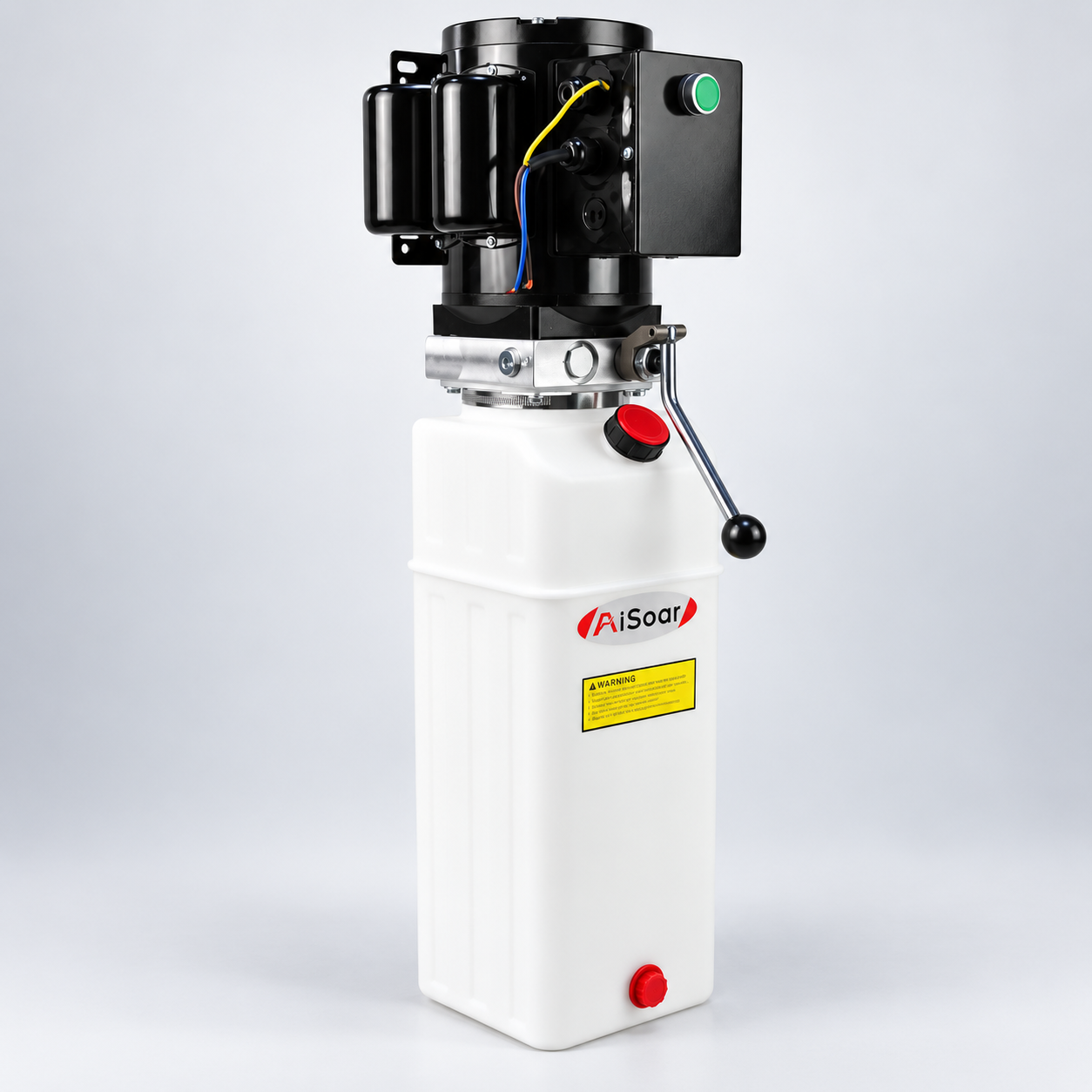
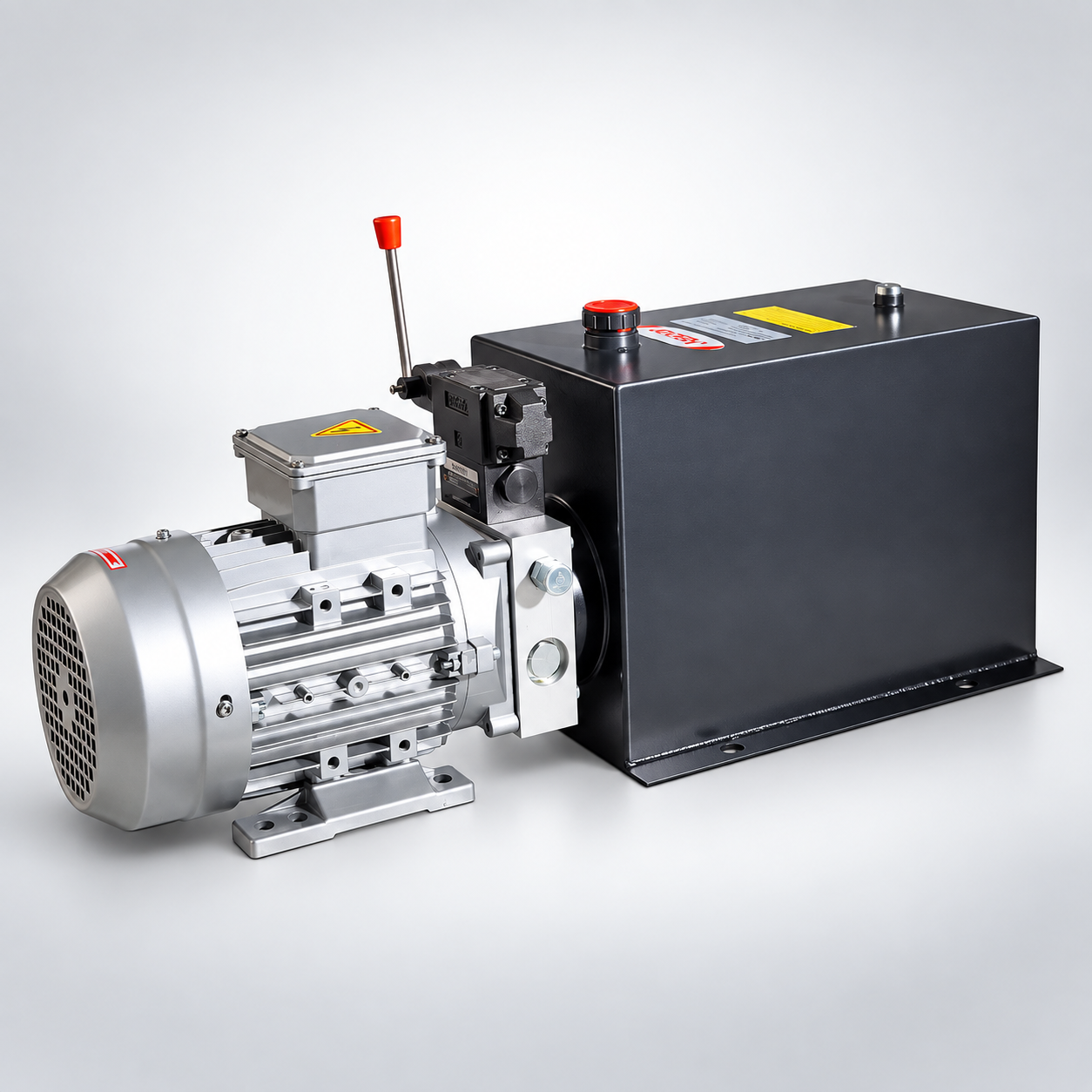
When building a mini hydraulic power unit pack , choosing the right motor is not just a component decision—it shapes the performance, reliability, and efficiency of the entire system.
A common mistake is selecting the pump first and then trying to match a motor afterward. In reality, best practice is to start from the load requirement, determine the motor performance needed, and then size the pump and prime mover accordingly.
Start with Application Load Requirements
Motor selection should begin with the real operating demand of the machine:
1) Required breakaway torque
2) Required running torque
3)Target shaft speed (rpm)
4)Duty cycle (continuous vs intermittent)
5) Operating pressure and flow range
If these are unclear, motor sizing becomes guesswork—and that usually leads to either early failure (undersized) or poor efficiency and unnecessary cost (oversized).
Understand the Key Motor Ratings
Hydraulic motors are typically rated by:
- Displacement (cm³/rev or in³/rev): fluid volume needed for one shaft revolution
- Torque (Nm or in-lb): output turning force
- Speed (rpm): rotational output
- Pressure capability (bar/psi): differential pressure the motor can withstand
Important torque definitions:
- Starting torque: torque available from standstill (usually the lowest due to internal losses)
- Stall (or running) torque: maximum torque before shaft rotation stops
Core Formulas for Motor Sizing
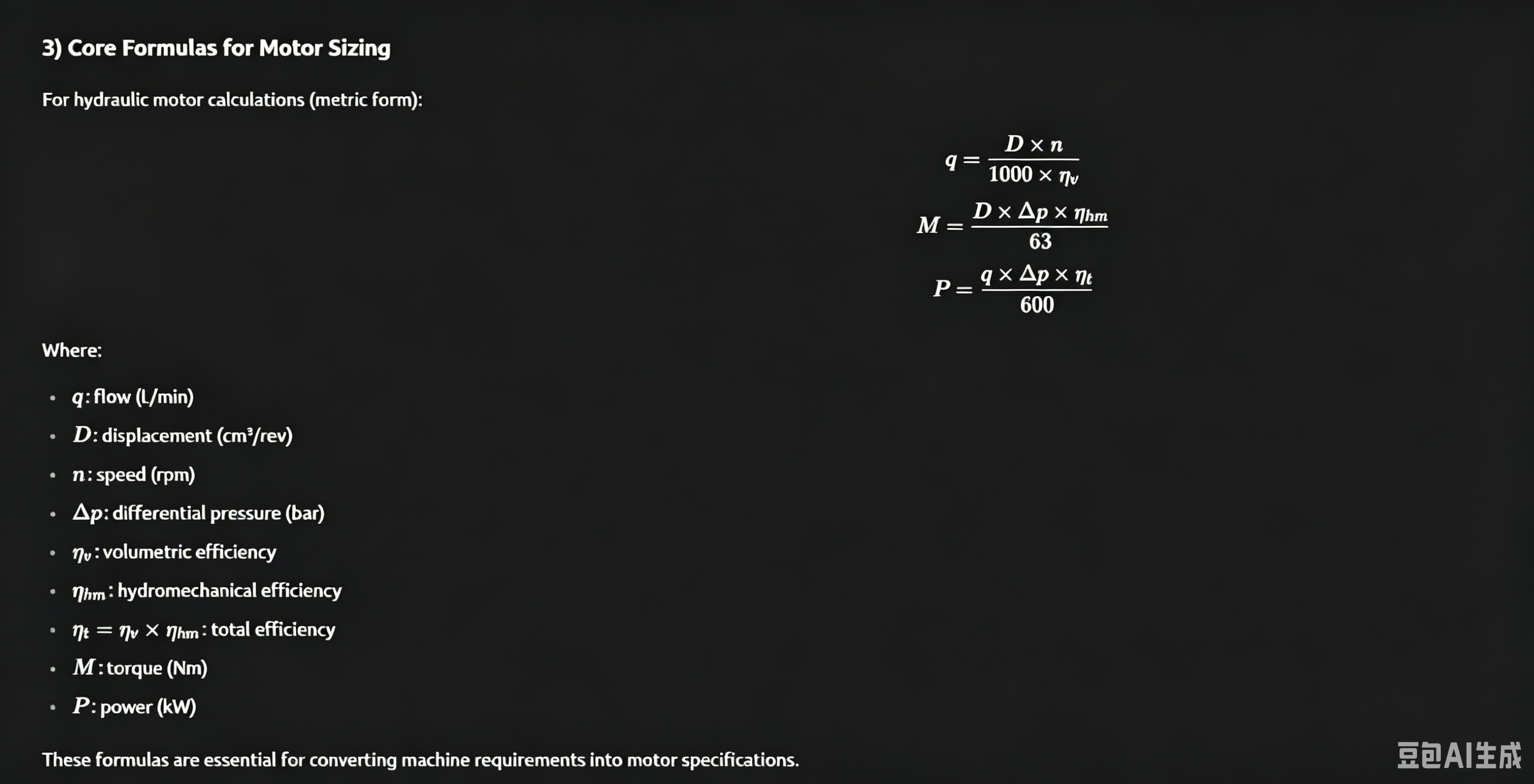
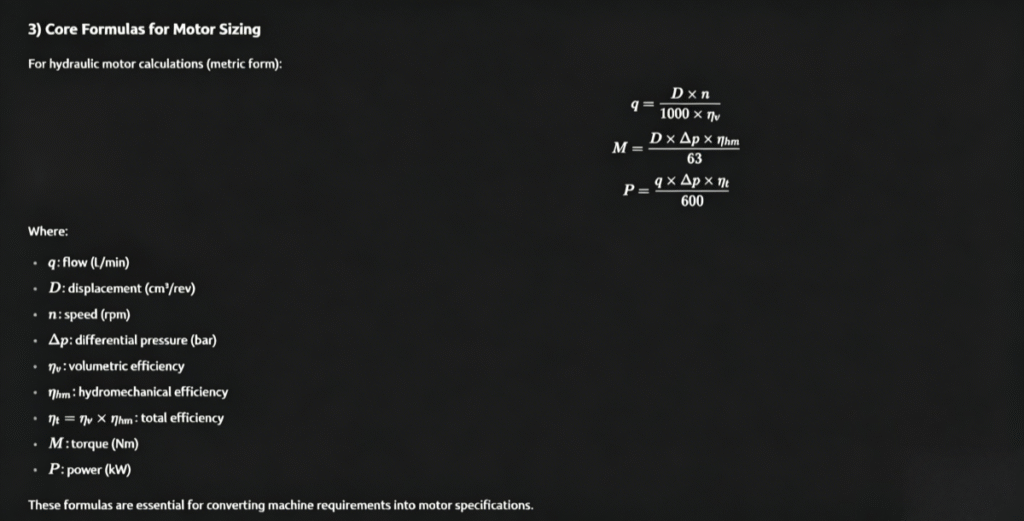
These formulas are essential for converting machine requirements into motor specifications.
Choose the Right Motor Class: HSLT vs LSHT
Hydraulic motors generally fall into two classes:
- HSLT (High-Speed, Low-Torque)
- LSHT (Low-Speed, High-Torque
Your application determines which is appropriate. If the machine requires strong torque at low speed (e.g., heavy drive or winch), LSHT is often preferred. For higher rotational speeds with moderate torque, HSLT may be better.
Compare Common Hydraulic Motor Types
| Motor Type | Typical Class (HSLT/LSHT) | Key Advantages | Main Limitations | Typical Applications |
| Gear Motor | Mostly LSHT (orbital), some HSLT variants |
Low cost, compact, simple | Noisy, medium pressure | Mobile, agri, conveyors, fans |
| Vane Motor | Mostly HSLT | Quiet, smooth flow, simple | Medium pressure, cleaner oil needed | Industrial drives, injection molding |
| Axial Piston (Swash Plate) | HSLT | High efficiency, high speed, precise control | Higher cost, complex, clean oil required | Construction, winches, high-performance systems |
| Bent-Axis Piston | HSLT | Very efficient, high pressure/speed, fast response | Expensive, integration complexity | Heavy-duty mobile, cranes, offshore, winches |
| Radial Piston | LSHT | Very high low-speed torque, smooth at low speed | Larger, slower, higher cost | Direct drives, heavy LSHT applications |
Avoid “Rated-but-Overstressed” Design
A motor may be technically within its max rating and still be a poor long-term choice.
Example: if a motor is continuously run near pressure limits for long duty cycles, service life can drop significantly.
In many cases, selecting a motor with higher performance margin results in:
- Better durability
- Lower maintenance frequency
- Lower total lifecycle cost
Conclusion
Choosing the right motor power for a hydraulic power unit requires more than checking a catalog pressure rating. The correct decision comes from matching motor displacement, torque, speed, and efficiency to the real application load profile. Start with the load. Size the motor to the load. Then build the rest of the hydraulic system around it. That is the most reliable path to performance, long service life, and lower total operating cost.