Hydraulic cylinder leakage is one of the most common problems in hydraulic systems. A leaking cylinder may lose pressure, move slowly, drift under load, fail to hold position, or reduce the overall efficiency of the machine. In serious cases, leakage can lead to equipment downtime, safety risks, oil contamination, and expensive repair costs.
A hydraulic cylinder test bench is one of the most reliable ways to check cylinder leakage before delivery, after repair, or before the cylinder is installed back on equipment. It allows the cylinder to be tested under controlled pressure, flow, and movement conditions, making leakage easier to detect and evaluate.
Hydraulic cylinder leakage can be divided into two main types: external leakage and internal leakage. External leakage is usually visible outside the cylinder, while internal leakage happens inside the cylinder when oil bypasses the piston seal from one chamber to another. Internal leakage is often harder to identify because there may be no oil visible outside the cylinder, but the cylinder still loses force or fails to hold pressure. Research on hydraulic cylinder leakage also explains that internal leakage between pressure chambers can gradually reduce performance without obvious external signs.
What Is Hydraulic Cylinder Leakage?
Hydraulic cylinder leakage means hydraulic oil is escaping from the area where it should be sealed. The leakage may happen outside the cylinder or inside the cylinder.
External leakage usually appears around the rod seal, port connection, end cap, welded joint, guide sleeve, fittings, or hydraulic hoses. This type of leakage is easier to find because oil can be seen on the cylinder surface or around the connection area.
Internal leakage, also called piston bypass, happens when hydraulic oil passes across the piston seal inside the cylinder barrel. The oil moves from the high-pressure chamber to the low-pressure chamber. The cylinder may not leak oil externally, but it may lose pressure, fail to hold load, drift, or move with weak force.
This is why visual inspection alone is not enough. A cylinder may look clean from the outside but still have serious internal leakage. A hydraulic cylinder test bench helps detect both visible and hidden leakage problems.
Why Use a Test Bench for Leakage Testing?
Testing a hydraulic cylinder directly on a machine can be difficult. The cylinder may be connected to valves, hoses, pumps, load-holding valves, and other hydraulic components. If the cylinder drifts or loses pressure, the problem may come from the cylinder, the valve, the hose connection, or the complete hydraulic circuit.
A hydraulic cylinder test bench isolates the cylinder from the machine. This allows the operator to test only the cylinder under controlled conditions. The test bench can apply pressure, hold pressure, cycle the cylinder, measure pressure drop, inspect external leakage, and check whether oil is bypassing across the piston seal.
For manufacturers, leakage testing helps ensure that each cylinder meets quality requirements before shipment. For repair workshops, it confirms whether the repaired cylinder is ready to return to service. For maintenance teams, it helps avoid repeated installation and removal caused by unresolved leakage problems.
Main Leakage Tests for Hydraulic Cylinders
A hydraulic cylinder test bench can perform several leakage-related tests. The most common ones include:
- External leakage inspection
- Pressure holding test
- Internal leakage or piston bypass test
- Rod seal leakage test
- Port and fitting leakage test
- End cap and welded area leakage test
- Full-stroke function test with leakage observation
A standard cylinder test procedure may include full-stroke cycling, proof pressure testing, and internal bypass testing. For example, Parker’s published hydraulic cylinder test procedure describes cycling the cylinder through its full stroke, rejecting cylinders with external leakage or deformation, and performing an internal bypass test on double-acting cylinders.
Step 1: Prepare the Hydraulic Cylinder
Before starting the leakage test, the cylinder should be cleaned and visually inspected. Dirt, oil residue, damaged fittings, or loose connections may affect the test result.
Check the cylinder barrel, piston rod, ports, seals, welded joints, mounting ends, and surface condition. If the rod is scratched, bent, or damaged, leakage may occur even if the seal itself is new. If the port thread or fitting surface is damaged, external leakage may appear during testing.
The cylinder should also be checked against the drawing or specification. Confirm the bore size, rod diameter, stroke, mounting type, working pressure, and test pressure. These details help the operator choose the correct fixture, pressure setting, hose connection, and test process.
Step 2: Mount the Cylinder on the Test Bench
The cylinder should be securely mounted on the hydraulic cylinder test bench. The mounting fixture must match the cylinder size and connection type, such as clevis, eye, flange, trunnion, or pin connection.
For long-stroke or heavy-duty cylinders, proper support is very important. If the cylinder is not supported correctly, the rod may bend, the mounting point may shift, or the test may become unsafe.
The cylinder should be positioned so that the operator can observe the rod seal, end caps, ports, welded areas, and hose connections during the test. Safety guards should be used when testing large cylinders or high-pressure cylinders.
Step 3: Connect the Hydraulic Lines
Connect the hydraulic hoses from the test bench to the cylinder ports. The hoses, fittings, and quick couplings should be suitable for the required pressure and flow.
Before pressurizing the system, confirm that all connections are tightened correctly. A loose fitting may create external leakage and lead to a false test result. The operator should also make sure that the correct port is connected to the correct test circuit, especially for double-acting cylinders.
If the test bench includes leakage measuring devices, pressure sensors, flow meters, or data acquisition systems, these should be connected and checked before the test starts.
Step 4: Remove Air from the Cylinder
Air inside the hydraulic cylinder can affect leakage testing. It may cause unstable movement, pressure fluctuation, noise, vibration, or inaccurate pressure holding results.
Before performing the formal leakage test, the cylinder should be extended and retracted several times at low pressure. This helps remove trapped air from the cylinder chambers and hydraulic lines.
During this process, observe whether the cylinder moves smoothly. If the cylinder shakes, crawls, or moves unevenly, the system may still contain air, or there may be assembly problems, seal friction, contamination, or rod alignment issues.
Step 5: Perform the External Leakage Test
External leakage testing is usually performed by pressurizing the cylinder and visually checking all sealing and connection areas.
The operator should inspect:
- Rod seal area
- Port connections
- Hose fittings
- End cap joints
- Welded areas
- Guide sleeve
- Cylinder tube surface
- Valve or manifold connection, if included
If oil appears on the outside of the cylinder, the leakage source should be identified. Common causes include damaged rod seals, poor seal installation, scratched rod surface, loose fittings, port damage, welding defects, incorrect seal selection, or excessive pressure.
For new cylinder production, external leakage usually means the cylinder needs to be repaired, reassembled, or rejected according to the quality standard. For repaired cylinders, external leakage indicates that the repair is not yet complete.
Step 6: Perform the Pressure Holding Test
The pressure holding test is used to check whether the cylinder can maintain pressure for a specified time. The cylinder is pressurized to the required test pressure, and the pressure is held while the operator monitors the pressure gauge or sensor.
If the pressure drops significantly, there may be leakage inside the cylinder, leakage outside the cylinder, leakage through the test circuit, or trapped air in the system. Therefore, the test bench itself must also be in good condition and properly sealed.
For double-acting cylinders, pressure holding should normally be tested in both extension and retraction directions. This helps check the sealing performance of both chambers.
A pressure holding test is especially important for cylinders used in lifting, clamping, pressing, supporting, and positioning applications. These cylinders must maintain force or position under load. If the cylinder cannot hold pressure, the machine may drift or fail during operation.
Step 7: Perform the Internal Leakage or Piston Bypass Test
Internal leakage testing is one of the most important leakage tests for double-acting hydraulic cylinders. The purpose is to check whether oil is bypassing the piston seal inside the cylinder.
A common test method is to move the cylinder to the end of stroke, apply pressure to one side, and check whether oil flows out from the opposite port. If continuous oil flow appears from the opposite port, it usually indicates piston seal bypass.
For example, when testing at the fully extended position, pressure may be applied to the piston side while the rod-side port is monitored. If oil continues to come out from the rod-side port, the piston seal may be leaking internally. The same principle can be applied in the opposite direction depending on the cylinder design and test procedure.
Internal bypass may be caused by worn piston seals, damaged seals, incorrect seal installation, barrel scoring, poor surface finish, contamination, excessive pressure, or incorrect piston clearance.
This test is important because internal leakage may not be visible from outside. Without a test bench, the cylinder may be installed on a machine and only then show problems such as drifting, weak force, or unstable movement.
Step 8: Record the Test Results
After the leakage test is completed, the test result should be recorded. For a manual test bench, the operator may record pressure, test time, leakage condition, and inspection result manually.
For a PLC-controlled or software-controlled hydraulic cylinder test bench, the system can automatically record pressure, flow, temperature, leakage data, holding time, and test curves. It can also export test reports for quality traceability.
Test records are useful for production quality control, customer inspection, warranty management, and repair history. For batch cylinder production, consistent records help ensure that every cylinder is tested under the same conditions.
Common Signs of Hydraulic Cylinder Leakage
Hydraulic cylinder leakage may show several symptoms during operation or testing:
- Oil visible around the rod seal or ports
- Cylinder drifts under load
- Cylinder cannot hold pressure
- Cylinder moves slowly or unevenly
- Cylinder loses lifting or pushing force
- Pressure drops during holding test
- Oil bypasses from the opposite port
- Cylinder temperature rises abnormally
- Machine movement becomes unstable
If these symptoms appear, a leakage test should be performed before replacing other hydraulic components. In many cases, the cylinder should be isolated and tested separately to confirm whether the problem is really inside the cylinder.
Benefits of Testing Cylinder Leakage with a Test Bench
Using a hydraulic cylinder test bench for leakage testing offers several advantages.
First, it improves accuracy. The cylinder is tested separately from the machine, which helps identify whether the leakage is caused by the cylinder itself.
Second, it improves safety. The test bench provides controlled pressure, proper fixtures, and safer operating conditions compared with testing on equipment.
Third, it improves quality control. Manufacturers can test every cylinder before shipment and reduce the risk of customer complaints.
Fourth, it improves repair reliability. Repair workshops can verify the cylinder after replacing seals, polishing the rod, repairing the barrel, or reassembling the cylinder.
Finally, it provides test records. With data recording and report export, the test result can be documented and shared with customers.
AiSoar Hydraulic Cylinder Leakage Test Bench Solutions
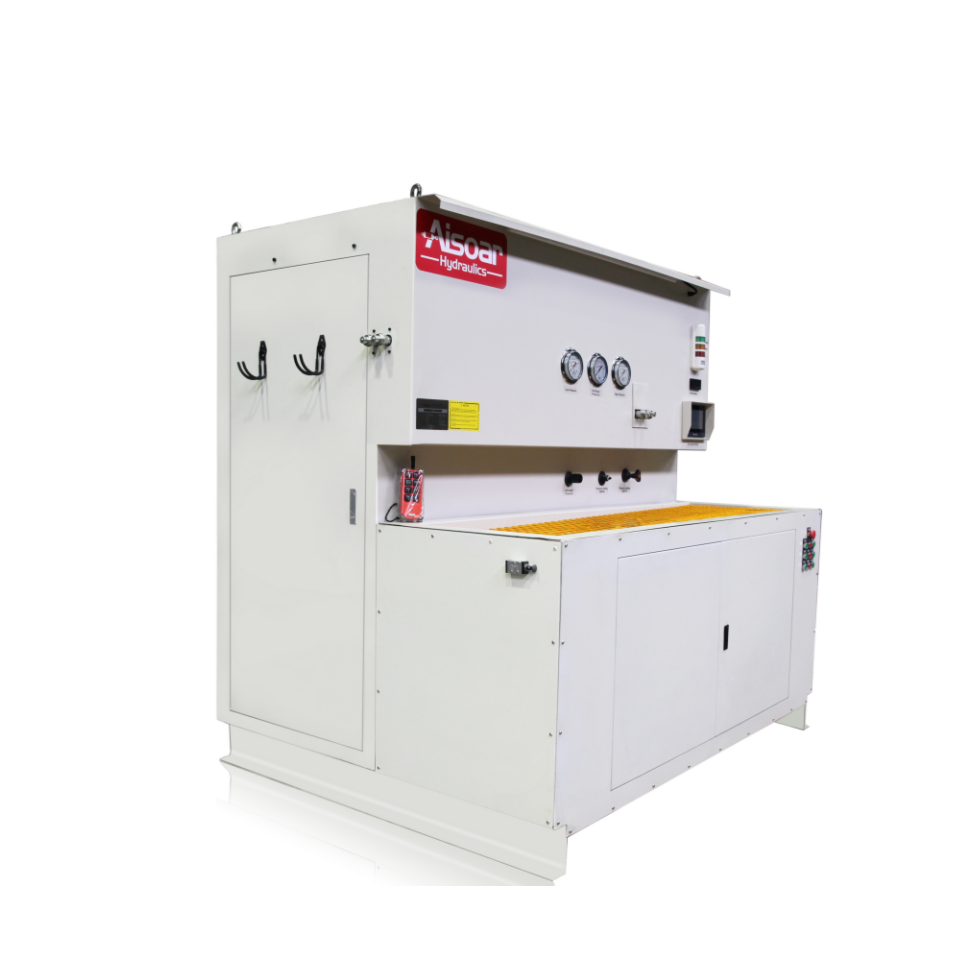
AiSoar Hydraulics provides hydraulic cylinder test bench solutions for pressure testing, pressure holding, external leakage inspection, internal leakage testing, cylinder extension and retraction testing, and test report export.
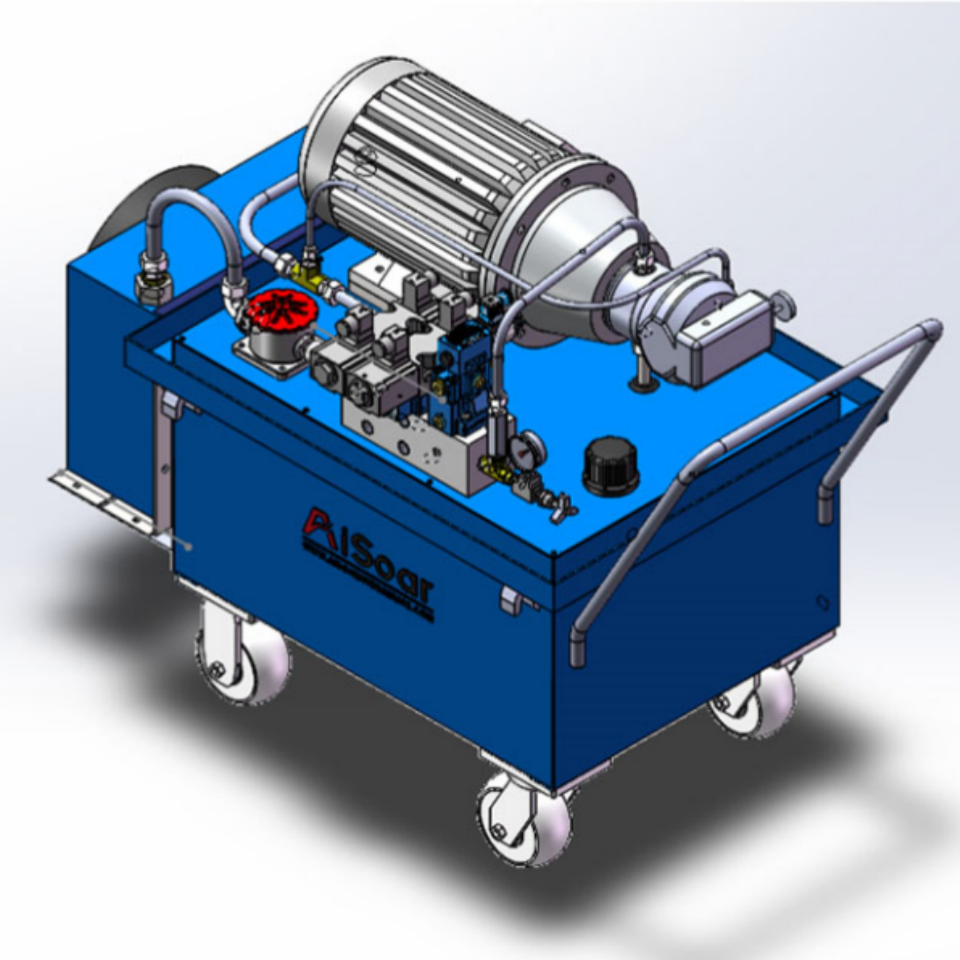
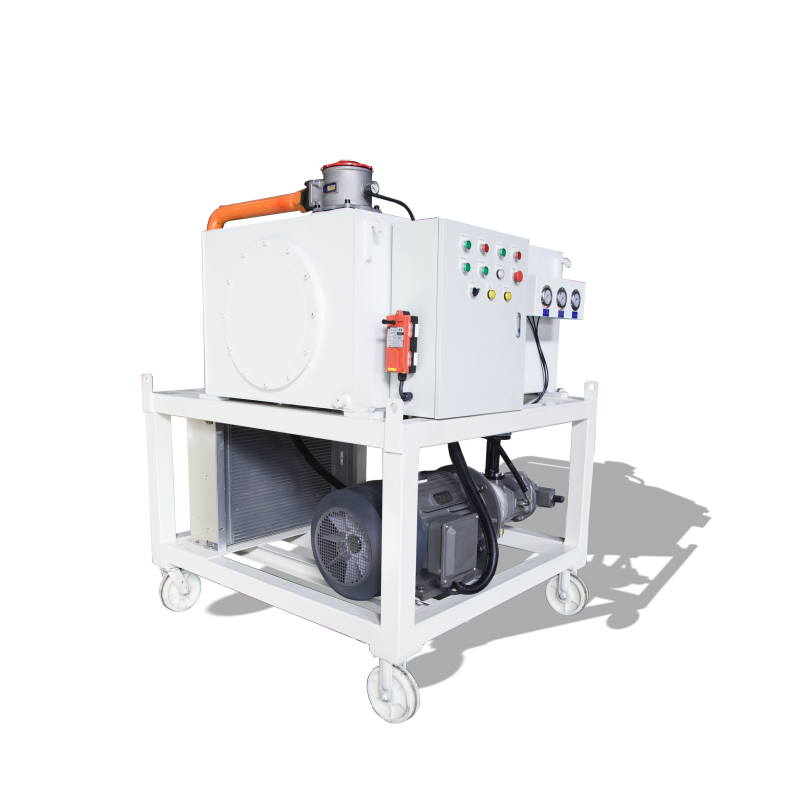
The test bench can be customized according to cylinder bore, rod diameter, stroke, maximum pressure, flow rate, cylinder weight, control method, testing process, and data recording requirements. Available configurations can include manual control, PLC control, software control, cooling and filtration system, quick connections, safety protection, leakage measurement, and automatic report export.
For hydraulic cylinder manufacturers, repair workshops, and maintenance centers, a properly designed test bench helps detect leakage before installation, reduce failure risks, improve product quality, and provide more reliable hydraulic cylinders to customers.
If you need to test hydraulic cylinder leakage accurately and efficiently, AiSoar can help design a suitable hydraulic cylinder test bench based on your cylinder specifications and testing requirements.