Introduction
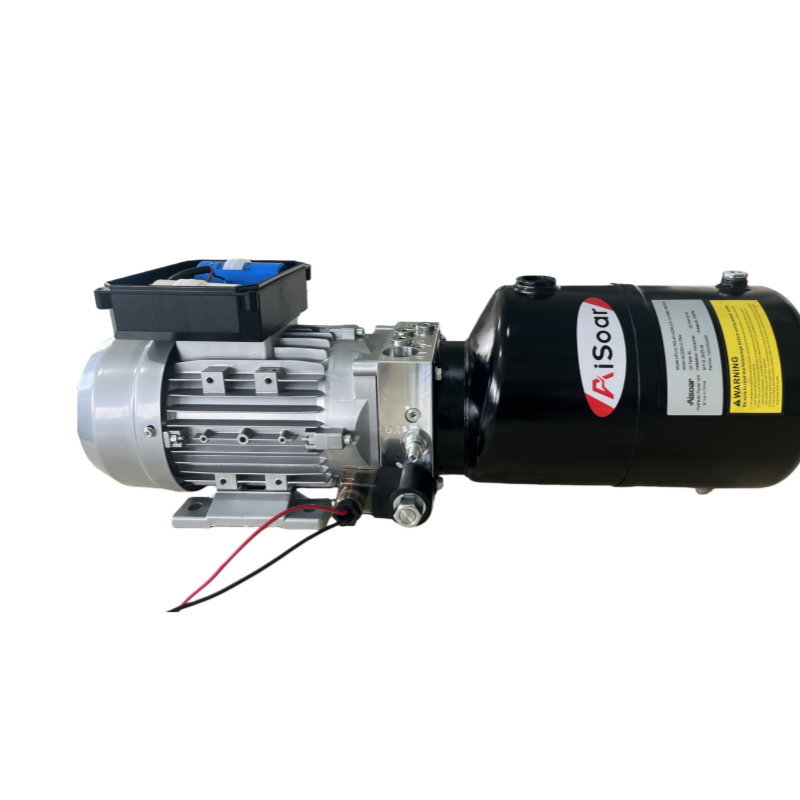
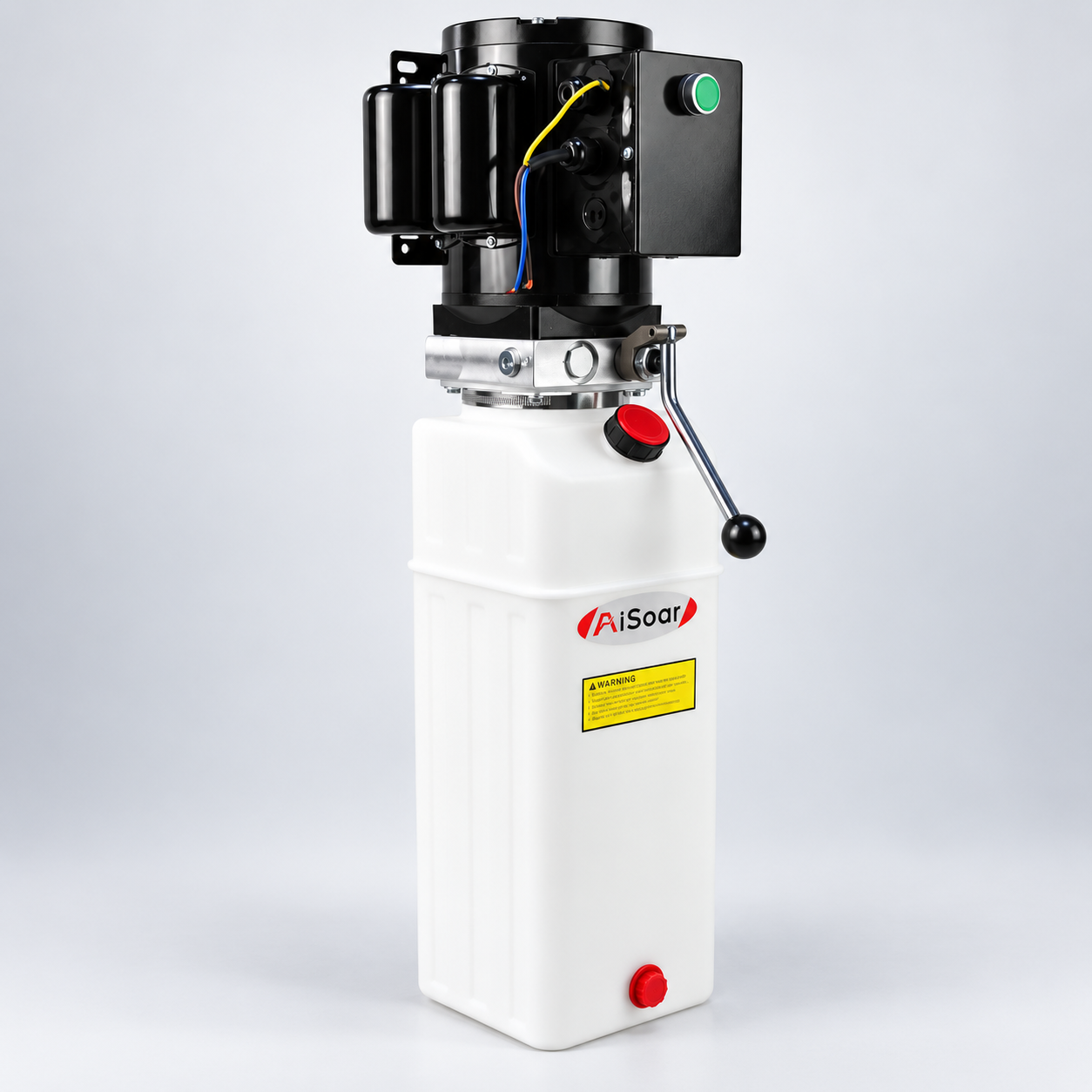
A dock leveler hydraulic power unit (HPU) is the core component that supplies hydraulic power to operate a hydraulic dock leveler. It converts electrical energy into hydraulic energy, allowing the dock platform and lip to raise, lower, and position safely between a warehouse loading dock and a truck bed.
In modern logistics centers, distribution warehouses, and industrial loading bays, dock leveler hydraulic power units play a critical role in ensuring safe and efficient material handling operations.
What Does a Dock Leveler Hydraulic Power Unit Do?
The hydraulic power unit provides pressurized hydraulic oil to the cylinders that move the dock leveler.
Its main functions include:
- Raising the dock platform
- Extending or positioning the dock lip
- Controlling lowering speed
- Holding loads safely during operation
- Providing smooth and reliable movement
Without a properly designed hydraulic power unit, a dock leveler cannot operate safely or efficiently.
Main Components of a Dock Leveler Hydraulic Power Unit
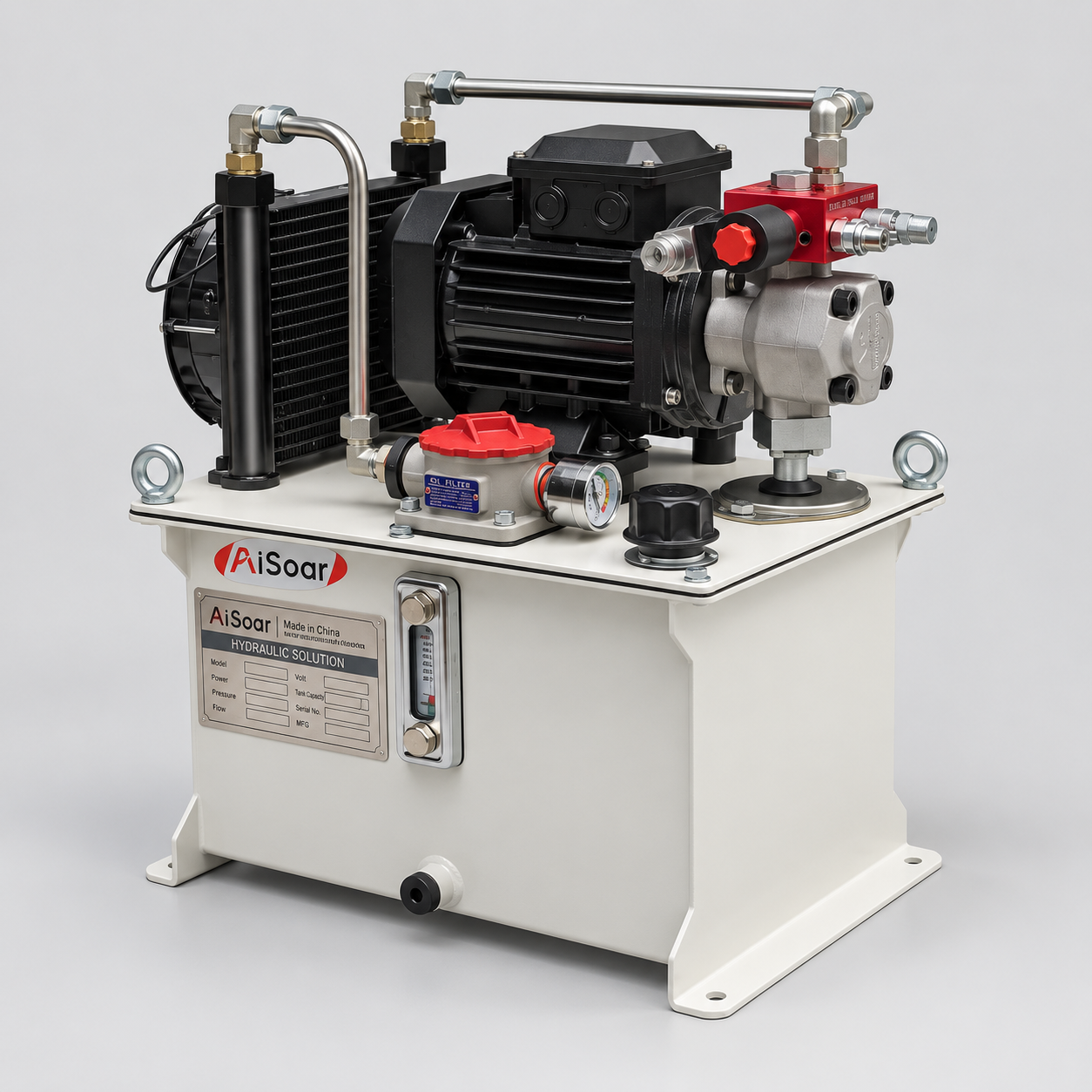
A typical dock leveler hydraulic power unit consists of the following components:
| Component | Function |
|---|---|
| Electric Motor | Drives the hydraulic pump |
| Hydraulic Pump | Generates oil flow and pressure |
| Oil Reservoir (Tank) | Stores hydraulic oil |
| Solenoid Valve | Controls oil direction and movement |
| Relief Valve | Protects the system from overpressure |
| Flow Control Valve | Regulates lowering speed |
| Hydraulic Manifold | Integrates hydraulic circuits |
| Electrical Control Box | Controls operation and safety functions |
These components work together to create a compact and reliable hydraulic system.
How Does a Dock Leveler Hydraulic Power Unit Work?
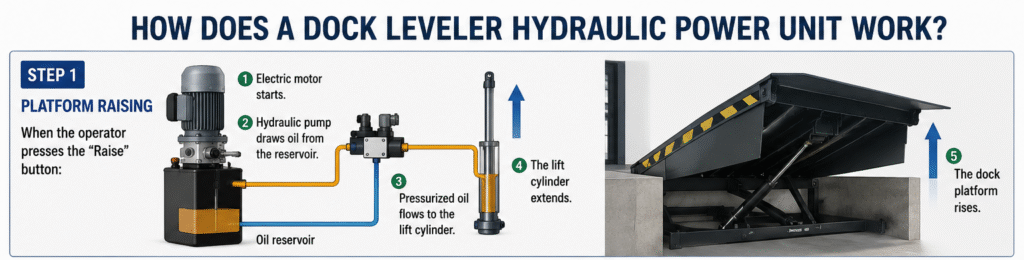
Step 1: Platform Raising
When the operator presses the “Raise” button:
- The electric motor starts.
- The hydraulic pump draws oil from the reservoir.
- Pressurized oil flows to the lift cylinder.
- The lift cylinder extends.
- The dock platform rises.
Step 2: Lip Extension
As the platform reaches its maximum height:
- Hydraulic pressure activates the lip cylinder.
- The dock lip extends outward.
- The lip rests on the truck bed.

Step 3: Controlled Lowering
After positioning:
- The motor stops.
- Solenoid valves open.
- Hydraulic oil returns to the tank through controlled passages.
- The platform lowers smoothly under gravity.

This controlled descent prevents sudden drops and improves operator safety.
Typical Hydraulic Circuit for Dock Levelers
A dock leveler hydraulic system generally includes:
- Power unit
- Lift cylinder
- Lip cylinder
- Solenoid valve system
- Pressure relief valve
- Flow control valve
The hydraulic power unit acts as the central power source, supplying pressure to all moving components.
Common Specifications
Although specifications vary by manufacturer and dock capacity, typical dock leveler hydraulic power units include:
| Specification | Typical Range |
|---|---|
| Motor Voltage | 220V / 380V / 460V AC |
| Motor Power | 0.75 kW – 2.2 kW |
| Working Pressure | 160–210 Bar |
| Flow Rate | 2–8 L/min |
| Tank Capacity | 3–10 Liters |
| Duty Cycle | Intermittent Operation |
| Control Voltage | 24V DC or 110V AC |
The exact configuration depends on platform size, lifting capacity, and operating frequency.
How to Choose the Right Dock Leveler Hydraulic Power Unit
When selecting a hydraulic power unit, consider:
| Selection Factor | Why It Matters |
|---|---|
| Platform Capacity | Determines required lifting force |
| Cylinder Size | Affects oil volume and pressure |
| Operating Voltage | Must match facility power supply |
| Duty Cycle | Influences motor sizing |
| Required Speed | Determines pump flow rate |
| Installation Space | Impacts tank and manifold design |
| Safety Requirements | May require additional valves |
Working with an experienced hydraulic power unit manufacturer helps ensure proper system sizing and long-term reliability.
Common Problems and Solutions
| Problem | Possible Cause |
|---|---|
| Platform Won’t Raise | Motor failure, low oil level, pump damage |
| Slow Lifting Speed | Insufficient flow, worn pump, voltage issues |
| Oil Leakage | Damaged seals, loose fittings |
| Excessive Noise | Air contamination, low oil level |
| Platform Drops Too Fast | Faulty flow control valve |
| Motor Overheating | Excessive duty cycle or overload |
Regular inspection can significantly reduce downtime and maintenance costs.
Conclusion
A dock leveler hydraulic power unit is the heart of a hydraulic dock leveler system. By supplying controlled hydraulic power to the lift and lip cylinders, it enables safe, smooth, and efficient loading dock operations.
Whether used in warehouses, logistics centers, or industrial facilities, selecting the correct hydraulic power unit ensures reliable performance, improved safety, and longer equipment life. For OEM dock leveler manufacturers and maintenance teams, understanding the hydraulic power unit is essential for optimizing dock equipment performance and reducing operational downtime.
Need a Complete Dock Leveler Hydraulic Solution?
Understanding how a dock leveler hydraulic power unit works is only the first step.
For warehouse and loading dock projects, selecting the right hydraulic power unit together with properly matched lift cylinders and lip cylinders is critical for safe and reliable operation.
👉 Explore our complete Dock Leveler Hydraulic Power Unit & Hydraulic Cylinder Solution, including system design recommendations, hydraulic circuit examples, and real project applications.