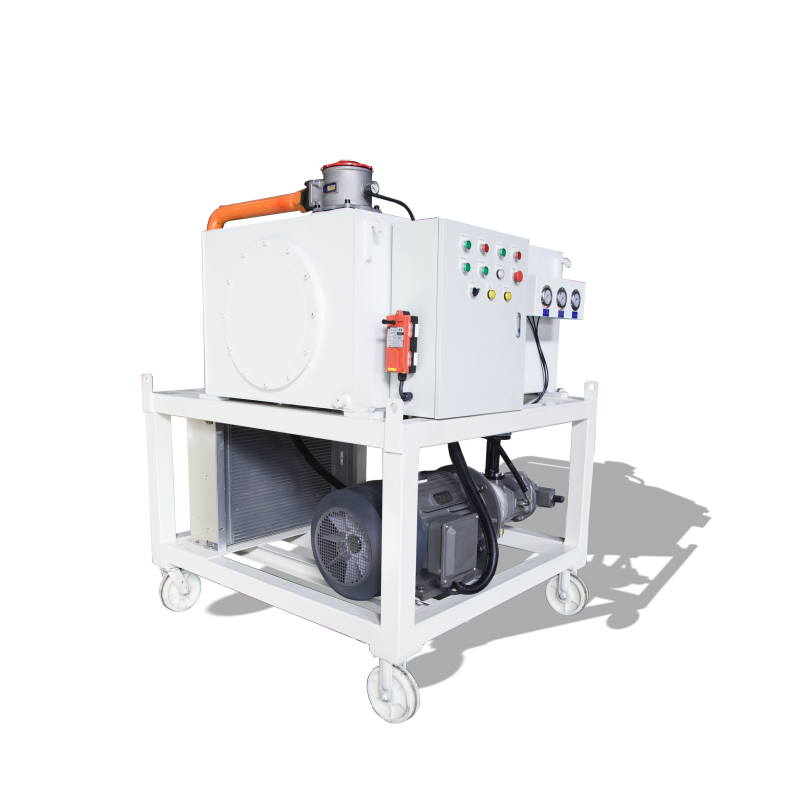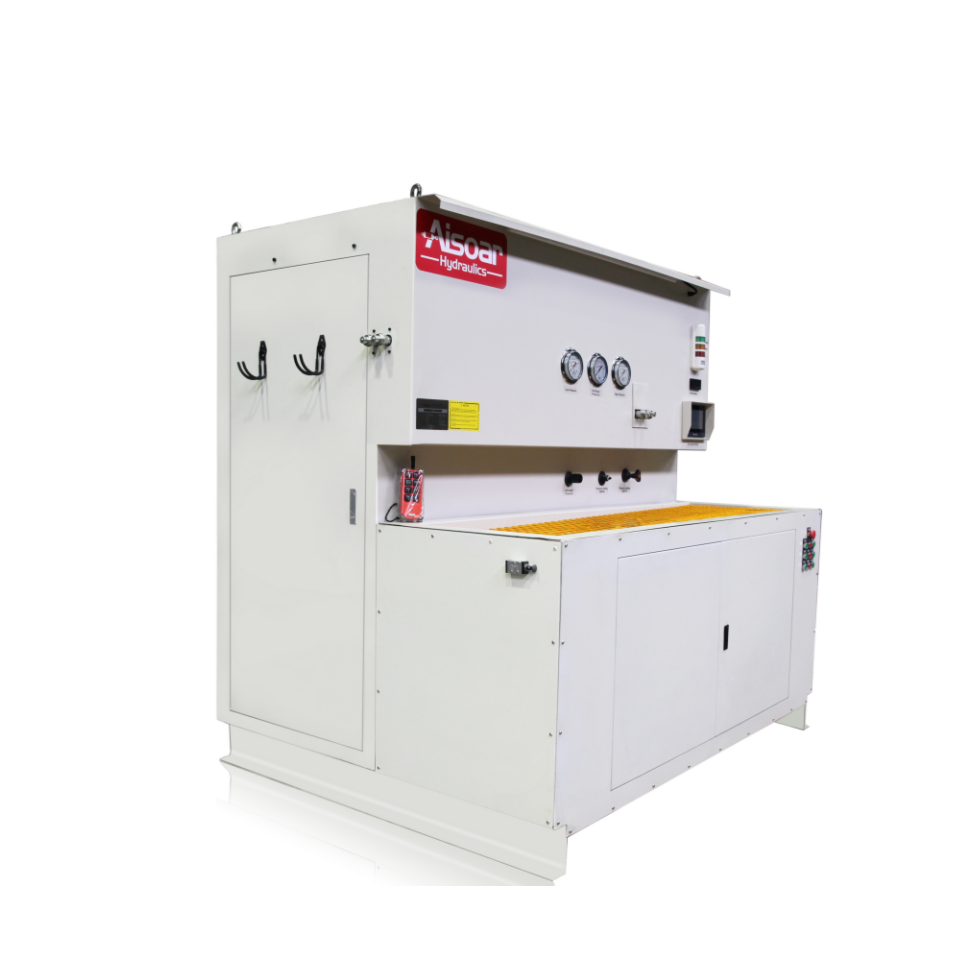
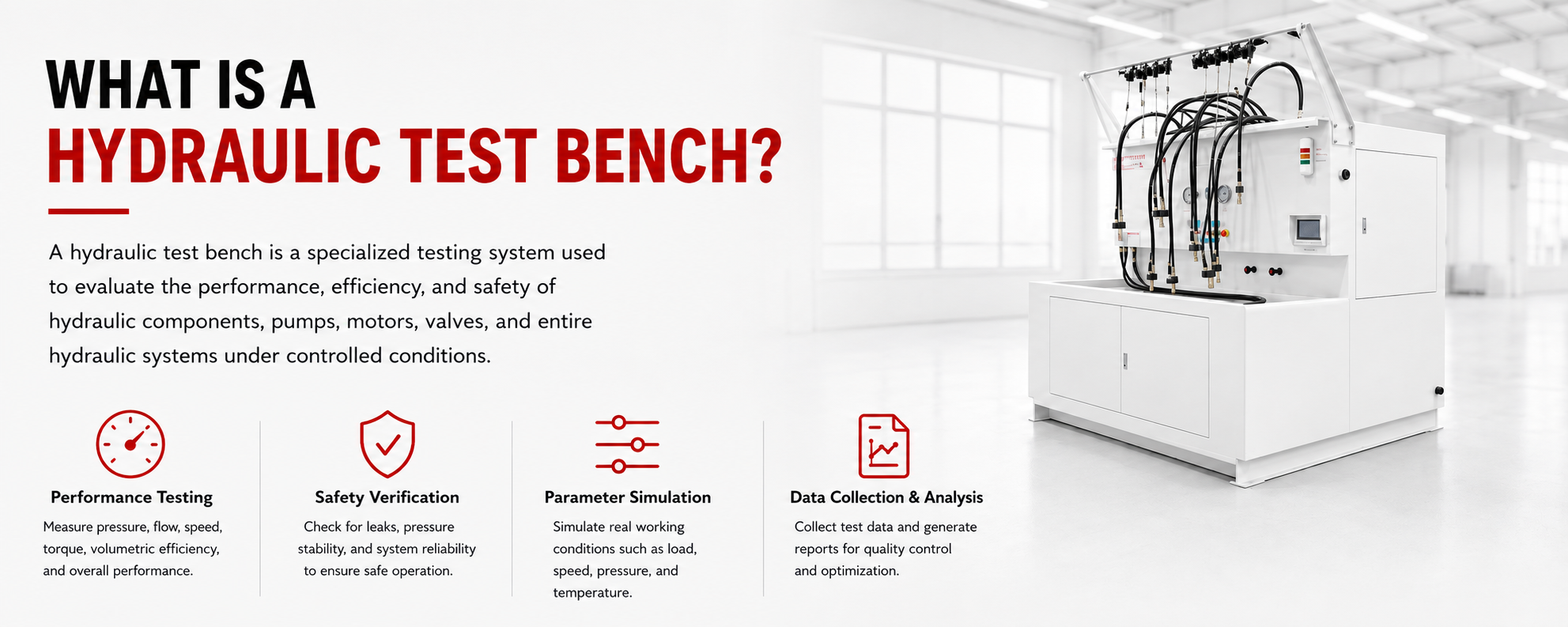
A hydraulic test bench is a specialized testing system used to inspect, verify, and evaluate the performance of hydraulic components or complete hydraulic systems. It creates controlled hydraulic pressure, flow, and load conditions so that cylinders, pumps, motors, valves, power units, and hydraulic circuits can be tested before delivery, after repair, or during product development.
For manufacturers, repair workshops, and equipment owners, a hydraulic test bench is more than a simple pressure source. It is a quality control platform that helps confirm whether a hydraulic component can work safely, reliably, and consistently under its expected operating conditions.
In hydraulic manufacturing, testing is an essential step. A hydraulic cylinder may look correct from the outside, but internal leakage, seal damage, poor machining accuracy, unstable movement, or insufficient pressure-holding performance may only become visible during testing. The same is true for hydraulic pumps, motors, valves, and complete hydraulic power units. Without proper testing, these problems may appear only after the component is installed on equipment, causing downtime, oil leakage, safety risks, or expensive warranty claims.
How Does a Hydraulic Test Bench Work?
A hydraulic test bench works by using a hydraulic power source to supply oil at a controlled pressure and flow rate. The component being tested is connected to the test circuit through hoses, quick couplings, manifolds, or special fixtures. During the test, the system measures important parameters such as pressure, flow, temperature, leakage, movement speed, load, and sometimes electrical control signals.
For example, when testing a hydraulic cylinder, the test bench may extend and retract the cylinder several times, hold pressure at the end of stroke, check for external leakage, and monitor whether there is internal leakage across the piston seal. When testing a pump, the bench may measure output flow, pressure capability, volumetric efficiency, temperature rise, and noise or vibration. When testing a valve block, the bench may check pressure control, directional switching, leakage, response, and functional stability.
The test process can be manual, semi-automatic, or fully software-controlled. A simple manual hydraulic test bench may use pressure gauges, manual valves, and visual inspection. A more advanced PLC-controlled or software-controlled hydraulic test bench can automatically run test steps, record data, generate curves, and export test reports.
What Can a Hydraulic Test Bench Test?
A hydraulic test bench can be designed for one specific product or configured as a universal testing platform for different hydraulic components.
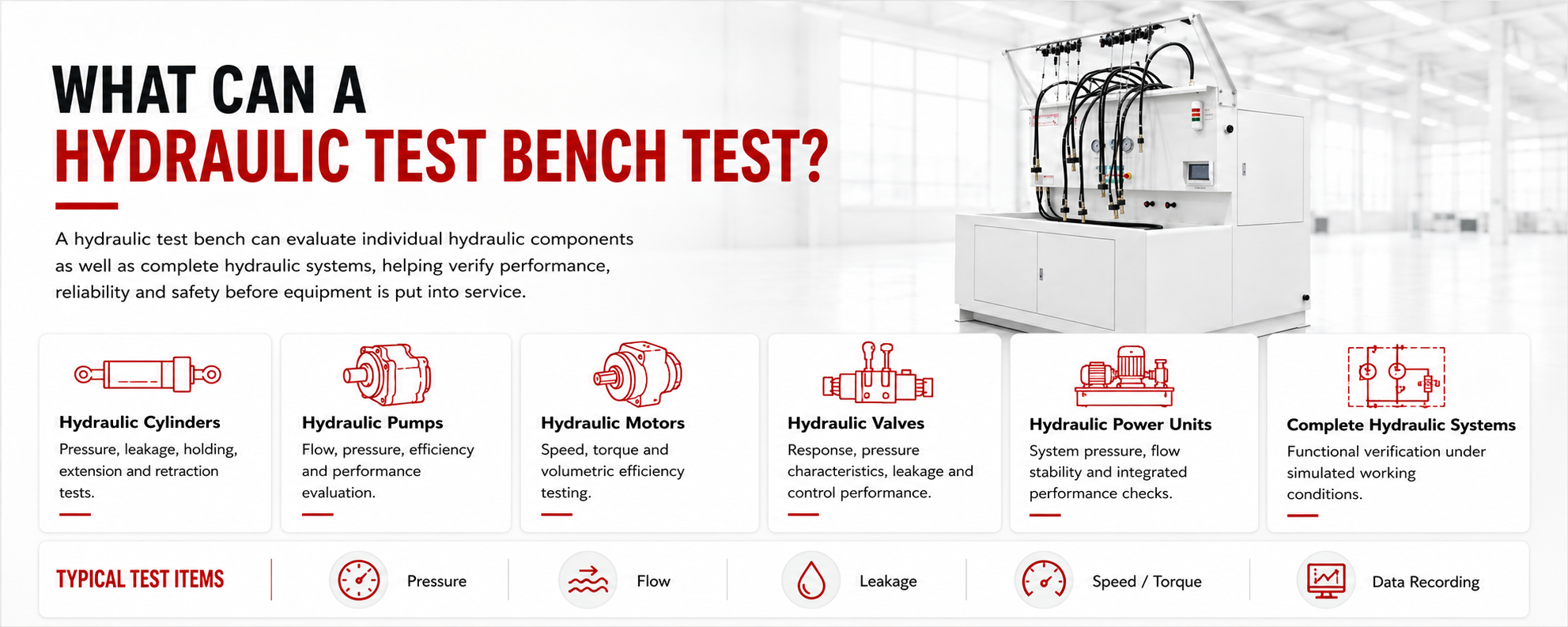
Common test objects include:
- Hydraulic cylinders
- Hydraulic pumps
- Hydraulic motors
- Hydraulic valves
- Valve blocks and manifolds
- Hydraulic power units
- Hose assemblies
- Complete hydraulic systems
For hydraulic cylinders, common test items include pressure testing, movement testing, pressure holding, leakage inspection, cushioning performance, stroke verification, and synchronization testing for multiple cylinders.
For hydraulic pumps and motors, test items may include flow output, pressure resistance, speed, torque, volumetric efficiency, temperature rise, noise, and running performance under load.
For hydraulic valves and valve blocks, the test bench may check relief pressure, directional control, internal leakage, pressure drop, flow control accuracy, switching function, and stability under repeated operation.
For hydraulic power units and complete systems, the test may include motor operation, pump performance, valve logic, system pressure, flow distribution, oil temperature, safety protection, and overall functional reliability.
Main Components of a Hydraulic Test Bench
A hydraulic test bench usually consists of several key sections. The exact configuration depends on the testing purpose, required pressure, flow rate, automation level, and test object.
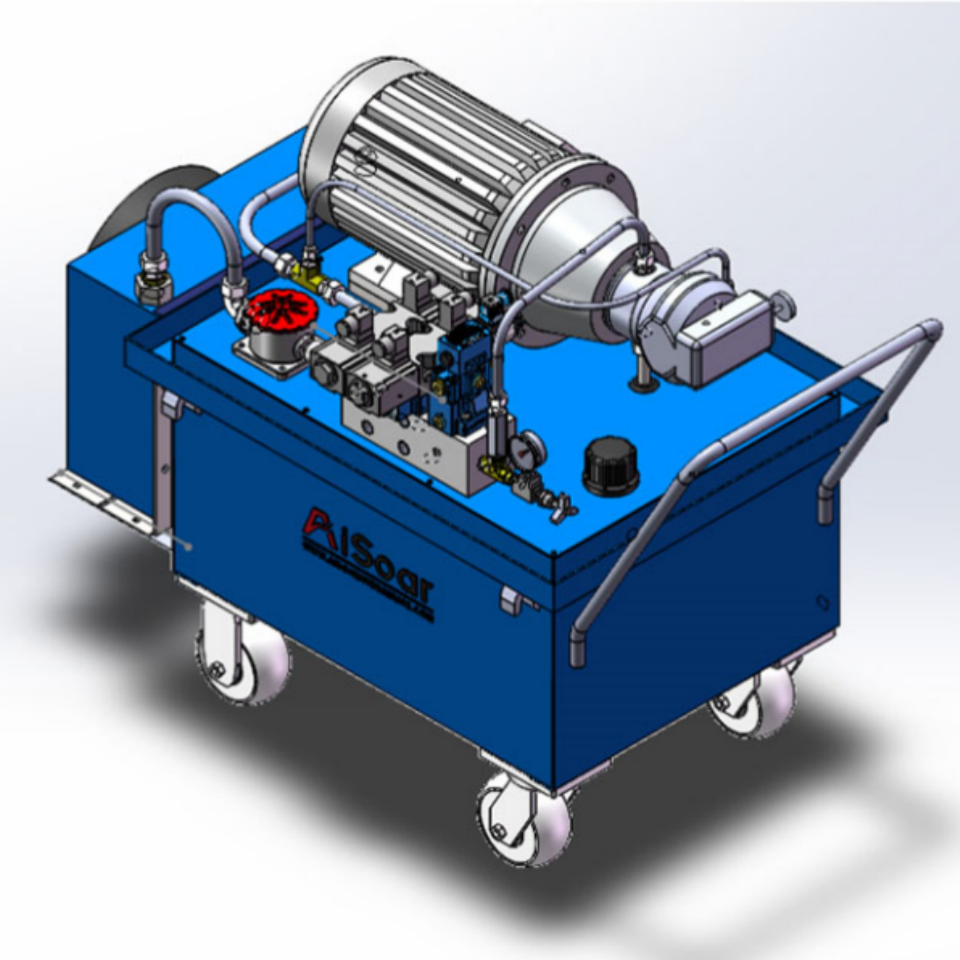
The hydraulic power unit is the core of the system. It normally includes an electric motor, hydraulic pump, oil tank, filters, valves, cooling system, and safety devices. It provides the required hydraulic pressure and flow for the test.
The control valve system manages the oil direction, pressure regulation, unloading, flow control, and test sequence. Depending on the design, the system may use manual valves, solenoid valves, proportional valves, servo valves, or cartridge valves.
The measuring system collects test data. Common sensors include pressure sensors, flow meters, temperature sensors, displacement sensors, force sensors, speed sensors, and leakage measurement devices.
The mechanical fixture or test frame holds the component during testing. For large hydraulic cylinders, the test bench may include a strong support frame, adjustable mounting brackets, pin supports, safety guards, and loading devices.
The control system can be manual, PLC-based, or software-based. Advanced systems can store test programs, display real-time curves, record test data, manage user permissions, and export test reports for traceability.
The cooling and filtration system helps maintain oil cleanliness and temperature stability. This is especially important for high-pressure testing, long test cycles, or continuous production testing.
Why Is a Hydraulic Test Bench Important?
A hydraulic test bench helps manufacturers and users reduce risk before the product is used in real equipment. Hydraulic components often work under high pressure and heavy load. If a component fails during operation, it may cause oil leakage, unstable movement, equipment shutdown, or safety hazards.
For manufacturers, a test bench improves quality control. Every cylinder, pump, valve, or power unit can be tested according to a defined procedure before shipment. This helps reduce defective products, improve customer confidence, and provide test records for quality documentation.
For repair workshops, a hydraulic test bench helps diagnose faults more accurately. Instead of relying only on visual inspection, technicians can test the repaired component under pressure and confirm whether the problem has been solved.
For OEM equipment manufacturers, a hydraulic test bench supports product development and system validation. Engineers can test whether a hydraulic design meets the required pressure, speed, force, flow, and temperature conditions before it is installed on the final machine.
For end users, hydraulic testing helps reduce downtime. Components can be tested before reinstallation, reducing the risk of repeated failure after repair.
Manual vs Software-Controlled Hydraulic Test Bench
Not every hydraulic test bench needs the same level of automation. The right choice depends on the testing frequency, product type, data requirements, and budget.
A manual hydraulic test bench is suitable for simple testing, small repair shops, or low-volume inspection. It is easier to operate and usually has a lower initial cost. However, it depends heavily on operator experience, and test data may need to be recorded manually.
A PLC-controlled hydraulic test bench offers better repeatability and process control. The test sequence can be programmed, and key parameters can be monitored automatically.
A software-controlled hydraulic test bench is more suitable for manufacturers that require accurate data recording, test curves, report export, and traceability. This type of test bench is often used for batch production testing, high-pressure hydraulic cylinder testing, pump and motor performance testing, and complete hydraulic system validation.
How to Choose the Right Hydraulic Test Bench
Before selecting a hydraulic test bench, the buyer should clearly define the testing object and technical requirements. Different hydraulic components require different test circuits, measuring instruments, fixtures, and safety structures.
Important information includes:
- What components need to be tested?
- What is the maximum working pressure?
- What is the required flow rate?
- What oil temperature range should be controlled?
- What test items are required?
- Is pressure holding or leakage testing needed?
- Is data recording or report export required?
- What is the maximum size and weight of the test object?
- Should the system be manual, PLC-controlled, or software-controlled?
- Are safety guards or customized fixtures required?
For example, a hydraulic cylinder test bench for large cylinders needs strong mechanical support, suitable mounting fixtures, pressure-holding capability, and safe operation space. A hydraulic pump test bench needs accurate flow measurement, load control, and motor drive configuration. A valve test bench may need multiple circuits, pressure ports, leakage measurement, and flexible connection interfaces.
Standard or Customized Hydraulic Test Bench?
Some standard hydraulic test benches are suitable for common maintenance and basic component testing. However, many industrial users need customized test benches because their products have different pressure ranges, flow demands, sizes, test procedures, and reporting requirements.
A customized hydraulic test bench can be designed according to the customer’s hydraulic components, test process, factory layout, automation level, and quality control standards. It may include special fixtures, high-flow circuits, high-pressure circuits, oil cooling, filtration, leakage measurement, PLC control, software monitoring, and test report export.
For manufacturers producing different types of hydraulic components, a modular or universal hydraulic test bench may be a better option. It allows one system to test multiple product types, such as cylinders, pumps, motors, valves, and hydraulic power units.
AiSoar Hydraulic Test Bench Solutions
AiSoar Hydraulics provides standard and customized hydraulic test bench solutions for hydraulic cylinders, hydraulic power units, valves, pumps, motors, and complete hydraulic systems. According to the customer’s testing requirements, AiSoar can configure pressure range, flow rate, test circuit, mechanical fixture, control method, data acquisition, safety protection, oil cooling, filtration, and report export functions.
Whether the application is factory quality control, hydraulic cylinder production testing, repair workshop inspection, or complete hydraulic system validation, a properly designed hydraulic test bench can help improve testing accuracy, reduce failure risks, and make hydraulic product delivery more reliable.
If you need to test hydraulic components under controlled pressure, flow, and load conditions, a hydraulic test bench is not just optional equipment. It is an important part of hydraulic quality assurance and long-term system reliability.