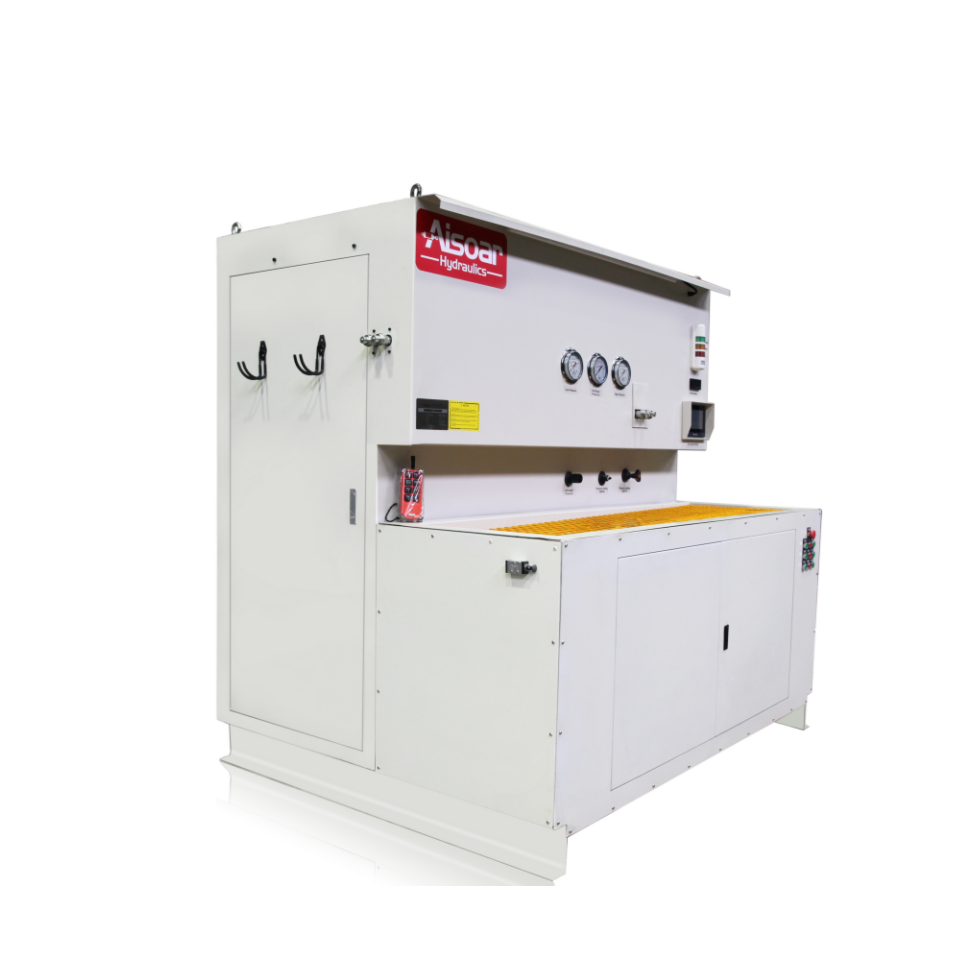
A hydraulic test bench can perform a wide range of tests on hydraulic components and complete hydraulic systems. It is used to check whether a component can operate safely, maintain pressure, control flow, prevent leakage, and meet the required performance before delivery, after repair, or before installation.
Depending on the design, a hydraulic test bench can be used for hydraulic cylinders, pumps, motors, valves, hydraulic power units, hose assemblies, manifolds, and complete hydraulic systems. Many hydraulic test benches are designed as multi-functional testing platforms for components such as pumps, motors, cylinders, and valves.
For manufacturers, repair workshops, and OEM equipment builders, hydraulic testing is not just a final inspection step. It is a way to reduce product failure, verify performance, improve quality control, and provide reliable test records.
What Tests Can a Hydraulic Test Bench Perform?
Pressure Testing
Pressure testing is one of the most important functions of a hydraulic test bench. The purpose is to confirm whether the hydraulic component can withstand the required working pressure or test pressure without damage, deformation, abnormal leakage, or unstable performance.
For hydraulic cylinders, pressure testing is commonly used to check the cylinder barrel, piston seal, rod seal, welded structure, ports, and end connections. The cylinder is pressurized according to the required test procedure, and the operator checks whether the cylinder can safely hold the pressure.
For valves, pressure testing can verify whether the valve body, seals, and internal passages can handle the required pressure. For hydraulic power units and systems, pressure testing helps confirm whether the pump, valves, pipelines, fittings, and safety devices are working correctly.
Pressure testing is especially important for high-pressure hydraulic equipment, because a small defect may become a serious failure when the component is installed on a machine.
Pressure Holding Test
A pressure holding test checks whether a hydraulic component can maintain pressure for a certain period of time. During this test, the component is pressurized to a target value, and the pressure is held for a defined duration.
If the pressure drops too quickly, it may indicate internal leakage, external leakage, seal failure, valve leakage, poor machining accuracy, or connection problems.
For hydraulic cylinders, pressure holding is often used to inspect piston seal performance and port sealing. For hydraulic valves, it can be used to check whether the valve can maintain pressure without excessive internal leakage. For hydraulic systems, it helps verify whether the complete circuit can maintain stable pressure under controlled conditions.
This test is important because many hydraulic failures are not visible immediately. A component may pass a simple movement test but still fail to hold pressure under load.
Leakage Testing
Leakage testing is another key function of a hydraulic test bench. Leakage can be divided into external leakage and internal leakage.
External leakage is usually visible. It may appear around the rod seal, port connection, welded area, valve body, hose fitting, or manifold surface. External leakage is easier to detect because oil can be seen outside the component.
Internal leakage is more difficult to detect. It happens when oil passes through internal sealing areas, such as across a hydraulic cylinder piston seal or inside a valve. A hydraulic cylinder with internal leakage may drift, lose force, move slowly, or fail to hold load. Research on hydraulic cylinder leakage also notes that internal leakage may be harder to identify than external leakage because it occurs between pressure chambers and may reduce performance without obvious external oil leakage.
A hydraulic test bench helps detect leakage by applying pressure, monitoring pressure drop, checking oil flow, measuring leakage volume, and observing the component during the test. Some advanced test benches can include dedicated leakage measurement devices for more accurate results.
Flow Testing
Flow testing is used to measure whether the hydraulic component or system can deliver, control, or pass the required oil flow. Flow is a key parameter because it directly affects actuator speed, system efficiency, heat generation, and machine performance.
For hydraulic pumps, flow testing checks whether the pump can provide the expected output flow at different pressures and speeds. If the actual flow is lower than expected, the pump may have internal wear, leakage, efficiency loss, or incorrect displacement.
For hydraulic valves, flow testing can measure whether the valve can pass the required flow without excessive pressure drop. For complete hydraulic systems, flow testing helps confirm whether oil is distributed correctly to different actuators.
For hydraulic cylinders, flow affects extension and retraction speed. A test bench can help verify whether the cylinder moves smoothly and whether the flow supply matches the required working speed.
Hydraulic test benches commonly use flow meters and pressure sensors to generate measurable data for comparison with operating requirements. Some hydraulic test bench systems are designed to generate and check flow and pressure data for components before installation.
Function Testing
Function testing checks whether the hydraulic component performs its basic operation correctly.
For a hydraulic cylinder, function testing may include extension, retraction, stroke verification, smooth movement, cushioning effect, abnormal noise, vibration, and end-position behavior.
For a hydraulic valve, function testing may include directional switching, pressure adjustment, relief valve opening, flow control, check valve function, solenoid response, and manual override operation.
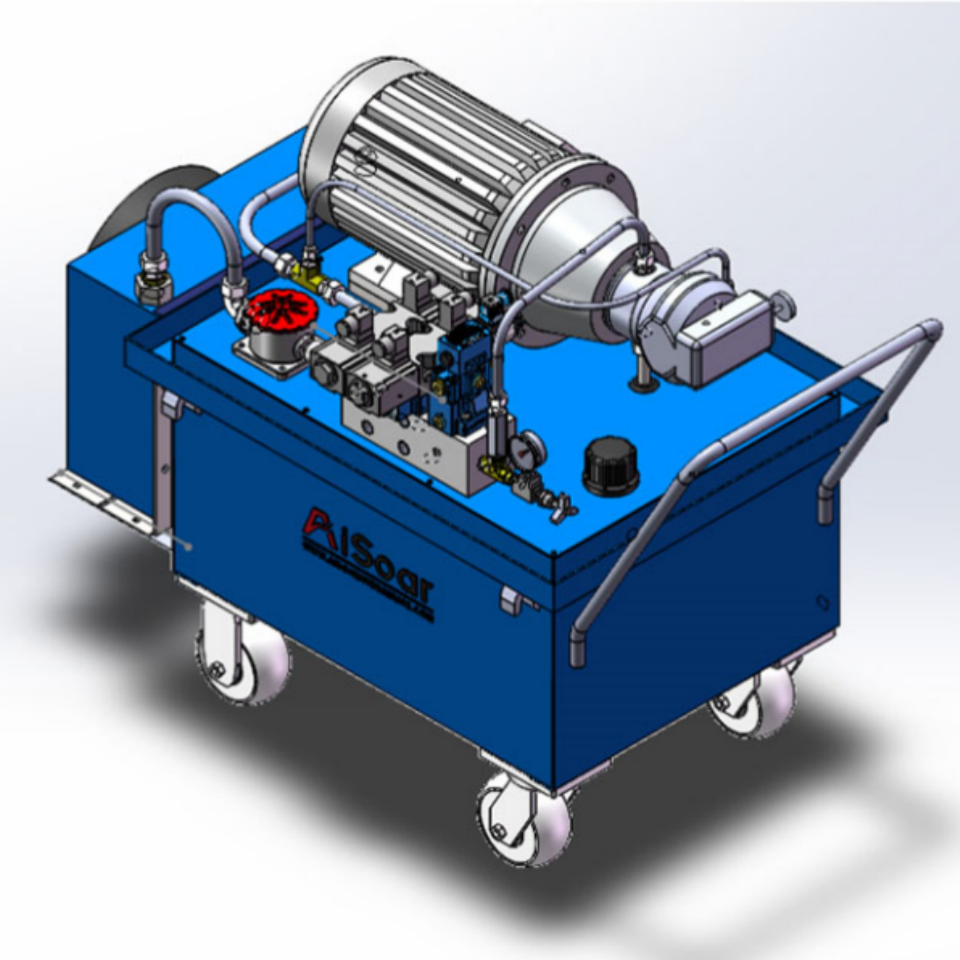
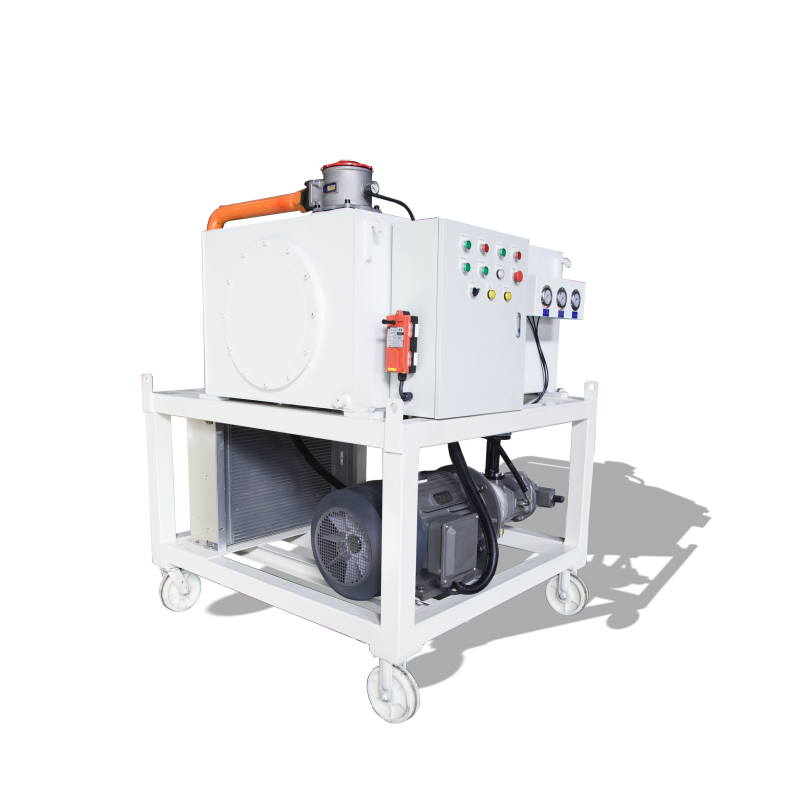
For a hydraulic power unit, function testing may include motor start-up, pump output, valve action, pressure build-up, unloading, oil return, cooling function, filtration status, and electrical control response.
Function testing is important because a hydraulic component may pass a static pressure test but still fail during actual operation. A test bench simulates working conditions so that the operator can confirm real functional performance.
Performance Testing
Performance testing goes further than basic function testing. It measures how well the hydraulic component performs under different operating conditions.
For pumps, performance testing may include flow output, pressure capability, volumetric efficiency, temperature rise, and performance under load. For motors, it may include speed, torque, pressure, flow consumption, and running stability. For valves, it may include response, pressure drop, leakage, flow control accuracy, and repeatability. Some hydraulic component test benches are designed to test pressure, flow, and efficiency for pumps, motors, valves, and cylinders.
Performance testing is especially useful for manufacturers, repair centers, and R&D teams. It helps compare actual test results with design requirements, customer specifications, or previous test records.
Cylinder Extension and Retraction Test
For a hydraulic cylinder test bench, extension and retraction testing is one of the most common test items. The cylinder is connected to the hydraulic circuit and operated repeatedly to check movement quality.
During this test, the operator can observe whether the cylinder moves smoothly, whether there is crawling, shaking, abnormal noise, rod bending, seal friction, or uneven speed. The test can also confirm whether the stroke length is correct and whether the cylinder can reach both end positions properly.
For double-acting cylinders, both extension and retraction are tested under controlled pressure and flow. For single-acting cylinders, the test may include pressure extension and return by load, spring, or external force, depending on the cylinder design.
For large or heavy-duty cylinders, the test bench may also require strong mechanical supports, adjustable fixtures, and safety protection.
Load Simulation Test
Some hydraulic test benches can simulate load conditions. This means the component is not only operated without resistance, but tested under conditions closer to real working applications.
For hydraulic cylinders, load simulation can help verify pushing force, pulling force, stability, and pressure response. For pumps and motors, load simulation can help evaluate output performance under working pressure. For hydraulic systems, it can help check whether the circuit can operate correctly when the actuator faces resistance.
Load simulation is very useful for OEM equipment manufacturers because it helps identify design or assembly problems before the hydraulic system is installed on the final machine.
Temperature and Oil Cleanliness Monitoring
Hydraulic oil temperature affects viscosity, sealing performance, efficiency, and system stability. During long test cycles or high-power testing, oil temperature may rise quickly. Therefore, many hydraulic test benches include temperature monitoring and oil cooling systems.
Oil cleanliness is also important. Contaminated oil can damage pumps, valves, seals, and precision components. A test bench with proper filtration helps protect the tested components and maintain more stable test results.
For advanced testing systems, temperature and cleanliness monitoring can be integrated into the control interface and test report.
Data Recording and Test Report Export
Modern hydraulic test benches are increasingly equipped with data recording and report export functions. Instead of relying only on manual reading and operator notes, the system can collect pressure, flow, temperature, leakage, displacement, time, and other test data automatically.
This is especially important for batch production, customer inspection, warranty management, and quality traceability. Some hydraulic test bench solutions include automated data acquisition and test report generation functions to support component testing and fault diagnosis.
A software-controlled hydraulic test bench can display real-time curves, store historical records, export test reports, and help users compare actual performance with required standards. For manufacturers, this makes quality control more professional and easier to document.
How to Choose the Required Test Items
Not every hydraulic test bench needs to perform every test. The required test items depend on the product type and application.
For hydraulic cylinder testing, the key items are usually pressure testing, pressure holding, leakage inspection, extension and retraction testing, stroke verification, and cushioning inspection.
For hydraulic pump testing, the key items are usually pressure, flow, speed, efficiency, temperature, noise, and performance under load.
For hydraulic valve testing, the key items are usually pressure setting, switching function, leakage, pressure drop, response, and flow control.
For hydraulic power unit testing, the key items are usually system pressure, pump output, valve logic, motor operation, oil temperature, filtration, and complete system function.
Before purchasing or customizing a hydraulic test bench, customers should provide the test object, maximum pressure, required flow rate, component size, testing process, control method, data recording requirements, and report format.
AiSoar Hydraulic Test Bench Solutions
AiSoar Hydraulics provides standard and customized hydraulic test bench solutions for hydraulic cylinders, pumps, motors, valves, hydraulic power units, and complete hydraulic systems. The test bench can be configured for pressure testing, leakage inspection, flow testing, function testing, performance verification, data recording, and test report export according to customer requirements.
A properly designed hydraulic test bench helps manufacturers and repair workshops detect problems before installation, reduce product failure, improve testing efficiency, and provide more reliable hydraulic components to customers.
If you need to test hydraulic components under controlled pressure, flow, temperature, and load conditions, AiSoar can help design a suitable hydraulic test bench based on your product type, testing standard, automation level, and quality control process.