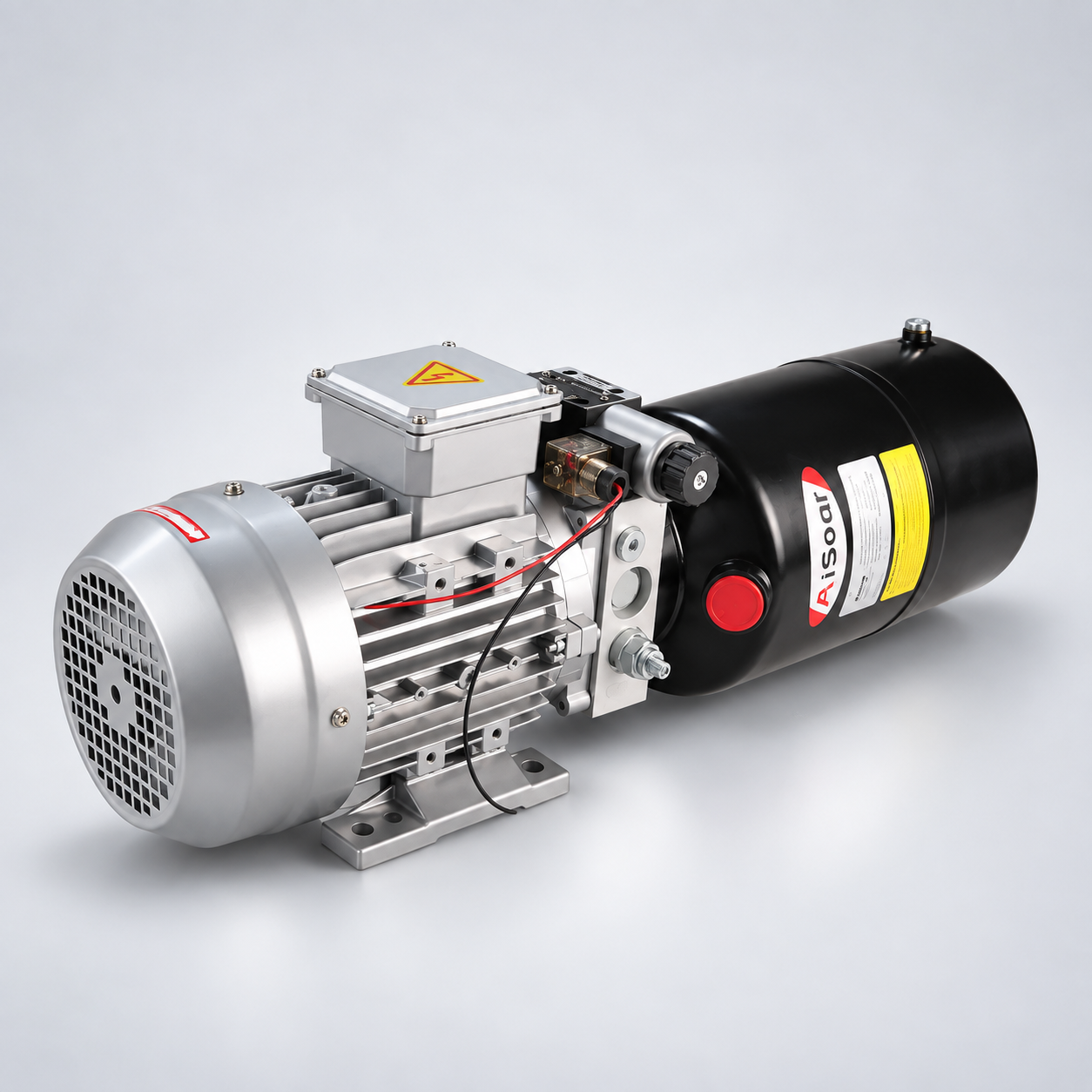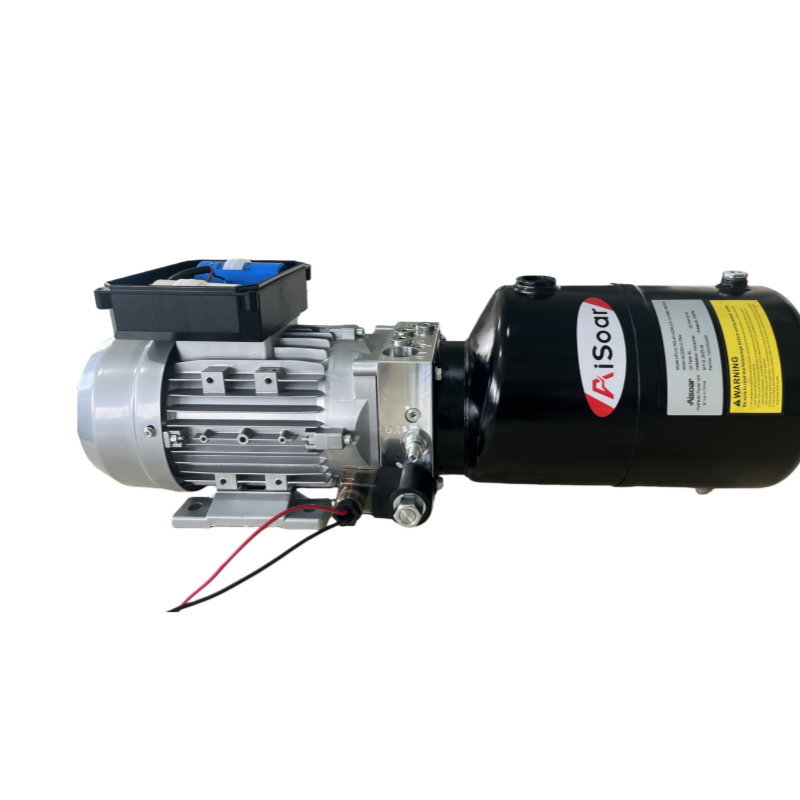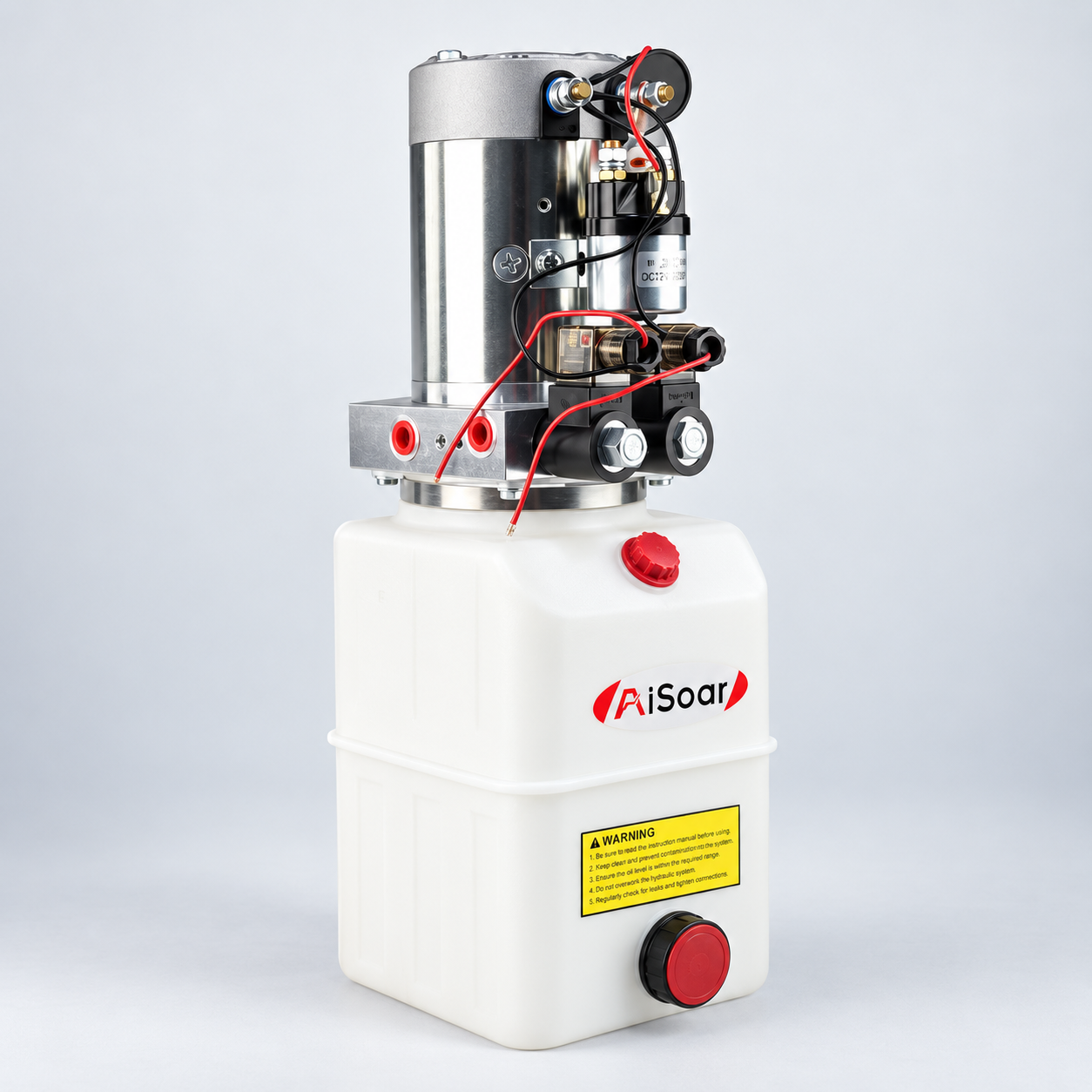
A mini hydraulic power unit combines an electric motor, gear pump, oil reservoir and valve manifold in one compact assembly. It is widely used in dock levelers, dump trailers, scissor lifts, tail lifts and similar equipment.
The manifold valves control pressure, direction, speed and load movement. A single-acting unit normally uses a pressure relief valve, check valve, solenoid lowering valve and flow control valve. A double-acting unit also requires a directional control valve. Load-holding valves may be added for vertical or suspended loads.
Common Valves in a Mini Hydraulic Power Unit
| Valve | Main Function | Typical Use |
|---|---|---|
| Pressure relief valve | Limits maximum pressure | Almost every unit |
| Check valve | Prevents reverse flow | Most circuits |
| Solenoid lowering valve | Returns oil to the tank | Single-acting lifting systems |
| Directional control valve | Changes cylinder direction | Double-acting cylinders |
| Flow control valve | Controls cylinder speed | Lifting and lowering |
| Counterbalance valve | Controls overrunning loads | Vertical loads |
| Pilot-operated check valve | Locks the cylinder | Position holding |
These valves are normally installed as cartridges inside a compact manifold, reducing piping and leakage risk.
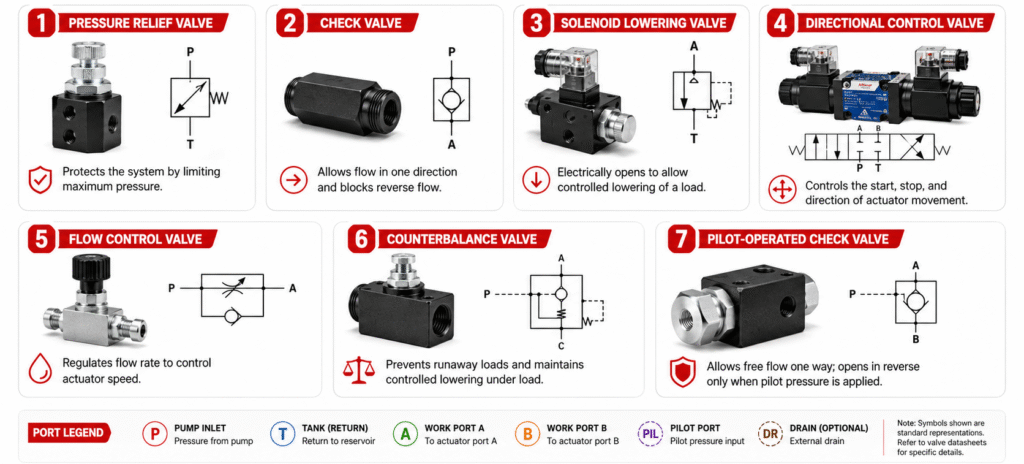
Pressure Relief Valve
A pressure relief valve protects the unit from excessive pressure. When pressure reaches the preset value, it opens and directs excess pump flow back to the reservoir.
It must handle both maximum pressure and full pump flow. Its setting should move the load without exceeding the system’s safe pressure.
Most mini hydraulic power units use compact direct-acting cartridge relief valves. An incorrectly sized or adjusted relief valve can cause pressure spikes, component damage or insufficient lifting force.
Check Valve
A check valve allows oil to flow from the pump toward the cylinder while blocking reverse flow.
In a single-acting lifting circuit, it helps hold the cylinder after the motor stops. Without it, oil may flow backward through the gear pump and lower the load.
Flow capacity, cracking pressure and internal leakage should be considered. A standard check valve should not be the only safety device for a suspended load.
When the application requires reliable load holding, a counterbalance valve or pilot-operated check valve may also be needed.
Solenoid Lowering Valve
A solenoid lowering valve is commonly used in single-acting mini hydraulic power units.
During lifting, the pump sends oil into the cylinder. When the lowering command is activated, the solenoid valve opens a return path to the reservoir, allowing the load to lower under gravity.
A normally closed design blocks return flow when power is removed. A manual emergency release may also be added. The coil voltage must match the machine control system.
Common coil options include 12V DC, 24V DC, 48V DC, 110V AC and 220V AC, depending on the machine control system.
The valve flow capacity must also match the required lowering speed.
Directional Control Valve
A double-acting mini hydraulic power unit requires a directional control valve or an equivalent cartridge-valve circuit to control extension and retraction.
A 4/2 valve provides extension and retraction. A 4/3 valve adds a neutral position.
For a 4/3 valve, the center condition must match the pump and machine requirements. Different center configurations affect pump unloading, cylinder holding and oil circulation when the actuator is stopped.
A tandem-center arrangement can unload the pump in neutral while blocking the cylinder ports. The valve must match the required flow, pressure, voltage and duty cycle.
Flow Control Valve
A flow control valve regulates cylinder speed.
In a single-acting unit, it is usually installed in the return passage. The pump determines lifting speed, while the valve limits how quickly oil leaves the cylinder during lowering.
A pressure-compensated valve gives more stable speed under changing loads. This is useful for lifting platforms and tail lifts that must lower smoothly with different load weights.
Excessive restriction creates pressure loss and heat. The required flow should therefore be selected according to cylinder size and target movement speed.
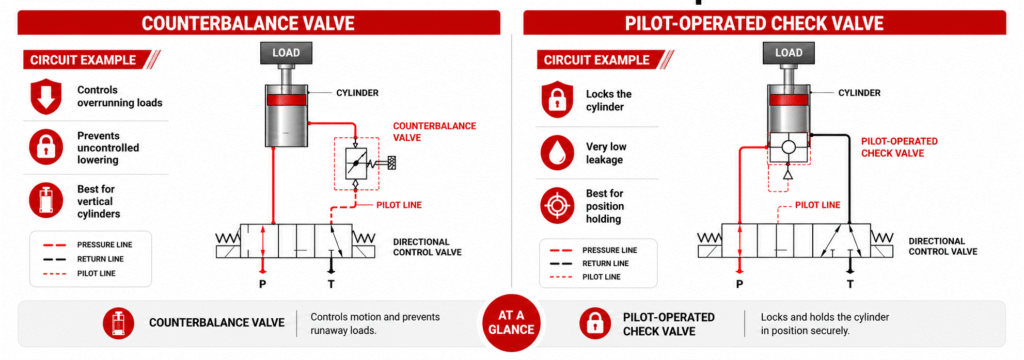
Counterbalance Valve or Pilot-Operated Check Valve
These valves both support load holding, but they serve different purposes.
Counterbalance Valve
A counterbalance valve controls oil leaving a cylinder when gravity or an external force can drive the load.
It is common in:
- Scissor lifts
- Dump trailers
- Aerial work platforms
- Tilting platforms
- Vertical lifting equipment
The valve helps prevent uncontrolled lowering and should normally be installed close to the cylinder port.
Its pressure setting and pilot ratio must match the load. Incorrect selection may cause unstable movement, high pressure loss or excessive oil heating.
Pilot-Operated Check Valve
A pilot-operated check valve locks oil inside the cylinder until pilot pressure opens it.
It suits outriggers, clamps and positioning equipment requiring low leakage.
For controlled movement of a vertical load, a counterbalance valve is usually more suitable. For position holding, a pilot-operated check valve may be the better choice.
Typical Valve Configurations
The valve configuration of a mini hydraulic power unit mainly depends on whether it operates a single-acting or double-acting cylinder.
| Item | Single-Acting Mini Hydraulic Power Unit | Double-Acting Mini Hydraulic Power Unit |
| Actuator type | Single-acting hydraulic cylinder | Double-acting hydraulic cylinder |
| Main valves | Pressure relief valve; pump outlet check valve; normally closed solenoid lowering valve; flow control valve; manual emergency lowering valve | Pressure relief valve; check valve; 4/2 or 4/3 directional control valve; flow control valves |
| Extension | The pump sends oil into the cylinder to extend it. | The directional valve sends pressurized oil to the piston side of the cylinder. |
| Retraction | The solenoid lowering valve opens and allows oil to return to the reservoir under gravity or external load. | The directional valve sends pressurized oil to the rod side while oil from the opposite chamber returns to the reservoir. |
| Speed control | The flow control valve regulates lowering speed. | Flow control valves regulate extension and retraction speed. |
| Load holding | The check valve helps hold pressure after the motor stops. | A counterbalance valve or pilot-operated check valve may be added when load holding is required. |
| Typical applications | Dump trailers, tail lifts, dock levelers and scissor lifts | Clamping equipment, positioning systems, small presses and bidirectional lifting equipment |
How to Select the Correct Valves
Before designing the manifold, confirm:
- Cylinder type, bore, rod diameter and stroke
- Maximum load and working pressure
- Pump displacement and flow
- Required cylinder speed
- Motor voltage and power
- Pressure-holding requirement
- Duty cycle
- Emergency lowering requirement
- Available installation space
Valve ratings should include a suitable margin, and manifold passages must avoid excessive pressure drop and heating.
The complete operating sequence should be reviewed before selecting individual valves. A valve may have a sufficient pressure rating but still be unsuitable because of limited flow capacity, high internal leakage or an incorrect operating function.
Common Selection Mistakes
Common mistakes include:
- Selecting an undersized pressure relief valve
- Using the wrong solenoid voltage
- Relying on a standard check valve for a suspended load
- Omitting lowering-speed control
- Installing a counterbalance valve too far from the cylinder
- Using undersized manifold passages
- Selecting the wrong directional valve center condition
Undersized passages and excessive throttling also cause heat. A directional spool valve cannot hold a cylinder without some internal leakage.
These mistakes may lead to cylinder drift, unstable lowering, slow movement, oil overheating or pressure spikes.
Frequently Asked Questions
Does every mini hydraulic power unit need a relief valve?
A pressure relief valve is normally required to limit maximum pressure and protect the hydraulic components.
Which valve controls lowering speed?
A flow control valve in the return passage controls lowering speed. A pressure-compensated design provides more consistent speed under changing loads.
Which valve should hold a vertical cylinder?
A counterbalance valve is normally used when gravity can drive the load. A pilot-operated check valve is more suitable when the main requirement is position holding.
Conclusion
The valve configuration of a mini hydraulic power unit depends on the circuit type and load movement.
Pressure relief and check valves are common in most units. Single-acting systems normally need a solenoid lowering valve and flow control valve. Double-acting units require a directional control valve. Counterbalance valves or pilot-operated check valves may be added for load control and position holding.
AiSoar Hydraulics designs customized mini hydraulic power units according to cylinder specifications, working pressure, flow rate, motor voltage, load condition, duty cycle and installation space.To configure the correct valve manifold, provide the cylinder type, bore, stroke, load, working pressure, required speed, motor voltage and installation space. AiSoar Hydraulics can then design a customized mini hydraulic power unit for your application.