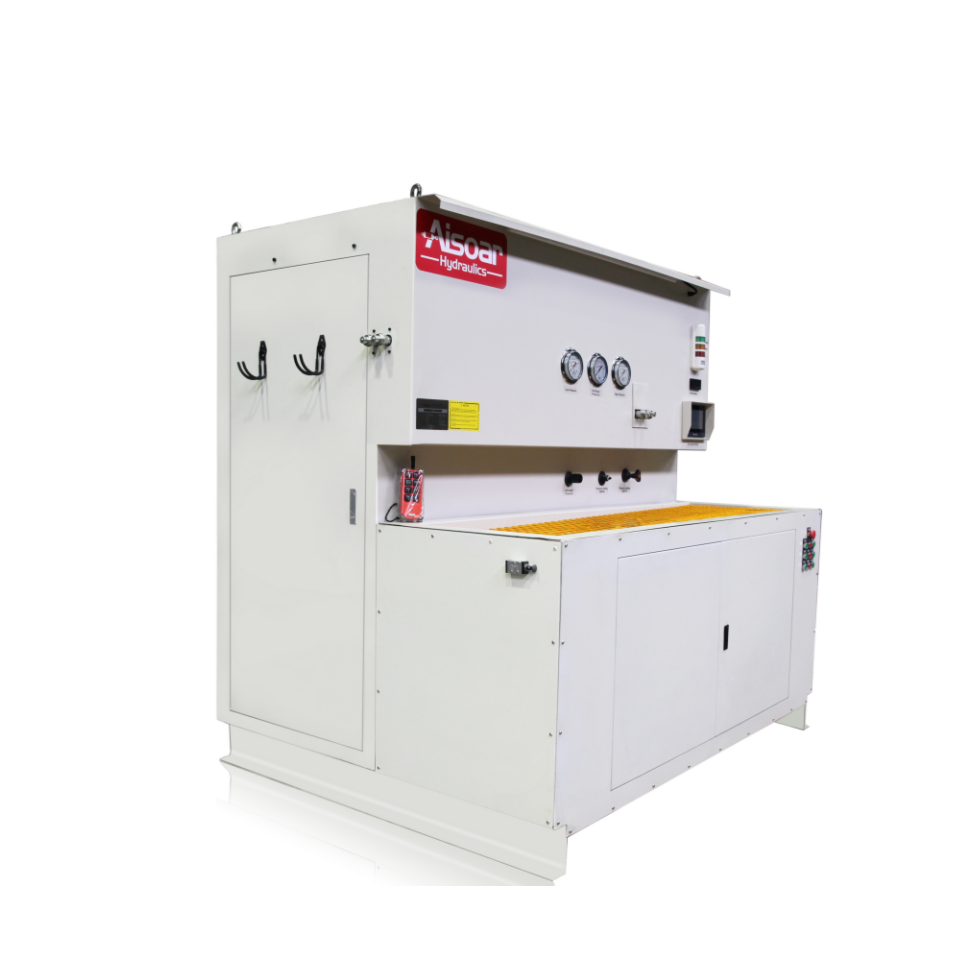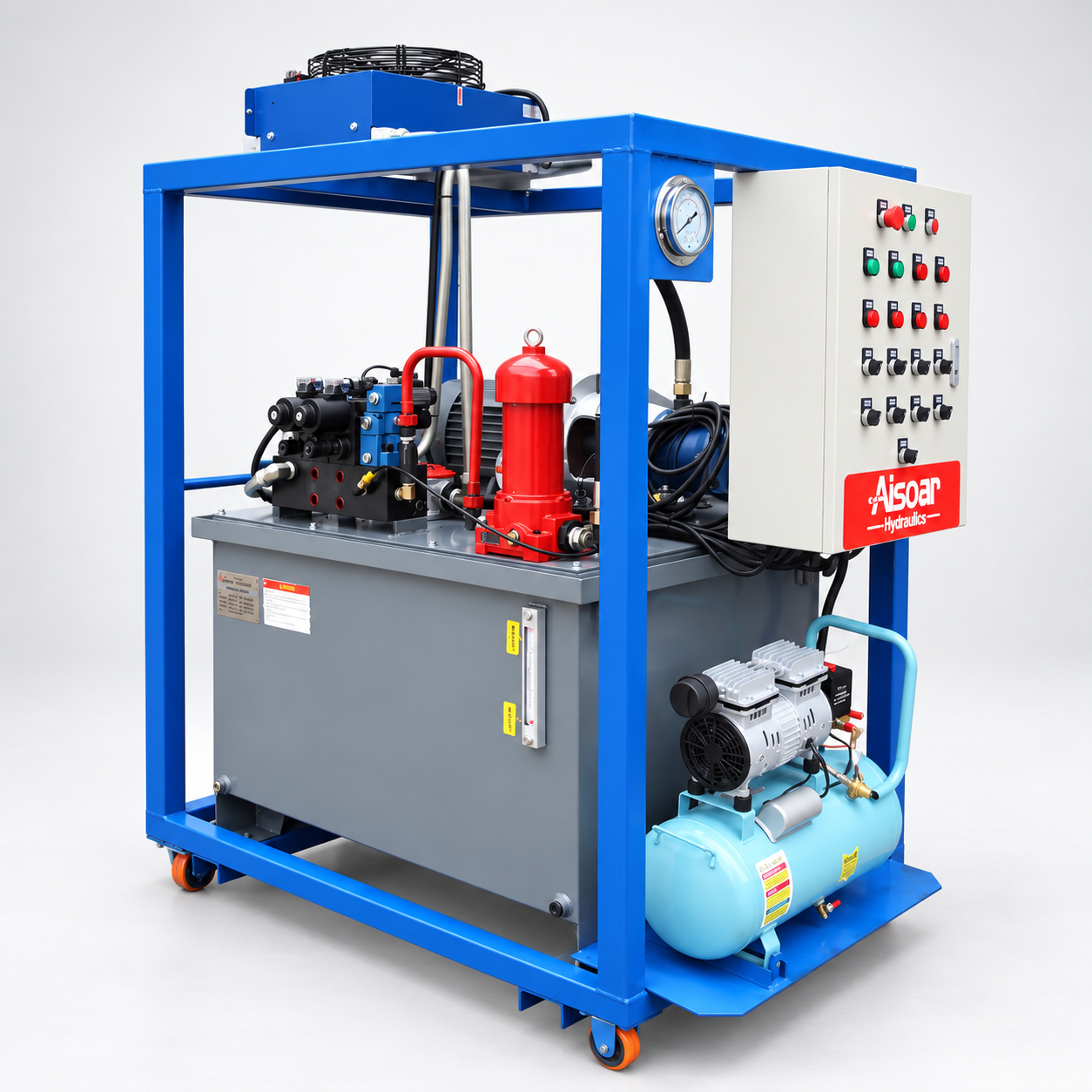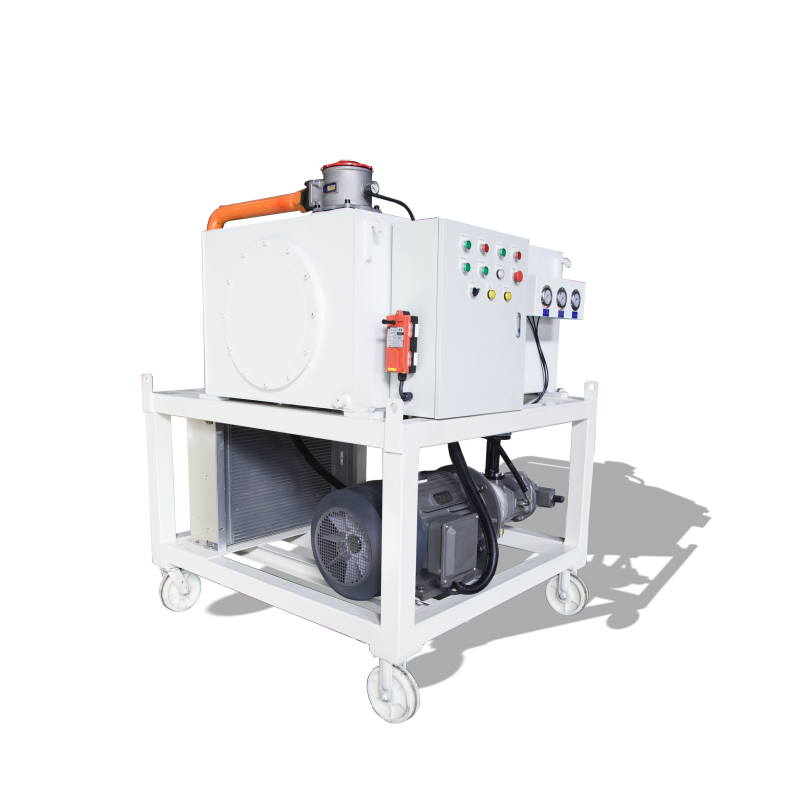
A test bench designed for hydraulic cylinders has very different requirements from one used for pumps, valves, or hydraulic motors. Even when two test benches operate at similar pressure levels, the required flow capacity, fixtures, instrumentation, control system, and test procedure can be completely different.
For this reason, selecting a hydraulic test bench should not begin with specifications such as maximum pressure or motor power alone. The better approach is to first define the component, test objective, testing process, and expected workload, and then determine what type of test bench can support those requirements.
Start with the Component You Need to Test
The type of hydraulic component is usually the first factor that determines the basic architecture of the test bench.
A hydraulic cylinder test bench must accommodate the physical size of the cylinder while providing suitable pressure control, mounting fixtures, extension and retraction space, and leakage measurement. Depending on the test procedure, the system may also need to apply or measure push and pull force.
A hydraulic pump test bench has a different task. Instead of mounting a long actuator, it normally needs to drive the pump at a controlled speed and measure pressure, flow, temperature, and sometimes input torque. The drive motor and coupling system therefore become important parts of the bench.
For a hydraulic valve test bench, the challenge is often the test manifold and hydraulic circuit. Different directional, relief, reducing, flow-control, or cartridge valves require different connections and test procedures. Accurate pressure and flow control may be more important than large mechanical fixtures.
A hydraulic motor test bench usually needs both a hydraulic supply and a controlled mechanical load. Pressure, flow, speed, and torque may need to be measured together so that motor output and efficiency can be evaluated.
These differences mean that there is no single “standard hydraulic test bench” that is ideal for every hydraulic component.
Define What the Test Bench Must Actually Verify
After identifying the component, the next step is to define the purpose of the test.
A repair workshop may simply need to confirm that a rebuilt cylinder can extend and retract correctly, hold pressure, and remain within an acceptable leakage level. A cylinder manufacturer may need a more standardized production test that includes proof pressure, pressure holding, cycling, leakage testing, and recorded test results for every finished product.
Similarly, a pump repair shop may mainly need to verify whether a rebuilt pump can produce acceptable pressure and flow, while a pump manufacturer or R&D laboratory may need to generate detailed efficiency curves across different speeds and pressure levels.
This difference is important because the same component can require very different test bench configurations depending on the testing objective.
A useful way to think about the requirement is:
Component type tells you what must be connected to the bench, while the test objective tells you what the bench must be able to measure and control.
The test procedure should therefore be defined before the equipment specification is finalized.
Dedicated or Multi-Function Hydraulic Test Bench?
Another important decision is whether to use a dedicated test bench or a multi-function hydraulic test bench.
A dedicated test bench is designed around one major component category, such as hydraulic cylinders or pumps. Because the hydraulic circuit, fixtures, instrumentation, and operating procedure are optimized for a specific type of component, the system can often be simpler to operate and easier to standardize.
A multi-function test bench is designed to test several component types on one platform. Depending on the design, it may support cylinders, pumps, valves, motors, or other hydraulic components by changing fixtures, manifolds, connections, and test modes.
| Selection Factor | Dedicated Test Bench | Multi-Function Test Bench |
|---|---|---|
| Main purpose | Repeated testing of one component type | Testing several hydraulic component types |
| Fixtures and connections | Optimized for specific products | More flexible and interchangeable |
| Operator setup | Usually simpler | More setup changes may be required |
| Test procedure | Easier to standardize | More test modes and configurations |
| System complexity | Generally lower | Generally higher |
| Best suited for | Production lines and specialized repair | General repair, R&D and mixed testing |
For a hydraulic cylinder manufacturer testing large numbers of similar cylinders, a dedicated cylinder test bench may be the more efficient solution. A repair center handling cylinders, pumps, valves, and motors from different machines may benefit more from a multi-function system.
The goal is not to maximize the number of functions on one machine. It is to determine whether combining those functions actually improves the customer’s testing workflow.
Consider Product Size and Mechanical Handling
Hydraulic test bench selection is not only a hydraulic problem. The physical size and weight of the tested component can significantly affect the machine structure.
For cylinder testing, important dimensions include bore, rod diameter, stroke, retracted length, extended length, mounting style, and total weight. A bench designed for small agricultural cylinders may be completely unsuitable for long-stroke industrial or mobile cylinders even if the hydraulic pressure rating is sufficient.
Heavy components may also require adjustable supports, lifting devices, sliding fixtures, protective enclosures, or other mechanical handling features. If the test bench is intended for a repair workshop, flexibility becomes especially important because the dimensions of incoming components may vary considerably.
Pump, valve, and motor test benches face similar mechanical considerations. Shaft size, rotation direction, flange patterns, valve port configurations, and adapter requirements can all affect how quickly the operator can install and change test components.
A technically capable hydraulic circuit is not enough if the component cannot be mounted safely and efficiently.
Decide How Much Automation the Testing Process Needs
Automation should be selected according to the actual workflow rather than treated as a feature that is automatically better when more advanced.
A manual bench may be entirely suitable for low-volume repair testing where products vary frequently and an experienced technician already needs to adjust the setup for every component. Semi-automatic operation becomes useful when repetitive steps such as pressure holding, timing, cycling, or data recording need to be made more consistent.
PLC-controlled systems are particularly valuable when test procedures are repeated frequently and production traceability matters. Test recipes, automatic sequencing, alarms, data recording, and pass/fail evaluation can reduce operator variation and simplify quality control.
However, automation level should be separated from the basic technical capability of the bench. A PLC-controlled system still needs adequate pressure, flow, measurement range, fixture capacity, and safety protection.
The detailed differences between manual, semi-automatic, and PLC-controlled test benches should therefore be considered separately from the question of which component type the bench is designed to test.
Consider Data Recording and Traceability
Not every user needs the same level of test documentation.
A repair workshop may only need the operator to view pressure and leakage and confirm that the repaired component has passed. A production manufacturer may need every test to be linked to a serial number with recorded pressure, flow, temperature, leakage, test time, and final pass/fail status.
For these applications, the test bench may need an HMI, PLC, data acquisition system, or industrial computer capable of storing and exporting test records. More advanced systems can also display pressure or flow curves and maintain a history of previous tests.
The important point is that data requirements should be defined at the beginning of the project. Adding detailed traceability after the hydraulic and electrical architecture has already been finalized can make the system more complicated than necessary.
Measurement accuracy should also be considered together with the data requirement. Recording thousands of data points is of limited value if the measurement range, sensor accuracy, or calibration method is not appropriate for the test.
Do Not Ignore Future Testing Requirements
A test bench is often used for many years, while the products being tested may change.
A cylinder manufacturer may begin with a relatively narrow bore and stroke range but later receive larger OEM projects. A repair company may initially test only cylinders and later want to add valve or pump testing. Production volumes may also increase, creating a need for more automation or better data management.
This does not mean that every test bench should be oversized or designed to test every possible product. Excessive unused capacity increases cost and system complexity.
However, reasonable future expansion should be considered when determining machine structure, hydraulic power capacity, control architecture, fixture design, and available measurement channels. In some cases, providing space or interfaces for future options is more practical than trying to rebuild the complete system later.
A Practical Selection Approach
The most effective hydraulic test bench selection process moves from the application toward the machine specification, rather than starting with a catalog model.
First define the hydraulic component and the tests that need to be performed. Then consider the size and connection range of the products, how frequently they will be tested, whether the procedure needs to be standardized, and what test data must be recorded.
Once these requirements are clear, the required pressure, flow, hydraulic power, measurement ranges, automation level, fixtures, and safety systems can be specified much more accurately.
This approach also makes communication with a test bench manufacturer easier. Instead of simply asking for “a 400 bar hydraulic test bench,” the user can describe the actual testing task and allow the bench architecture to be designed around that requirement.
Conclusion
Choosing the right hydraulic test bench is primarily about matching the equipment to the component, test objective, workflow, and required level of validation.
Cylinder, pump, valve, and motor test benches have different hydraulic and mechanical requirements, while dedicated and multi-function systems serve different operating environments. Automation and data acquisition can improve repeatability and traceability, but they should be selected according to actual production or repair needs rather than added unnecessarily.
A good selection process therefore starts by defining what will be tested, how it will be tested, how often it will be tested, and what results must be produced.
Once those questions are answered, the detailed technical specification of pressure, flow, power, accuracy, automation, and measurement range can be determined around the real testing requirement.