Hydraulic failures cause downtime, safety risks, and costly repairs. Ignoring core components leads to overheating, leaks, and pressure loss. Understanding each part helps you prevent failures and improve performance fast.
The main components of hydraulic system design are the reservoir, pump, valves, actuators, and hydraulic fluid. Together, these hydraulic system parts store, move, control, and convert fluid power into useful motion. If you understand how hydraulic systems work, you can diagnose issues earlier, reduce maintenance costs, and keep machines operating safely and efficiently.
Let’s break down each component clearly, then connect them in one practical flow so you can apply this knowledge immediately.
What Is a Hydraulic System?
A hydraulic system is a power transmission system that uses pressurized fluid to perform mechanical work. In simple terms, it transfers force from one point to another through liquid, usually oil. If you have ever asked about the hydrolic meaning (commonly misspelled), the correct “hydraulic” meaning is “movement or power through fluids.” Unlike purely mechanical systems, hydraulic systems can produce high force with relatively compact equipment, which is why they are widely used in excavators, presses, lifts, injection molding machines, and aircraft control systems.
The reason hydraulics are so powerful is Pascal’s Law: pressure applied to a confined fluid is transmitted equally in all directions. This principle allows a small input force to create a much larger output force at the actuator end. That is also why proper sealing, correct fluid viscosity, and pressure control are critical. If pressure escapes through leaks, contaminated oil, or worn seals, performance drops quickly. Understanding this basic principle is the first step in understanding how hydraulic systems work in real-world industrial applications.
What does a hydraulic system include?
When people ask about hydraulic systems components, they usually mean the five functional essentials that make the system run reliably: reservoir, pump, valves, actuators, and fluid. These are the parts of a hydraulic system you must evaluate first during design, troubleshooting, or maintenance.
Reservoir (Tank)
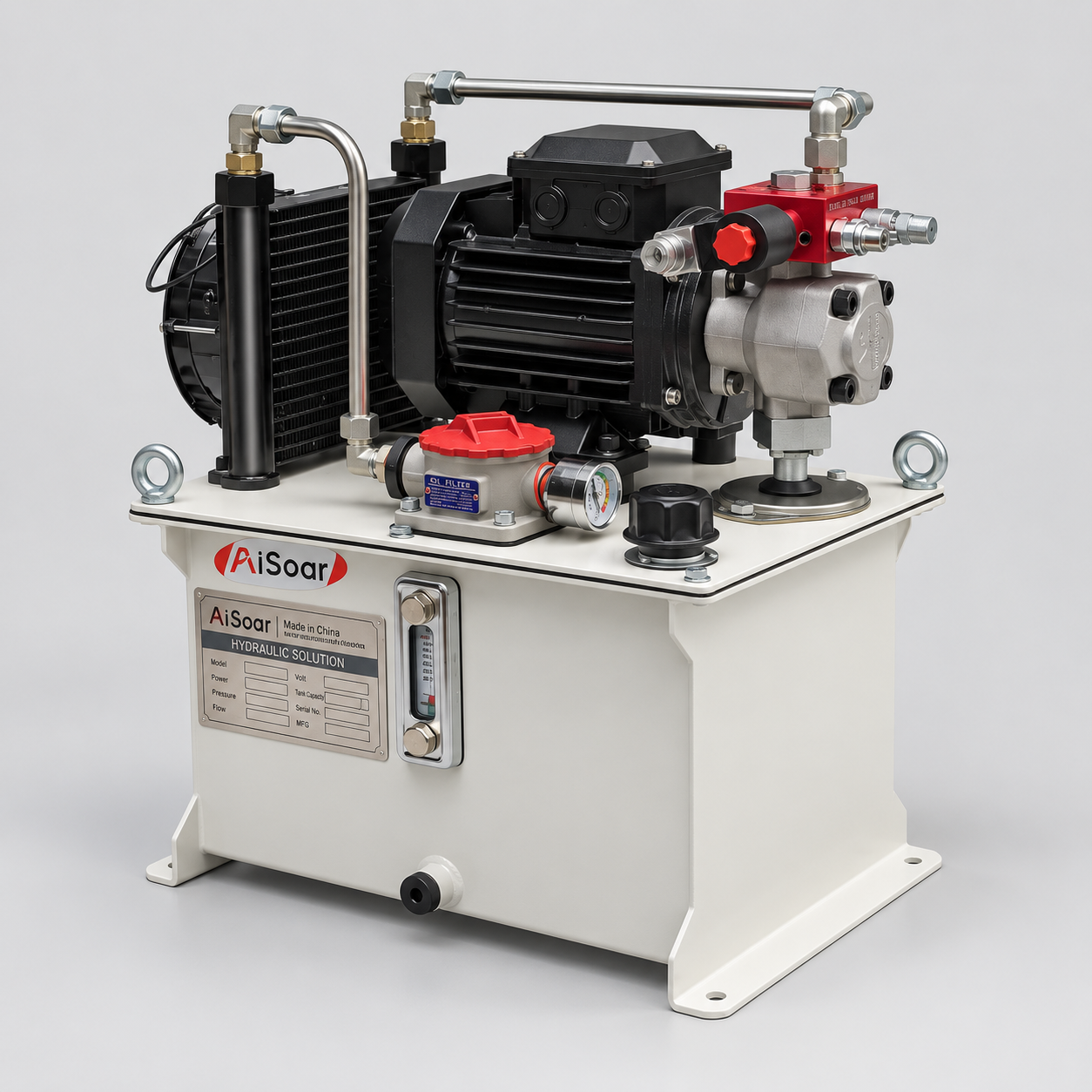
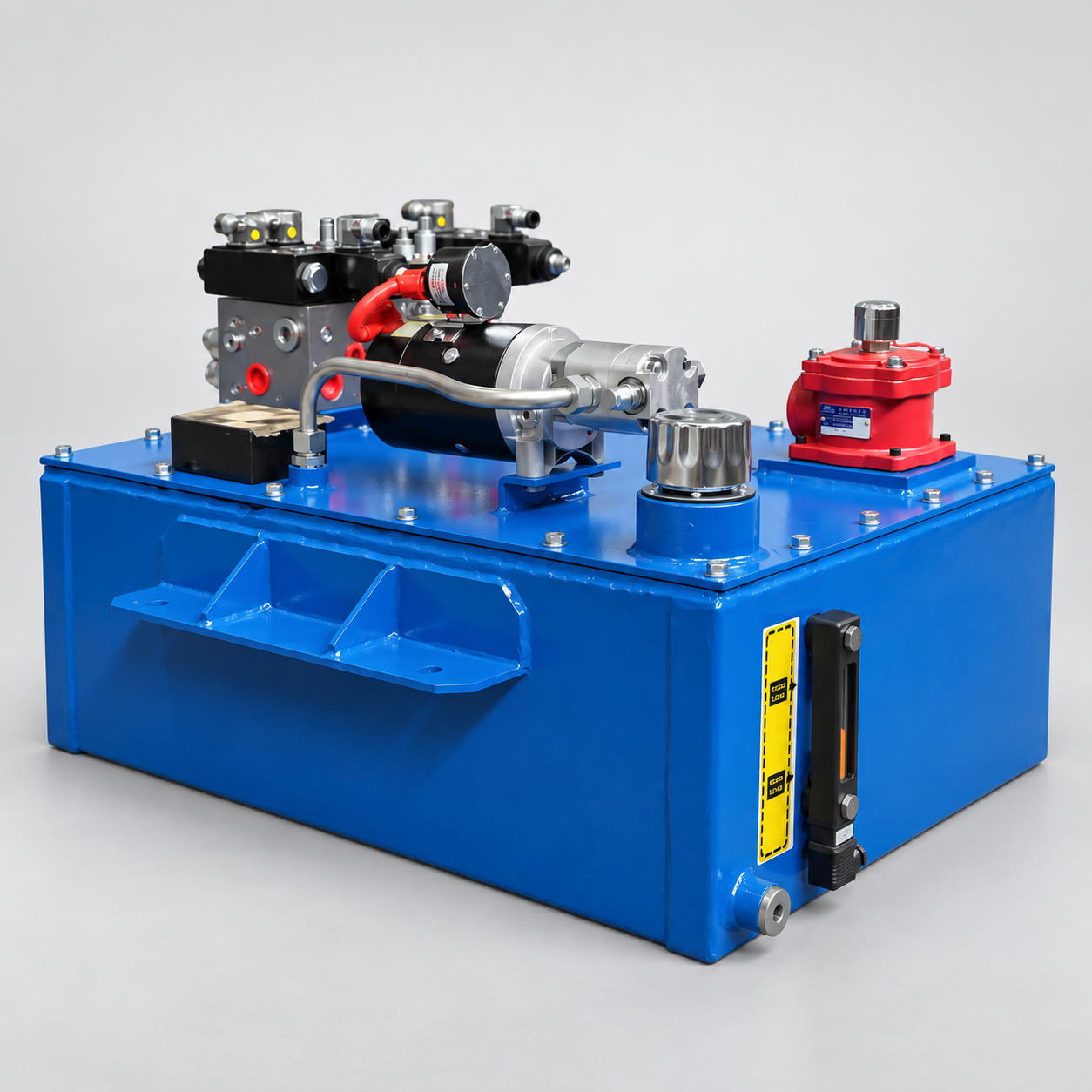
The reservoir stores hydraulic fluid and supports cooling, air release, and contamination settling. It is more than a storage container. A well-designed reservoir helps maintain fluid quality and temperature stability, both of which directly affect efficiency and component life. Poor reservoir sizing can cause overheating and foam formation.
Hydraulic Pump
The pump converts mechanical energy into hydraulic energy by creating flow. A key clarification: the pump does not directly create pressure by itself; it creates flow, and resistance in the circuit generates hydraulic pressure. Common pump types include gear, vane, and piston pumps. Choosing the wrong pump type can lead to noise, low efficiency, and shortened service life.
Valves
Valves control direction, pressure, and flow rate. Directional valves decide where fluid goes; pressure valves limit force and protect components; flow valves regulate speed. If valves stick or are improperly adjusted, machines may jerk, stall, or overheat.
Actuators
Actuators convert hydraulic energy into mechanical output. Cylinders create linear motion, while hydraulic motors create rotary motion. This is where useful work happens: lifting, pressing, rotating, clamping, or pushing.
Hydraulic Fluid
Fluid is the medium that transfers energy while also lubricating, cooling, sealing, and protecting against corrosion. So the common phrase hydraulic pump reservoir valve actuator fluid is not just a keyword chain—it actually summarizes the system’s functional architecture. Wrong fluid grade or dirty fluid is one of the most common causes of failure across all hydraulic system parts.
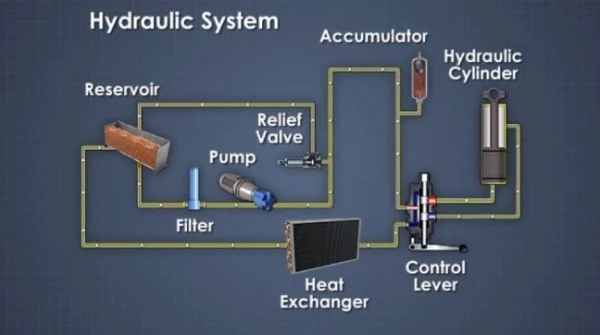
How These Components Work Together
To understand how hydraulic systems work, imagine one complete loop. First, fluid sits in the reservoir in stable condition. The pump draws this fluid and pushes flow into the circuit. As flow meets resistance—such as a load on a cylinder—pressure rises and the system generates hydraulic pressure needed to do work. Control valves then route and regulate this pressurized flow: one valve may send fluid to extend a cylinder, another may limit maximum pressure for safety, and a third may control movement speed.
Next, the actuator receives the controlled fluid energy and converts it into motion and force. For example, in a hydraulic press, pressurized fluid extends a cylinder rod downward to apply compressive force. After doing work, fluid returns through return lines, often passing filtration points, and then re-enters the reservoir for cooling and deaeration before repeating the cycle. This closed-loop behavior is the practical core of all hydraulic systems components.
The performance of the entire system depends on balance. If the pump supplies too much flow without proper valve control, heat rises. If the reservoir cannot dissipate heat, fluid viscosity changes and wear accelerates. If contamination enters, valves may stick and actuator response becomes unstable. That is why experts treat the main components of hydraulic system design as one integrated unit, not isolated parts.
In maintenance practice, diagnosing by interaction is far more effective than checking components individually. For instance, slow actuator movement might seem like a weak pump, but the root cause could be internal cylinder leakage, incorrect valve setting, or aerated fluid from poor reservoir return design. A pressure test, flow test, and fluid condition check together usually reveal the true issue faster.
From a reliability perspective, preventive care should focus on all parts of a hydraulic system: keep fluid clean, monitor temperature, inspect seals, test pressure settings, and verify pump efficiency trends. This approach reduces unplanned downtime, extends component life, and improves safety. Whether you are operating construction machines, factory equipment, or mobile hydraulics, system-level understanding always delivers better results than part-level assumptions.
In short, the reservoir conditions the fluid, the pump moves it, valves control it, actuators use it, and fluid ties everything together. Mastering this flow is the key to selecting better equipment, troubleshooting accurately, and getting maximum value from your hydraulic investment.
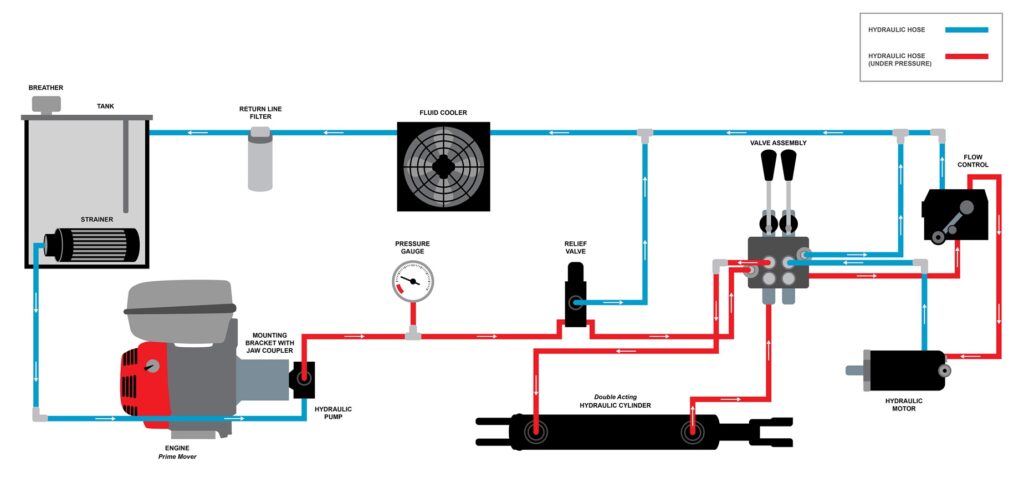
Hydraulic System FQA
1) What are the 5 main components of hydraulic systems?
The five main components of hydraulic systems are the reservoir, hydraulic pump, control valves, actuators, and hydraulic fluid. These hydraulic system parts work as one loop to store, transfer, control, and convert energy into mechanical motion.
2) Why is the reservoir important in hydraulic systems?
The reservoir stores fluid and helps with cooling, deaeration, and contamination settling. A properly designed tank improves fluid quality and protects other hydraulic systems components from overheating and premature wear.
3) What is the role of valves in a hydraulic circuit?
Valves control the system’s behavior:
- Directional valves control flow path
- Pressure valves protect against overpressure
- Flow valves control actuator speed
- Without correct valve settings, machines may become unstable, slow, or unsafe.